



















































Tea is almighty. It’s excellent for invigorating, warming in winter and cooling in hot weather; it strengthens the immune system, removes all excess from the body and can save you in case of food poisoning. And it makes any meeting and conversation more pleasant and cordial. However, to experience the taste and aroma at 100%, you must know how to choose and brew tea correctly.
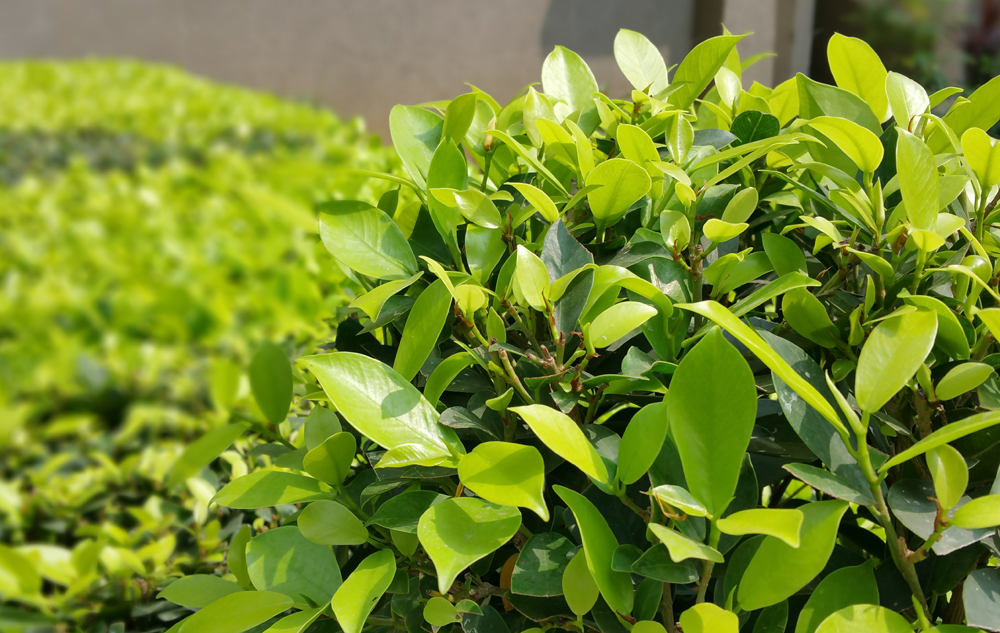
Observing our simple recommendations, you can quickly uncover the drink’s taste and enjoy drinking tea while playing a crazy time online game. Right away, this article will be about quality tea – the leaves and buds of the camellia plant, which grows as a tree, a tree-like shrub and the more familiar to us tea bush. It is grown without agrochemicals, and no artificial flavourings or additives are used in processing or packaging.
What is tea, and how to choose it correctly?
Before disassembling the tea-making sequence, we must understand how to choose the proper brew. Then, even without tasting it, we can determine by its appearance whether or not it is a good tea.


Tea leaves should be beautiful, not dull, and as whole and uniform in size, shape, and colour as possible. Likewise, the leaves should be as uniform in size, shape, and colour as possible and without any foreign objects (unless the technology suggests otherwise!).
The aroma in dry tea leaves before brewing may not be pronounced. To feel it, you can take a few breaths with your nose into a jar of tea and then inhale the aroma of tea from there.
Now let’s share with you some interesting facts about different teas.
Black Tea
Black tea was created as an export product for Europeans because green tea could very poorly withstand long transport by sea and could arrive spoiled. In the 1960s, China adopted a “colour” classification, by which this type of tea became known as red tea because, historically, China already had its black tea.

Green Tea
Why should the water temperature for brewing green tea be less than 100 degrees? The reason is that quality green tea has delicate leaves and buds, and when brewed with steep boiling water, extraction (secretion of substances from the tea leaf into an infusion) is too intensive. As a result, the taste may become bitter and astringent.
Also, green tea, unlike all other teas, is meant to be stored for a short time – you have to drink it the year it is made!
White Tea
White tea is one of the most ancient and valuable teas. It is not surprising because it goes through almost no thermal or mechanical processing, so it retains the fundamental nature of the tea plant. It is made only from the covered white pile of young tea buds. There are still varieties that use one or two leaf buds.
Yellow tea
Yellow tea is only made from tea buds and is only produced in a few regions. This tea is a rarity even in China because yellow is the emperor’s colour!
Oolong Tea
Oolongs are exceptional semi-fermented teas. Some are closer to black tea, others to green tea. They combine a rich aroma with a dense flavour. For oolong, as a rule, only tea leaves are harvested, which undergo a complex and time-consuming process. For brewing dark oolong tea, the latest Chinese tea ceremony, Gongfucha, was created using a small teapot made of special clay and tiny porcelain cups. This tea also flew into space!
If you like green tea but don’t want to wait until the boiling water gets colder than 85°, you can look at the pale oolongs from Taiwan because these teas can be brewed with boiling water.
Carcade
It is not tea at all! It’s a drink made with dried flowers of Sudanese roses. And making it easy: all you need to do is pour boiling water over a few flowers and let it steep for a while before enjoying its flavour and aroma.
What should the water be like for making delicious tea?
The Chinese themselves say, “water is the mother of tea”. To put it simply, water composition directly determines whether you like the finished tea. First of all, water should be clean and freshly boiled.
Water hardness
Tea water should be neither too hard nor too soft nor too mineral. Hard water not only forms a scale on the walls of the kettle but can also spoil the taste of the tea.
How do you read the hardness of your water? With soap! Yes, yes. Before pouring the water into the kettle, test it on yourself: soap your hands and dip them under it. If you don’t see any foam, it’s hard. If there is foam – water is medium-hard. The water is soft if you see foam; do not rinse it.
Temperatures
It is important to remember that almost all teas are best brewed with boiling water close to 100°. But green bush teas, as we said, require a more delicate approach. For them, the boiling water should be cooled to 85° so that there is no strong steam coming from the boiling water.
Sometimes when boiling water, it is better to be guided not by degrees shown by the heating device but by the cooking signs: the water’s appearance and sound. Therefore, if you use “smart” kettles with temperature modes for different types of tea, please be careful: they may not boil the water ultimately. And for proper tea preparation, the water should first be brought to signs of cooking when a slight stirring appears on the surface of the water, and only then, if necessary, cool it down to the desired temperature.
How to brew tea correctly.
It may seem very simple: pour the brew into the teapot, pour boiling water, pour it into cups, and drink it. Of course, this is all true, but there are a few more simple tips that, if followed, will make you enjoy the process and the result even more!
We recommend a reasonably universal checklist where four parameters are essential:
- Amount of tea leaf (dry);
- The volume of the brewing vessel;
- Infusion time;
- Water temperature.
There is a universal brewing algorithm for all teas:
Amount of tea leaf (dry): 3 g per 100 ml – for multiple brewing or 1 g per 100 ml – for single brewing;
- The volume of the brewing container – is 100-500 ml;
- Infusion time – from 5 seconds to 4 minutes;
- The water temperature for all teas, except green tea – is about 100 °.
If the tea is small (3-5g), but the teapot is big (350-500ml), we infuse the drink for 3-4 minutes. In this case, it is no longer possible to brew the tea a second time. If there is a lot of tea (8-10 g), and the kettle is small (150-200 ml), we can almost not infuse and add boiling water 4-5 times. For the 4th-5th time, we can increase the infusion time to 30-40 seconds.