


















































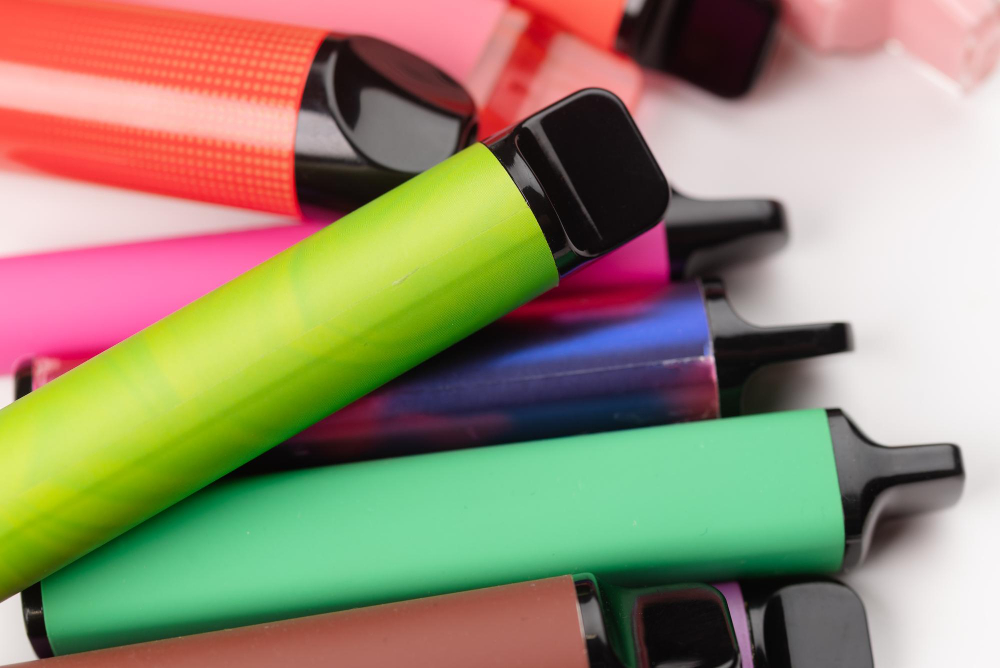

The Isle of Wight has a fairly well-established vape industry, with several shops in Newport and even more in Ryde, Shanklin and Sandown. But in October, the new national tax on vape liquid will come in. This comes a little bit more than a year after the ban on disposable vapes, and will be tough for the vape shops who have already had that major adjustment to deal with.
Another new adjustment affects local retailers
Vape shops are a niche trade that’s easy to keep track of. Therefore, we will probably also notice if the tax leads to shops disappearing or changing their offerings. When margins are small, an extra fee can be enough for a company to need to fight back.
In October this year, the tax on vape liquid comes into force. And this is after a major change in the market already has taken place. As vaping faces tighter regulation and higher costs, other nicotine products may become more attractive to consumers. Haypp, an online snus retailer, says that demand for their platforms has already grown nationally.


When disposable vaping was banned in 2025, many vape shops still managed to cope. Customers bought vape devices that could be refilled with liquid. Among vapers themselves, few wanted a ban, while nationally it was supported by as many as 77%.
Above all, people wanted to get rid of disposable vaping for environmental reasons, but also to reduce the risk of underage use. For non-disposable devices, the customer would have to refill the liquid, and for underage people that would be more difficult to get hold of.
For retailers, the situation is pressing right now. Being forced to change product ranges and source new merchandise in less than a year is possible, but a new tax on top of that could be crucial for a company that is already working on an uphill climb. Vaping will become more expensive, and probably some buyers will simply move on to other alternatives. One of those alternatives is nicotine pouches, also known as snus.
What does the vape tax mean on a human level?
The tax is called Vaping Products Duty, and the level has already been set. For every 10ml of vape liquid, £2.20 is added, before VAT. It’s pretty easy to calculate how much this will affect sales.
The island’s economy is already teetering on a delicate balance, where even minor economic changes can have major consequences for local businesses. However, there is a temporary relief that gives time and space to adjust. Shops and wholesalers will be allowed to continue selling the unbranded stock they already have, through a six-month transition period running until the end of March 2027.

The pressure is hitting harder on a small island
Independent stores serve a limited local clientele and often have small margins. In a short period of time, two major regulatory changes have transformed the sale of vapes.
The first was the ban on disposable vapes, which became illegal to sell in the summer of 2025, regardless of whether they contained nicotine or not. This change forced customers to acquire non-disposable devices for vape. And now the liquid for these devices is heavily taxed. It’s a tax that lands on a range that has recently become central.
A second adjustment in a short period of time will be noticeable because the stores here do not have the same opportunity to reach larger customer groups as is the case on the mainland.
When one door closes, another one opens
It is not yet possible to know to what extent the new tax will affect vape sales, but as with many things, when one door closes, another one opens. Vape can be replaced by nicotine pouches, and that’s exactly the direction that demand is taking.
On platforms like Haypp and Northerner, sales volume increased by 60% in 2025, before the tax even came into effect. In Haypp’s own survey of just over 2,000 pouch users, around 40% said they started using pouches to get away from vaping. Others use both pouches and vaping, based on their own preference.
The Island versus The Mainland
A survey shows that 53% of vapers are not even aware of the new tax, but have nevertheless started to change their habits. The same survey shows that almost half of them would consider buying cheaper products on the black market. Among those who regularly buy refill liquid, that figure rises to 51%.
The survey reflects the whole of the UK, not just what applies on the island. But in the coming period it may become clear what the national changes mean for the island’s stores and shopping habits.