































































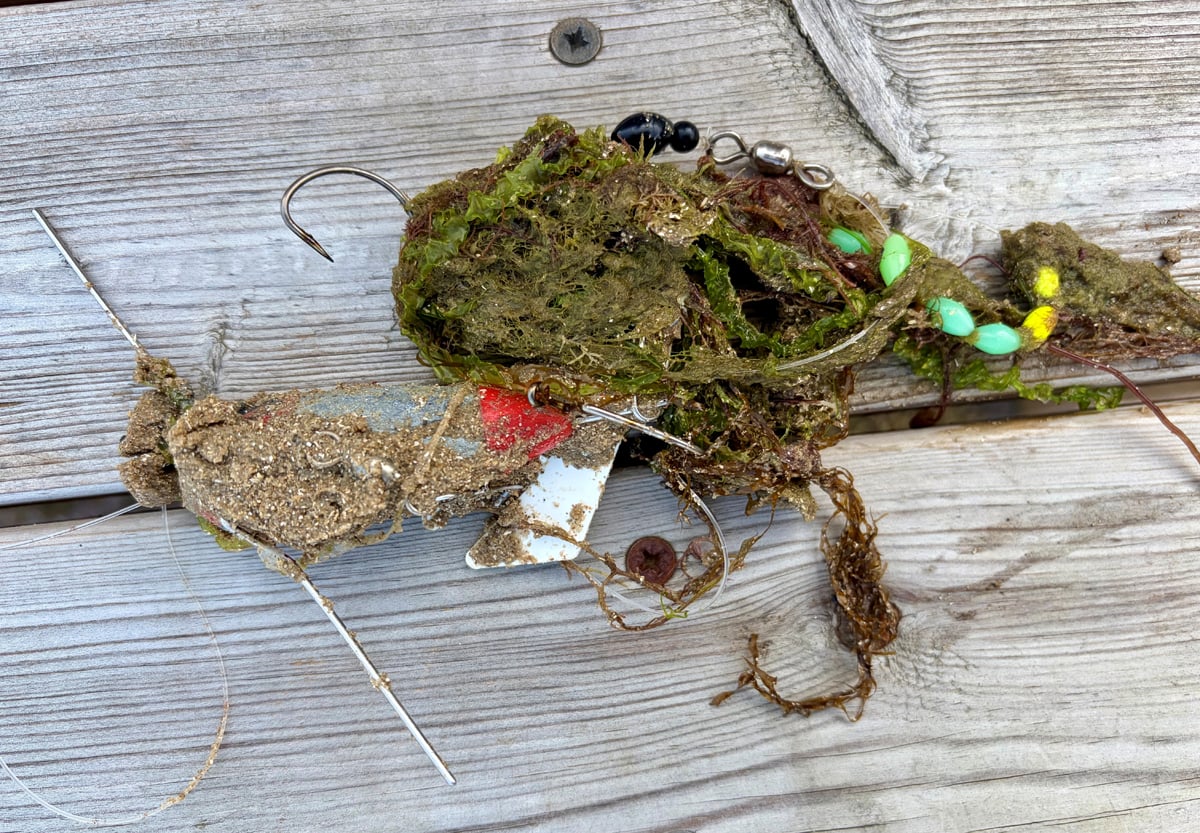
Residents and visitors are being reminded to dispose of fishing hooks, line and other tackle responsibly after a number of discarded items were recently found on beaches around the Island.
The reminder comes after a local dog required emergency veterinary treatment when a fishing hook became lodged in its tongue during a walk at Fort Victoria Country Park, near Yarmouth.
The Isle of Wight’s beaches are enjoyed by a wide range of users, including anglers, families, dog walkers and visitors.


The Isle of Wight Council is keen to emphasise that the overwhelming majority of anglers act responsibly and take great care to protect the environment and other beach users.
However, even a single discarded hook or length of fishing line can pose a risk to people and animals.
Children playing in the sand, dog walkers, barefoot beachgoers and wildlife can be particularly vulnerable to injury from hooks, line and other discarded tackle.
Animal welfare organisations have warned that fishing litter can also cause serious harm to birds and other animals through entanglement or ingestion.
Natasha Dix, service director for waste, environment and planning, said:

“Fort Victoria is a fantastic place for people to enjoy the beach, whether they’re fishing, walking the dog, exploring the rockpools or spending time with family and friends.
“Most anglers are considerate and take their equipment and litter home with them, but unfortunately we’ve found a number of discarded hooks around the site recently.
“We’ve also seen first-hand the consequences when tackle is left behind, including a local dog needing emergency veterinary treatment after a hook became lodged in its tongue.
“A hook left in the sand or among the stones may be easy to miss, but it has the potential to seriously injure a child, pet or local wildlife.
“We’re simply asking everyone using our coastline to check their area before they leave and dispose of any tackle safely, so that our beaches remain safe and enjoyable for everyone.”
Beach visitors are encouraged to remain vigilant and safely report or dispose of any hazardous items they find where appropriate.
Simple actions such as collecting unwanted hooks, removing discarded fishing line and taking litter home can make a significant difference in protecting people, pets and wildlife while helping to keep the Island’s beaches clean and welcoming.
Councillor Karen Lucioni, chair of the council’s environment and community protection committee, added:
“Most anglers act responsibly and play an important role in helping us care for these special places.
“This reminder is not about blaming any one group, but about encouraging everyone to think about the impact that even a small item left behind can have.”











Persons leaving such items behind need to be fined and
BANNED from fishing on the island.
This has become a constant problem over the last year or so. Early 2025 our dog got a hook through her cheek. The second one in a year. We had to take her to Wight Vets and she stoically let them operate on her cheek because it was a barbed hook. She was brave. If a fisherman had it through their cheek I suspect they would have been upset about it. It cost £150 due to some idiot fisherpersons thoughtlessness. If they are licensed the license should be increased to ensure they pay for the privilege of fishing from the beautiful coast of the Isle of WIght
So far this year we have found two bunches of line with hooks on discarded on the public footpath from the bottom of Westhill to the Warner Hotel. On top of the this there is a constant stream of waste. With everything from emtpy and half full plastic bottles, Empty fishing bait plastic bags, paper, cans, and other waste.
It is about time these fisherpeople are checked regularly on their set up and the waste that they should be taking home. If they leave waste they should be fined. It is disgraceful how cavalier they are, They do not think about the implications of the danger they are putting children and dogs in by leaving the line and hook waste that they do.
I apologise if this sounds like all fisherpeople do this, they don’t, some are careful and thoughtful, but the few who are not are spoiling it for the rest and I look at all fisherpeople as a risk to the lives of children and dog, plus the beauty of our coastline.
Please remember not just you use the coastal paths and coastline. Be responsible and thoughtful and dispose of the waste you create propely and safely. Take it home with you! It is a simple request and easy to do. Please do it.
Thanks.
As a dog owner, wildlife enthusiast, and many years a sea angler, I find this disturbing, and to leave line, hooks and bait discarded on the beach after your fishing session is totally unacceptable. However, most experienced fisherman would never intentionally leave these items discarded on the beach. To people automatically blaming fishermen, I would like to point out that our areas of coastline below high tide mark is often snaggy and weedy, therefore not uncommon for anglers to snag into a rock or heavy weed and then loose your end tackle through no fault of your own. This lost tackle cannot be retrieved, unless your a diver!. The lost hooks and line could stay in the sea for days, weeks or even months, and subsequently break free during strong spring tides and then end up being washed up along the coastline, sometimes miles away on another section of coastline. However, this may not have been the case at fort Vic as there is a sea wall and grass areas, so maybe no excuses in this case. I hope the dog involved is recovering well and ask for owners to be vigilant when walking their dog on the beach as there are also other hazards to look out for.
Any place of natural beauty is tainted by people who like being out on the beach or in the countryside but don’t feel any responsibility to leave it looking beautiful. Walking around the island you see picnic sites littered with cans, bottles, wrappers & empty packets as well as the inevitable bags of dog crap. Disappointing to say the least