


















































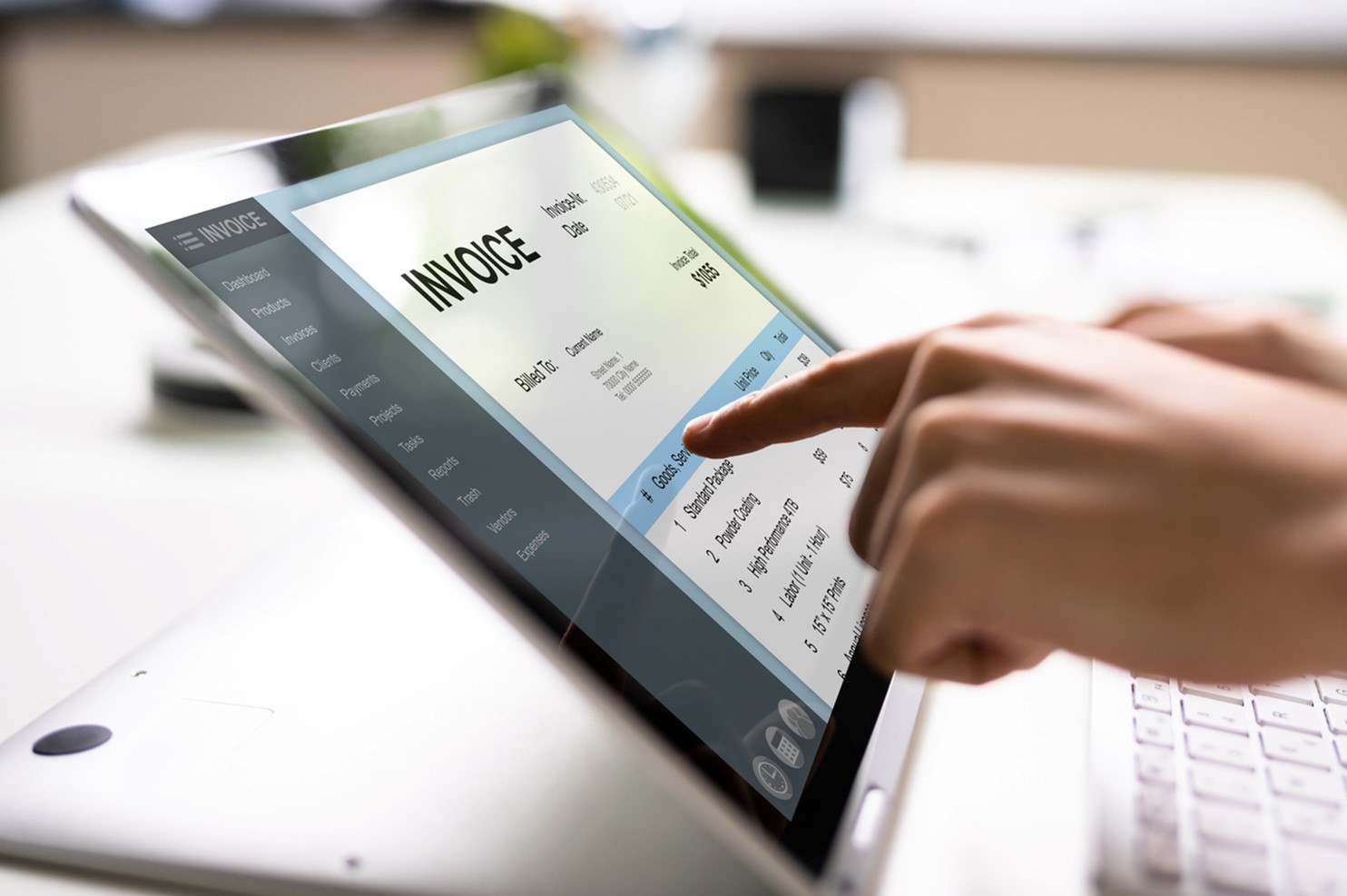

The humble invoice always has been, and always will be, an essential record in all modern economies. However, in recent years, it’s undergone a change in format – a rather radical one. While many businesses continue to use conventional invoicing formats – paper and ink, with lots of human pen-pushing or keyboard tapping to fill in the required fields – the proverbial writing for a new age of invoicing is, as it were, already on the wall.
In what follows, we’ll dive deeper into the rise of electronic invoicing, or e-invoicing – what it is, why it’s caught on, and why it will very shortly be the norm for most businesses.
So, just what is e-invoicing?


E-invoicing is a form of online account software. It is often provided on a subscription basis by expert third-party vendors who “rent out” their expensive and sophisticated products at a fraction of the cost of outright purchase to businesses, large and, especially, small. Legally exactly equivalent to conventional paper-and-ink invoices, they help companies make significant savings on costly resources, including human time, and are far less susceptible to the errors often associated with traditional alternatives.
In short, e-invoices are an example of “Electronic Data Interchange” or “EDI” software – digital technology covering the entire electronically-mediated exchange of data between a company and its clients, suppliers, business partners, HMRC, etc. In the case of invoices, the data fields are first converted into a format specified by a receiving business partner that is also compatible with that recipient’s system. The invoice can now be electronically transmitted to the recipient through a specific communication channel, at which point it gets transferred to the recipient’s system.
EDI also allows for the conversion and communication stages to be fully automated, combining data from different sources and in different formats into a unified file which is then converted and transferred.
Why is e-invoicing on the rise?
Because the technology is purchased by providers for “rental” via subscription, it isn’t prohibitively expensive, whether the firm in question is an independent optician on the Isle of Wight or a major fashion retailer in Kensington. Given that it also substantially eliminates error while facilitating savings on the costs of materials and human labour, as mentioned earlier, and it reliably reaches recipients in a timely manner, it’s a form of invoicing with significant appeal already built into it.
But an additional factor beyond inherent selling points like this is that invoicing requirements are increasingly being harmonised on a transnational level, such as between British companies and EU-based businesses. As accounting and professional services giant KPMG recently noted, the European Court of Human Rights has confirmed the principle of “substance over form” on multiple occasions. This means that a VAT invoice, for example, whatever the formal information it contains, must refer clearly to authentic transactions so that the relevant authorities can determine whether it is acceptable for VAT purposes. Accounting software solutions are uniquely capable of streamlining and executing this necessity.
But there’s another reason why e-invoicing is catching on. It’s to do with the onward march of digital technologies. As consumers and businesses embrace and familiarise themselves with these technologies, they tend to discover that they like the convenience, and the sheer simplicity of use, a lot. The result is that given the legislative harmonisation referred to above, more and more businesses are switching to electronic invoices to pare down administrative costs and the (often very boring) time burdens these tasks impose on human personnel in the absence of automated digital alternatives.
Why e-invoicing will be the norm for businesses in the near future
E-invoicing saves time and reduces administrative burdens. In addition, combined with new digital certification solutions, it also helps battle VAT fraud.
To quote from the KPMG report referred to earlier, “… with the accelerated digitisation of our society and business environment, e-invoicing will become more important and more transparency in economic transactions will be required.” The author (Jeroen Gobbin, Partner and Head of Indirect Tax at KPMG’s Belgian offices) believes that by 2025, e-invoicing will have become the accepted norm for business throughout Belgium.
In short, e-invoicing offers a most efficient and secure invoice solution for businesses of all sizes. Although specific hardware resources are required for the conversion stage of the EDI software, today, these are standard. And the bottom line is that if one’s competitors use accounting software of this kind, it’s not conducive to survival in the marketplace if one chooses to stick with conventional invoicing methods.
E-invoicing also grants its users superior visibility enabled by end-to-end tracking. This process extends to invoice validation, approvals and real-time payments while ensuring greater accuracy. No more erroneous duplicate payments or overpayments, in short.
What’s not to like?