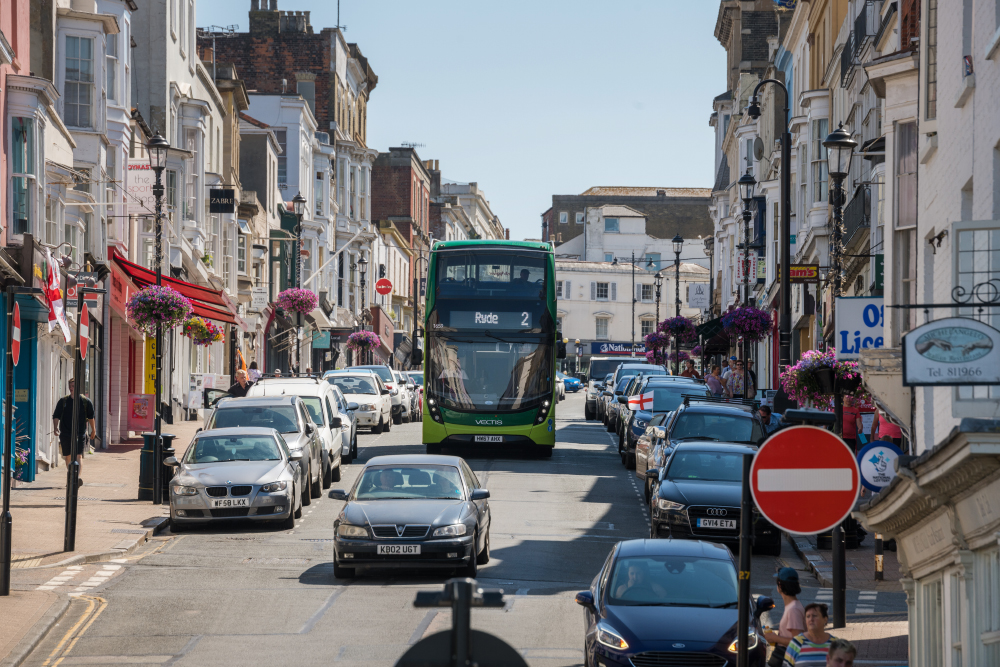



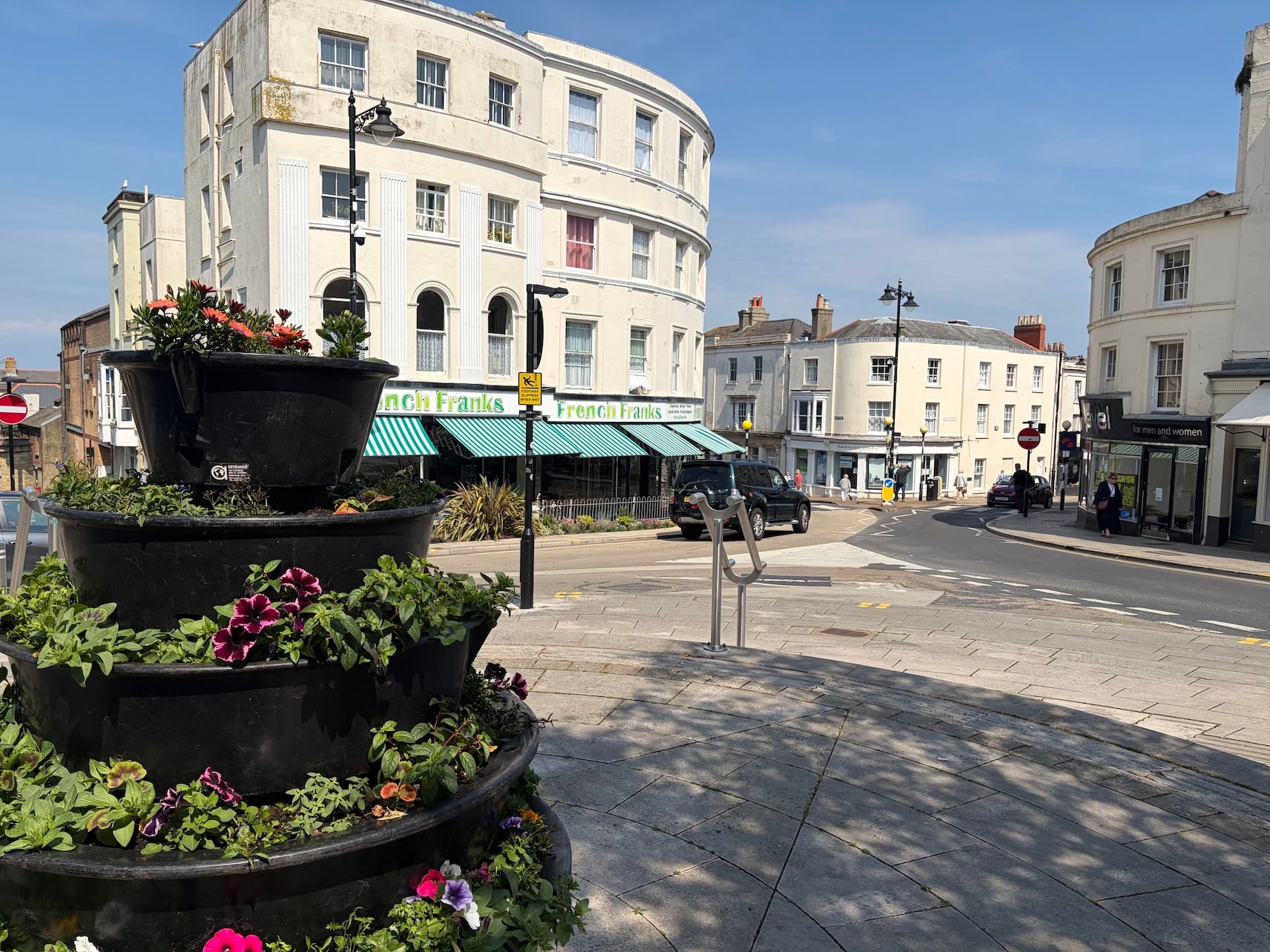























































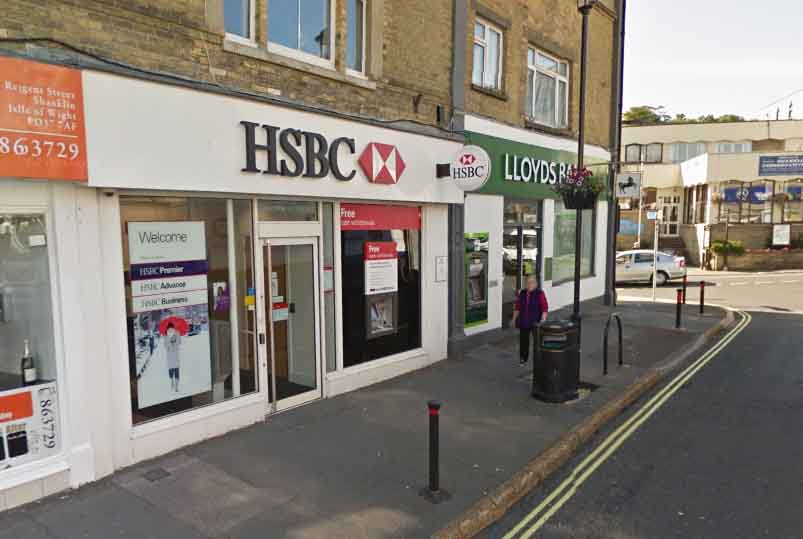

 UPDATED: HSBC have today (Monday) announced they are to close their branches in both Cowes and Shanklin next year.
The high street bank has written to all of their local customers to inform them that the Cowes and Shanklin branches will close on 13th January 2017, and advise them of local alternatives, as well as offering them 1-2-1 sessions to help explain their options or provide help in setting up mobile or internet banking.
A spokesperson for the company has said:


“We continually review our branch network to make sure our branches are in the right locations for our customers and we have a sustainable network for the future.
“Over the past five years, we have seen footfall reduce by an average of 40% at our regional branches and sometimes we have to make the difficult decision to close branches. These are not decisions we take lightly and we work closely with those impacted, including customers, to help them understand their options.
“With regard to the Cowes and Shanklin branches, we have advised our customers that there are alternative branches just a short drive away in Newport and Ryde, should customers wish to visit a branch and talk to a member of the HSBC team face-to-face”.
In addition to mobile and internet banking, HSBC have put in place a number of measures to help customers, including a partnership with the Post Office which has branches just a short walk from both the Cowes and Shanklin HSBC branches. The Cowes Post Office is open Monday to Saturday, 08:30-18:00 and the Shanklin Post Office opens every day from 07:00-23:00, so customers can still carry out their day-to-day banking.
HSBC say they will be working closely with customers in the coming weeks to ensure they are fully aware of all the measures in place to support them.

UPDATE @ 14:15 – Just hours after the announced closure of HSBC in Cowes and Shanklin, The Federation of Small Businesses (FSB) has said that they have found that high street banks in the UK are failing small businesses as their branch closure programmes continue to accelerate. In the last 25 years, the total size of the branch network has halved to just over 8,000 branches and is set to halve again in the next 10 years.
FSB’s new report, “Locked out: The impact of bank branch closures on small businesses” sets out the serious implications of this trend and finds that small business access to banking and productivity is already being damaged.
Neil Eames, FSB Development Manager, has said:
“The rapid pace of bank branch closures across the UK presents some very real and tough challenges for small businesses. FSB members highly value the face-to-face interaction they receive in-branch, particularly when making complex financial transactions, with staff who often have a greater understanding of their business and the local economy. In addition, many of our members deal heavily in cash and cheques and need access to over-the-counter banking facilities on a regular basis.
“Small businesses are keen to embrace the opportunities of the digital economy, however, barriers towards digital inclusion, such as unreliable broadband connectivity, and a lack of confidence in using digital services creates serious challenges. These are some of the reasons which explain why the protection of in-branch banking is so important for financial inclusion.
“We believe there is a sensible middle way. Our research highlights as good practice, those banks incorporating new technology in-branch, in order to both develop their digital offerings and better meet customer needs.”
The FSB’s report can be found at https://www.fsb.org.uk/docs/default-source/fsb-org-uk/fsb-bank-branch-closures-(final).pdf?sfvrsn=0.