












































Proposals to increase Floating Bridge fares and introduce a new charge for under-19s have been rejected by Isle of Wight councillors following a fierce campaign from communities on both sides of the River Medina.
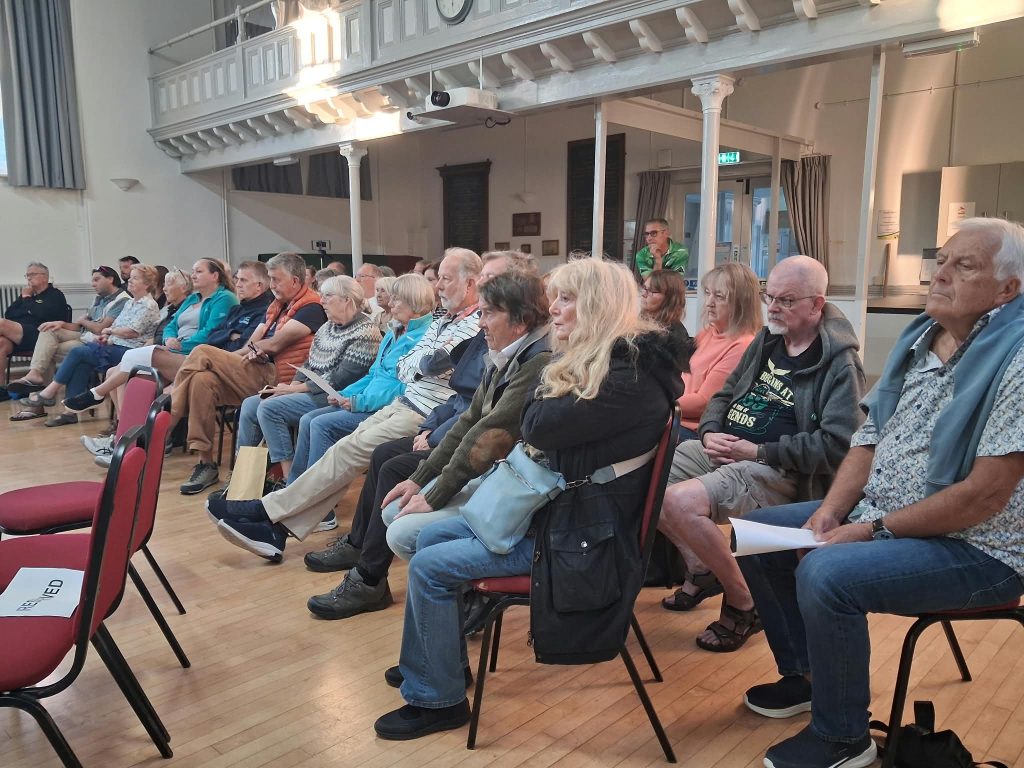
Councillors and residents rallied against the plans at a packed East Cowes Town Hall public meeting on Monday before the issue was debated at County Hall on Tuesday (6th October).
The proposals, contained in a council report signed by strategic director of community services Simon Moon, included raising passenger and vehicle ticket prices to align with the Dartmouth Lower Ferry.


A flat rate of £1 per crossing for under-19s between 19:00 and 07:00 was also recommended.
The Dartmouth Lower Ferry currently charges £2.50 for an adult single, £5 for an adult day return, £7.50 for a car or small van single and £14 for a car or small van day return.
Current Floating Bridge prices range from 50p to £1 for a foot passenger single and £2.50 to £3 for a car or small van.
Mr Moon’s report recommended that the measures be approved for referral to the policy, finance and resources committee as part of the Isle of Wight Council’s budget-setting process.
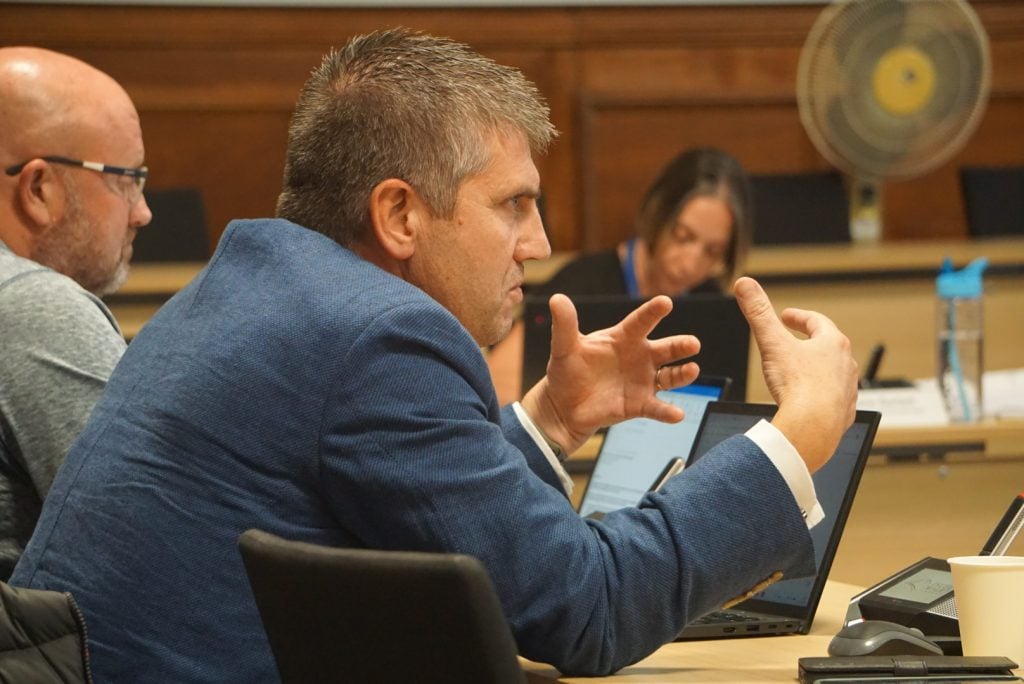
However, all members of the economy, regeneration, transport and infrastructure committee (ERTIC) voted against the proposals on Tuesday.
Independent East Cowes councillor Karl Love described the decision as a “win for common sense”.
Both Cowes and East Cowes town councils had already decided to oppose the proposals on Monday.
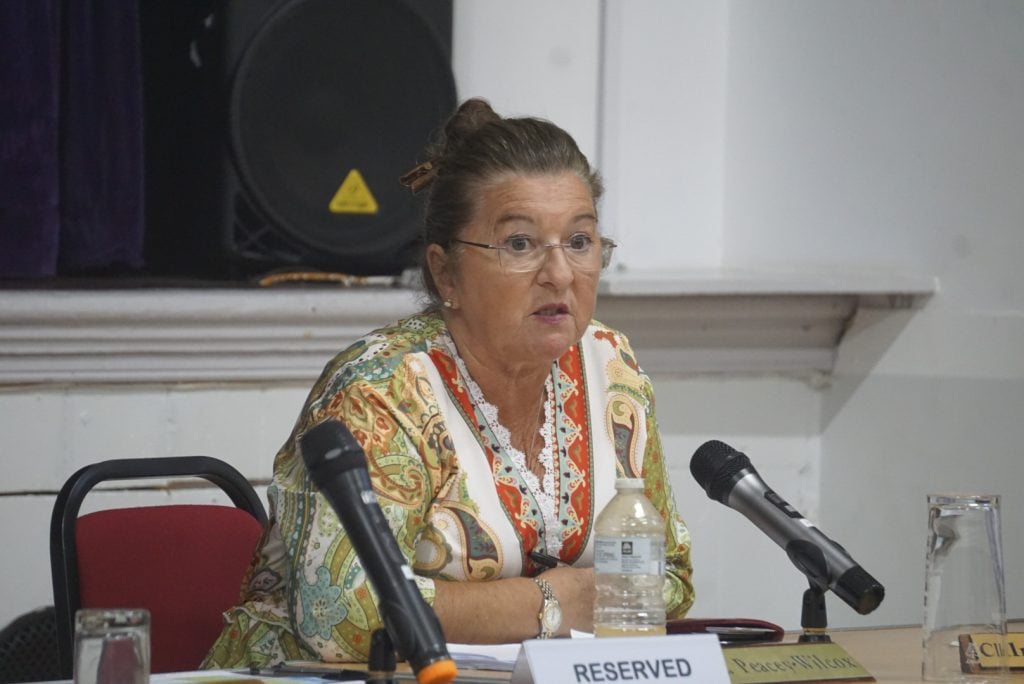
Speaking at the public meeting, Cllr Lora Peacey-Wilcox, leader of the Island First Network at County Hall and a Cowes town councillor, said:
“I believe this suggestion by staff at County Hall is spiteful, alarmist, damaging.
“I notice there’s no one here – senior staff or directors – that suggested it, that’s pretty poor. No one here to listen to our concerns.”
Concerns were also raised about the impact higher fares could have on some of the most vulnerable passengers using the service.
A Floating Bridge staff member said he had been shocked by how many passengers are “socially and economically vulnerable”.
He said:
“£1.50 or a pound, I’m talking almost exclusively for the foot passengers, is a lot of money.
“They are on the breadline – I know they are because I speak to hundreds of them every day.”
In the council chamber on Tuesday, Cllr Love, who also serves as East Cowes deputy mayor, described the proposed fare rises as “absolutely ludicrous”.
He said:
“The economic impact for this Island would be significant, on our employers.
“Don’t think about the Floating Bridge in terms of what it costs, think about it in terms of what it resources, in terms of hundreds of millions of pounds worth of jobs and industry and connectivity.”
Cllr Paul Williams, Reform UK councillor for Osborne ward, also raised concerns about charging younger passengers.
He said many of his residents use the Floating Bridge, including young people travelling to Cowes for sports clubs and other activities.
He added:
“They go across to Cowes and do the sports clubs and things like that over there and to charge them is wrong.”
Labour councillor for Cowes North, Jock Rafferty, warned that higher fares could also push more traffic onto roads around Newport.
He said:
“If you price people off the Floating Bridge, they don’t disappear – they drive around to Newport, find another way to travel or they simply stop making the journey.”
Cllr Nick Stuart, Liberal Democrat representative for Brighstone, Calbourne and Shalfleet, said work was continuing on proposals for a replacement ferry which could be “lighter and faster”, with a new report expected in January.
He said:
“If it is possible, and obviously there’s no certainty about that at the moment, to get a better ferry which does produce lower operation costs and a reasonable income, then it is likely that we may eventually be able to return with a new ferry to a position where that ferry brings money in for the council.”
Despite the committee’s rejection of the fare changes, Mr Moon’s report warned that the council’s “financial challenge” remains the single biggest risk to sustainable public services on the Isle of Wight.
It said the authority needed to “resolutely” maximise the use of its resources to generate additional income, funding and savings.
Speaking about savings proposals, including the Floating Bridge changes, Mr Moon referred to County Hall’s wider financial pressures.
He said:
“Given the financial pressures, the council being in receipt of Exceptional Financial Support (EFS) and the budget gap we’ve got to, everything has to be considered.
“Some of these issues will have been raised in the previous budget cycle earlier last year. Unfortunately, these issues will continue to have to keep coming back while we continue to carry such a budget deficit.
“As a consequence of being in receipt of EFS, there’s greater scrutiny on the authority…none of these are easy.”