








































































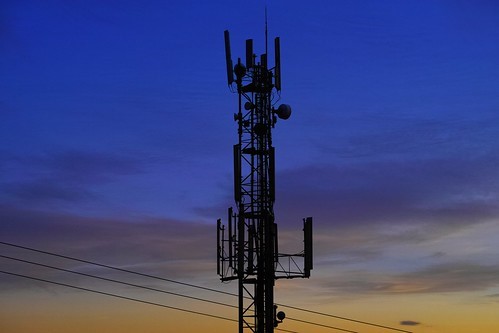
5G has recently come to Wight, far ahead of many locations on the mainland. Bringing immense promise with it, there is still a great deal of confusion surrounding what the technology is, and what it can accomplish. Taking a look at some real-world examples from work, video media, and online betting, we want to reveal some of the mystery, to see if 5G is right for you.
The Next Generation
The exact hardware specifications of 5G are complicated, but thankfully the technology can be summed up quite simply. The best way to think of 5G is as an upgrade to some limitations of 4G in terms of speed and connectivity. In fact, this is where the name 5G comes from; it is the fifth generation of mobile connectivity tech.
Compared to 4G, 5G offers increased bandwidth (download speed), lower latency (shorter response times per click), and a tenfold increase in maximum users per tower. It also comes with a major caveat, however, in that 5G’s range and building penetration is much poorer than 4G and even 3G systems.



Do You Need 5G to Play Casino Games?
To start with a conclusion, the answer to this question is usually no. To illustrate this, let’s look at a few common use-cases, focusing particularly on casino games – popular among many internet users not just in the Isle of Wight but all over the world.
When players browse the different casino websites in search of free spins or deposit bonuses, the content on such websites is likely to be rather extensive: it will contain reviews that detail everything from the selection of games available at each platform to the level of customer service provided. Still, text does not require vast amounts of loading time and so 5G is probably superfluous to requirements.
When it comes to playing the slots or table games accessed via the links at such sites, 4G will still be enough. The same applies to live-casino games, a more modern and bandwidth dependent form of casino gambling. So efficient are these websites, that even 3G connections would usually suffice.
The same applies to other commonly used internet features: YouTube is a standout for many mobile users, as a perfect place to check out something alone or share something with friends. Seeing as using this service requires a constant stream of video and audio, an outsider might expect it to be demanding on connections. This isn’t quite the case, however. Most YouTube viewers on mobile will watch at a resolution of 1080p or below. This requires between 3-9Mbps, well below the real-world 4G performance of up to 100Mbps. Even if you wanted to watch 4k video on YouTube, users would be unlikely to use over 51Mbps. In other words, in this case, 5G would be overkill.

Or, consider a more interactive illustration as seen with online casinos. With broad websites covering hundreds of games, the level of complexity backing up these systems can be much higher than what users can expect with straight video streams like YouTube. Again, they fall well within 4G possibilities. Moving on to work use, this is where we could see a major use for 5G. Here, 5G could theoretically serve an important purpose as a backup system in case the primary internet connection fails. For regular use though, wired connections would still be a much more reliable choice.
Is 5G Useless?
This might be the impression we’ve created, but it’s far from the case. Sure, for most average users 5G might not be useful now, but we also need to consider futureproofing and niche users. In the next decade, bandwidth requirements for some systems will continue to grow, which could make 5G a necessity. There are also possibilities tied to sharing connections like in a 5G mobile hotspot, which could see major benefits through a singular 5G base.
In simple terms, 5G is a sort of future-proofing. With this in place, we protect against limits which we could otherwise be scraping up against in the next few years. It might not be worth it to rush out and buy a 5G device now, as it won’t improve your online casino experience or your ability to stream videos. But as prices drop, and connection points expand, this technology could play an important part in the digital landscape, even if most of us won’t realise it.