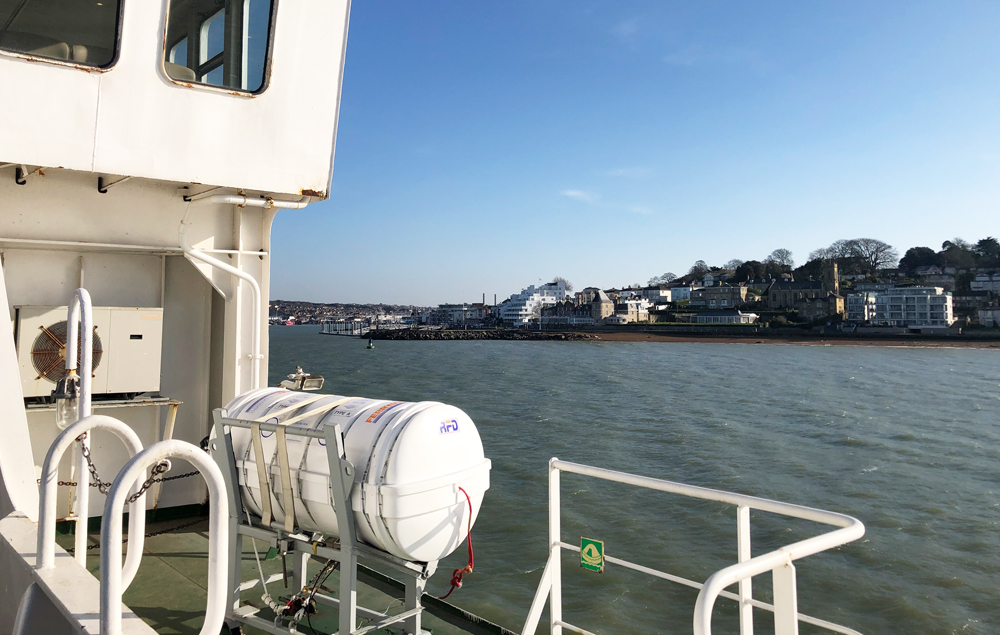










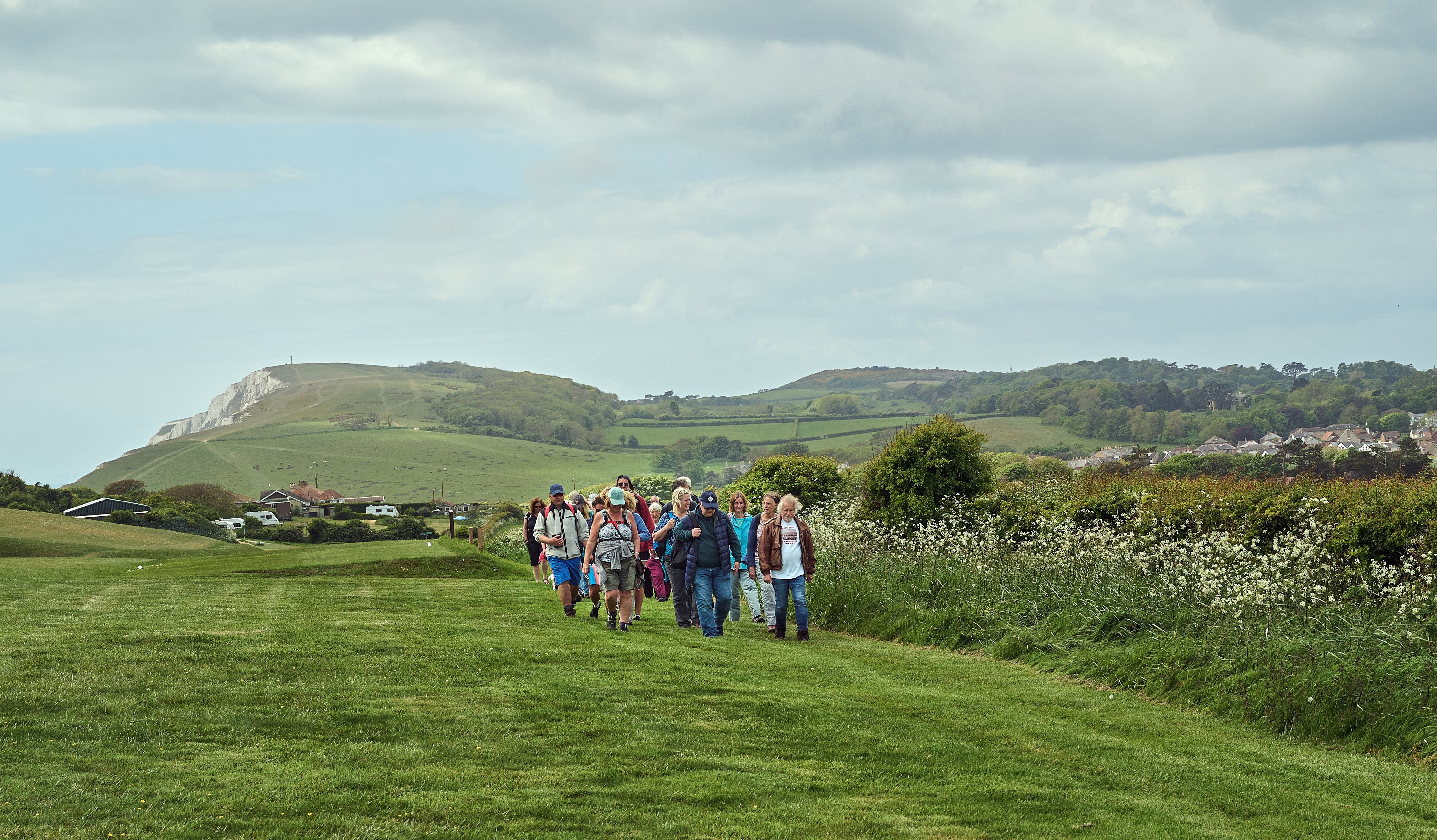


































Most people see the Needles as chalk stacks and a chairlift, forgetting that the clifftop right above them once use to be the host of rocket engines and a space programme.
Britain’s rocket test bench above the Needles
In the mid 50s, engineering firm Saunders-Roe signed a lease for High Down. The headland above the Needles got turned into a full rocket test facility – something we now mostly associate with the US. There was a time where we were more involved in space programmes, and some to think of it, less NIMBY about having them in our precious backyard.
It was a brutish and concrete platform that, as we often do in the UK, was built into the natural slope. It had blast chutes that vented burning engine exhaust through water, it would have been some spectacle to catch.


Britain’s Black Knight and then Black Arrow rockets were fired there, and done so repeatedly, though none of them ever actually launched from the site itself. Once proven though, they were shipped out to Woomera in South Australia for the real thing – far away, but perhaps more suitable.
The site ended up (sadly or not) closing down in 1971 after the government cancelled the UK’s independent satellite launch programme. It may have been wise for the sake of the local wildlife, though the reasons were mostly about post-war finances. Historic England’s own listing records it as one of the rare (surviving) examples of 1950s British rocket infrastructure, while the island gives a nod to it with Rocket Week at Needles New Battery. Newcomers and tourists are always slightly bewildered at first.
The satellite that’s still up there
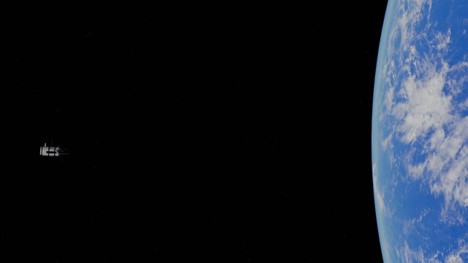
That cancelled programme did still manage one clean success, it must be said. On the 28th of October, 1971, a Black Arrow rocket lifted off from Woomera carrying Prospero, making Britain the sixth country to put a satellite into orbit on a rocket of its own design and build. We did it, albeit much more expensively than it can be done today.
Prospero’s mission and orbital behaviour were documented by the scientists who built it in a paper published in the Proceedings of the Royal Society. More than half a century later and it’s still circling the planet in a steep, near-polar orbit, passing over Britain a couple of times a day. It’s not expected to fall back to Earth until around 2070 – few, if any, who were there for the launch will experience both days.
The maths that keeps both honest
Tracking something like Prospero, or judging whether two objects in orbit might collide, relies on a lot of probability modelling. It’s a technique called the Monte Carlo method – it’s used by agencies like the European Space Agency for orbital conjunction analysis to track and predict Prospero’s trajectory. It’s named, fittingly, after the Monaco casino, because the physicists who invented it way back in the 1940s needed a code name for a randomness-based calculation and borrowed one from roulette. The same idea (running huge numbers of random trials) is exactly what sits behind the random number generators inside a modern online casino.

An unlikely pair
A cliff above the Needles and a screen in someone’s pocket don’t look like they belong in the same story. But both, in their own way, run on the same stubborn mathematics of chance — one keeping a fifty-year-old satellite honest in its orbit, the other keeping a game fair.