










































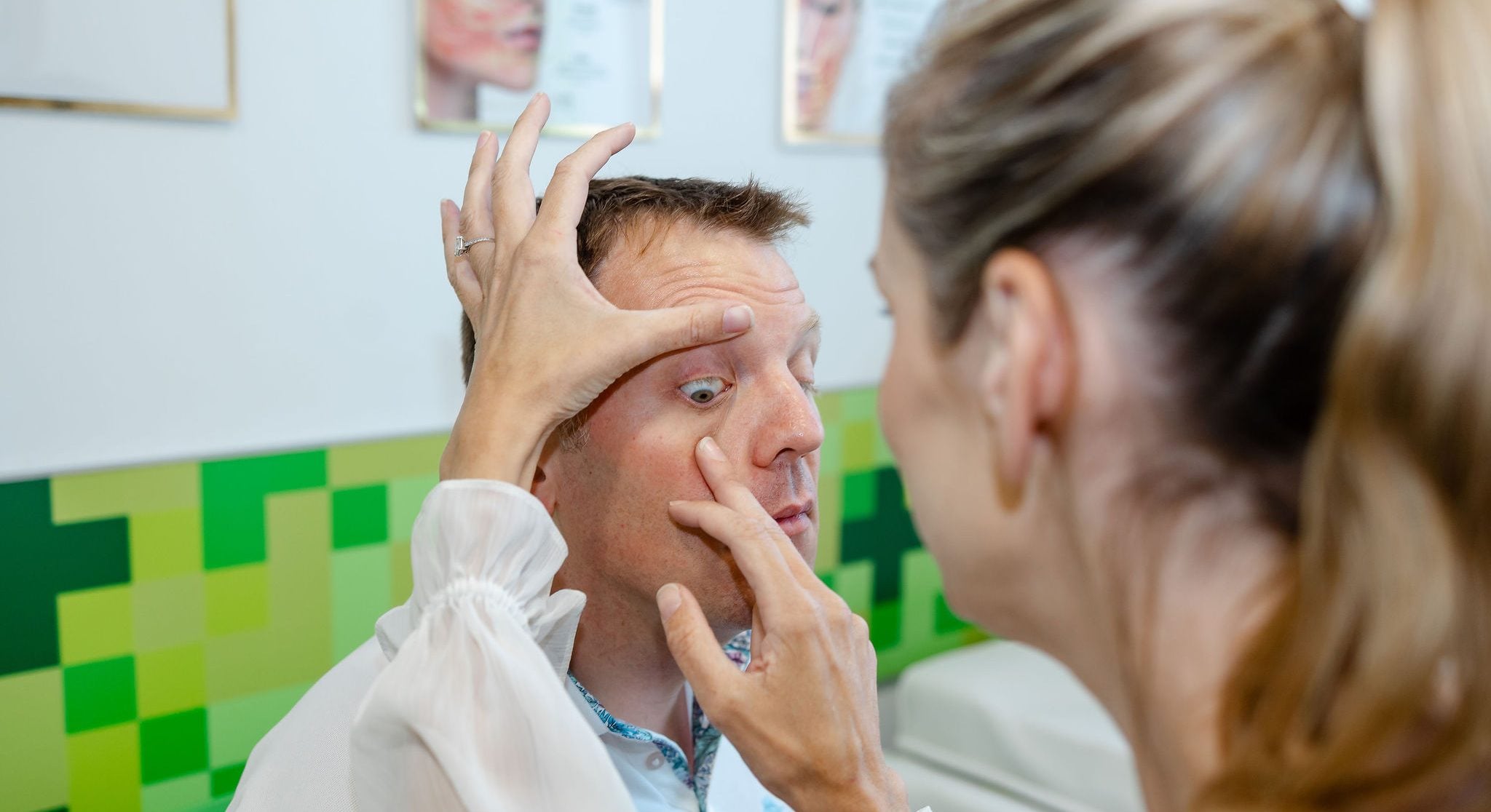

Islanders are being encouraged to visit their local pharmacy for advice and treatment for minor eye conditions as part of a new NHS campaign aimed at making healthcare more accessible.
The campaign, launched by NHS Hampshire and Isle of Wight, highlights the support available through community pharmacies for common eye problems such as dry or sore eyes, eye infections, allergies and eyelid lumps, bumps and irritation.
Pharmacists can assess symptoms, offer expert advice, recommend appropriate treatment or refer patients to specialist services if further care is required.


The initiative forms part of the NHS’s long-term ambition to deliver more healthcare within communities, reducing pressure on GP surgeries, urgent treatment centres and hospital emergency departments.
Neil Hardy, Chief Pharmacist for NHS Hampshire and Isle of Wight, has said:
“Our community pharmacies are already playing a vital role in helping thousands of people get quick and convenient care for minor illnesses and ailments closer to home. Expanding awareness of the eye support available in pharmacies is a natural next step in that journey.
“We know that when people develop a minor eye problem, they want expert help quickly and locally. Pharmacists are highly trained healthcare professionals who can assess symptoms, provide advice and suggest treatments where appropriate, and ensure patients are directed to the right service for their particular needs if they require additional care.
“This is about making healthcare simpler and more accessible for local people while strengthening neighbourhood health services. By helping patients receive the right care in the right place, we can improve their experience and make sure our GP practices, urgent treatment centres and emergency departments are available for those who need them most.”
Article continues below this advertisement
The campaign supports the Government’s 10-Year Health Plan for England, which aims to shift more healthcare from hospitals into communities, increase the use of digital technology and place a greater emphasis on preventing ill health.
Across Hampshire and the Isle of Wight, work is already underway to support these ambitions through a range of initiatives, including the development of one-stop local health centres and the introduction of ‘Dora’, an artificial intelligence telephone assistant designed to help reduce waiting times for cataract surgery.
Mr Hardy added:
“The vision for the NHS is clear – delivering more care in neighbourhoods and communities, and making it easier for people to access support without needing to attend hospital.
“The wide range of services now available in pharmacies, like blood pressure testing, vaccinations and support for minor illnesses, including eye conditions, demonstrates how we can use the skills of our wider healthcare workforce to give patients faster access to care, while supporting the long-term vision for the NHS.”
Residents experiencing a minor eye condition are encouraged to speak to their local pharmacy in the first instance.
However, contact lens wearers who experience eye problems or require help removing a contact lens are advised to contact the optician responsible for supplying and managing their lenses.
Anyone experiencing severe eye symptoms, including changes to or loss of vision, or an eye injury such as a scratch, impact or chemical splash, should seek urgent medical advice via NHS 111 or emergency services as appropriate.







but they can’t treat you if you have already been one of chosen few to get to see GP,and they charge the NHS £25 for every person seeking advice whether they can advise treatment or not,it’s not a free service just more drain on NHS and GPS not doing their jobs
With the continuing inaccessibility of GP appointments this is a logical solution.
The profitability of Pharmacies has been an issue for several years due to Government funding of the NHS Pharmacy contract being totally inadequate. Pharmacies are closing at an alarming rate. Any adequately funded additional services are to be welcomed to keep our local Pharmacies open.
They are vital to communities.
I had to go to Day Lewis Chemist, top of Newport High Street, small eye infection, to be told the pharmacist doesn’t ” do eyes” go to St Mary’s, went to SMH were although they treated me you feel that you are taking up their time when they could be with someone who really needs them.
What do GPs do these days? It is almost impossible to get an appointment to see one, they don’t do home visits, their work is farmed out to pharmacists, nurse practitioners and paramedics. What are they actually doing? I ask for information not as a criticism – I would genuinely like to know.