








































Up until the dawn of the 20th century, Islanders still kept seasonal customs that bound neighbour to neighbour through the turning of the year.
Across the Isle of Wight, long before the pressures and entertainments of modern life rewrote the festive calendar, the closing days of the year were marked by rituals. Some spoke of hope, some of luck, some simply of shared warmth at a time when warmth was precious.
Today, these customs survive mainly in archives and possibly in the memories of the oldest residents.


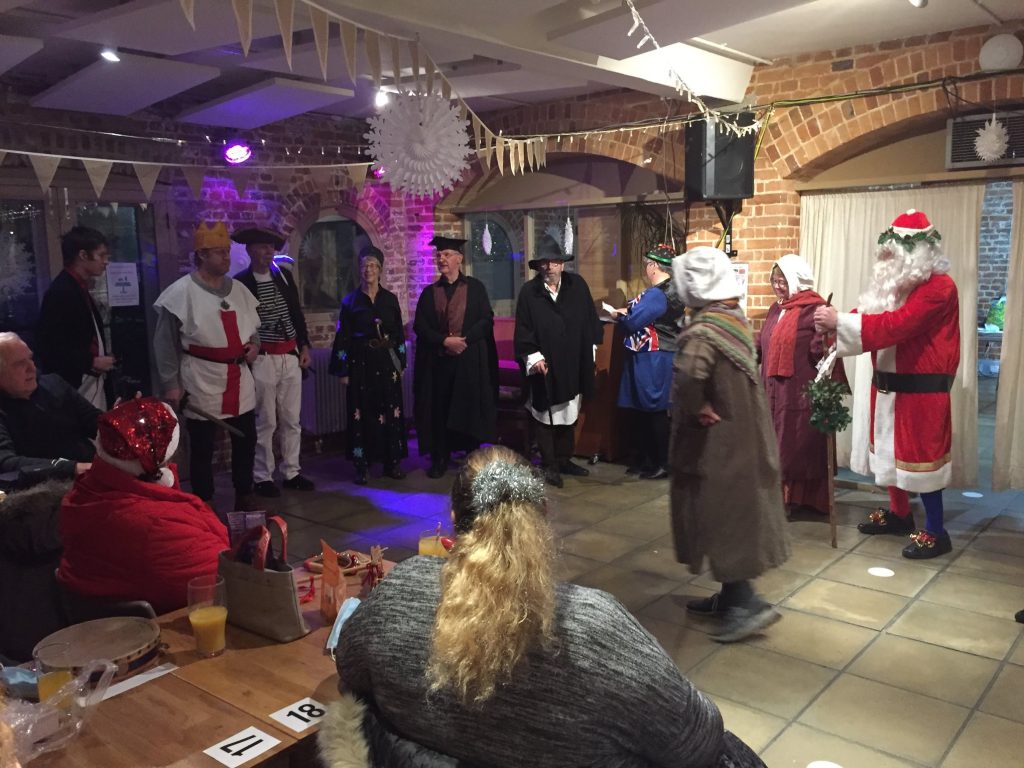
Foremost was the Mummers’ Play, known locally as the “Christmas Boys Play”. In the late 19th century and into the early years of the next, mummers visited or performed in villages as far apart as Calbourne, Brading, Brighstone, Chale, Freshwater, Kingston and Shorwell, St Helens, Seaview, Yarmouth and Bembridge. The versions recorded by William Henry Long in his 1886 dialect glossary give a vivid impression of how the island’s performances unfolded: part drama, part satire, part ritual.
In the island versions, the play often opened with a figure stepping forward in the unmistakeable cadences of local speech:
“Here comes I – old Father Crismus – come to see how ye be all this fine day.”
A neighbour might answer with mock irritation:
“And what business have ye knocking at our door when decent folk be settling for their supper?”
Article continues below this advertisement

To which the reply came:
“I be the Doctor, and I’ll heal what evil may befall – if ye’ll give me a drop o’ sommat to warm me inside!”
The drama that followed – a mock battle, an apparent death, and a miraculous resurrection — was entertainment, certainly, but also a gesture towards renewal at the darkest time of the year. When the Doctor struck his pose and pronounced the revival, villagers cheered, and coins, cakes or a dram of cider were pressed upon the performers. In return the mummers wished health and fortune upon the household, a wish that carried real weight in an age when illness, bad harvest or poor weather could undo a family’s prospects.
The last clearly recorded performance on the island took place in Bembridge in 1911. After that the tradition faded, pressed out by changing habits and the dislocation of war.
Another custom with firm roots on the island was wassailing. In town and village it often followed the form described elsewhere in England: a warm spiced drink shared from house to house, a toast to health, a wish for prosperity. But on the Isle of Wight the practice also carried a distinctive orchard character.
Accounts from Yarmouth and the western parishes describe groups gathering at Twelfth Night or in the first days of January to sing to the apple trees, pour cider at their roots and, on occasion, fire a pistol or shotgun into the branches to “wake the old tree” for the coming crop. Children were given roasted apples, adults shared the wassail bowl, and the evening closed with tea or a simple supper.
Domestic customs filled in the quieter spaces between performance and feast. Some households opened their doors at midnight and called greetings to the new year; in fishing communities this carried particular meaning, as men and women spoke their hope for safe voyages and calm seas into the night wind. Others exchanged small symbolic gifts — a piece of bread, a lump of coal, a pinch of salt — tokens meant to guarantee warmth, plenty and solidity through whatever the coming year might hold.
Between Christmas and New Year, small dances and gatherings also played their part. Schoolrooms and chapel halls became temporary social centres where families shared tea and cake and young people met to music played on fiddle, accordion or piano. Some villages held penny readings or local concerts; in others it was enough simply to gather, talk and keep the dark days bright.
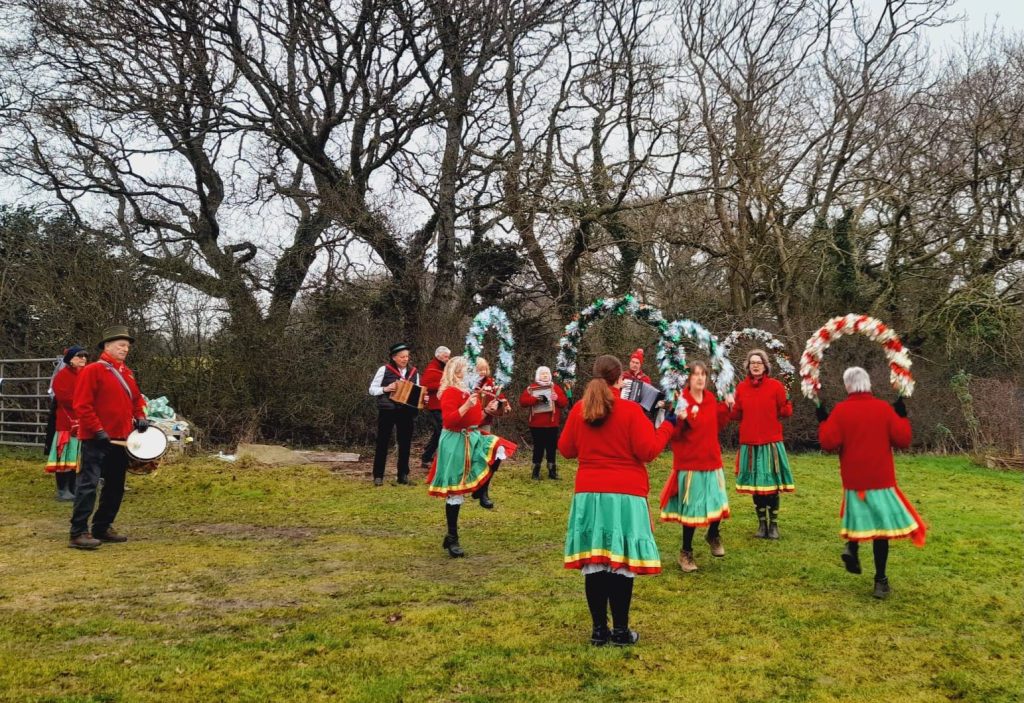
In recent decades, as interest in local heritage has grown, several community groups on the island have revived or reinterpreted these seasonal customs. Mummers’ Plays have been staged for schools and fêtes; wassail evenings have been organised in orchards; even the old Christmas Boys’ dialogue has been dusted off and adapted for modern audiences.
What has been lost is not merely a set of rituals but a way of feeling time. When winter depended on neighbourliness as much as celebration, when a knock at the door or a bowl of warm cider could be a promise of good fortune, the season carried a weight and warmth that no electric light can replace.














Great article, how times have changed.
Nowdays they get a new Tatt and Vape.
Lol
Happy New Year
A history to be proud of
Better people thosedays, how times have changed,
not for the better.
I remember we did the Mummer’s play when I was in the 6th form at Carisbrooke High in 1984.