

















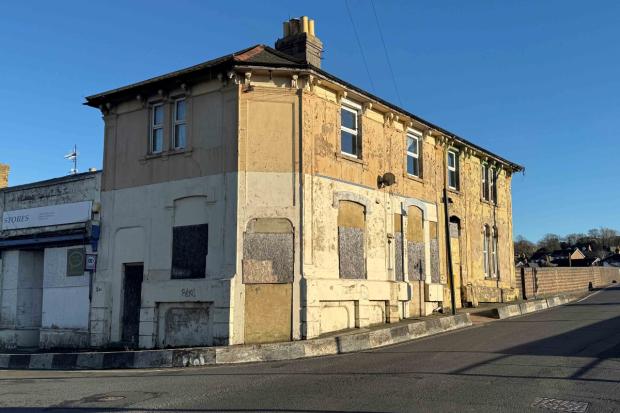





















The Fire Brigades Union is warning that the ‘slow and scrambled’ response to Saturday’s fire at the derelict Cygnet Hotel in Sandown shows how close the fire service is to being unable to keep the community safe.
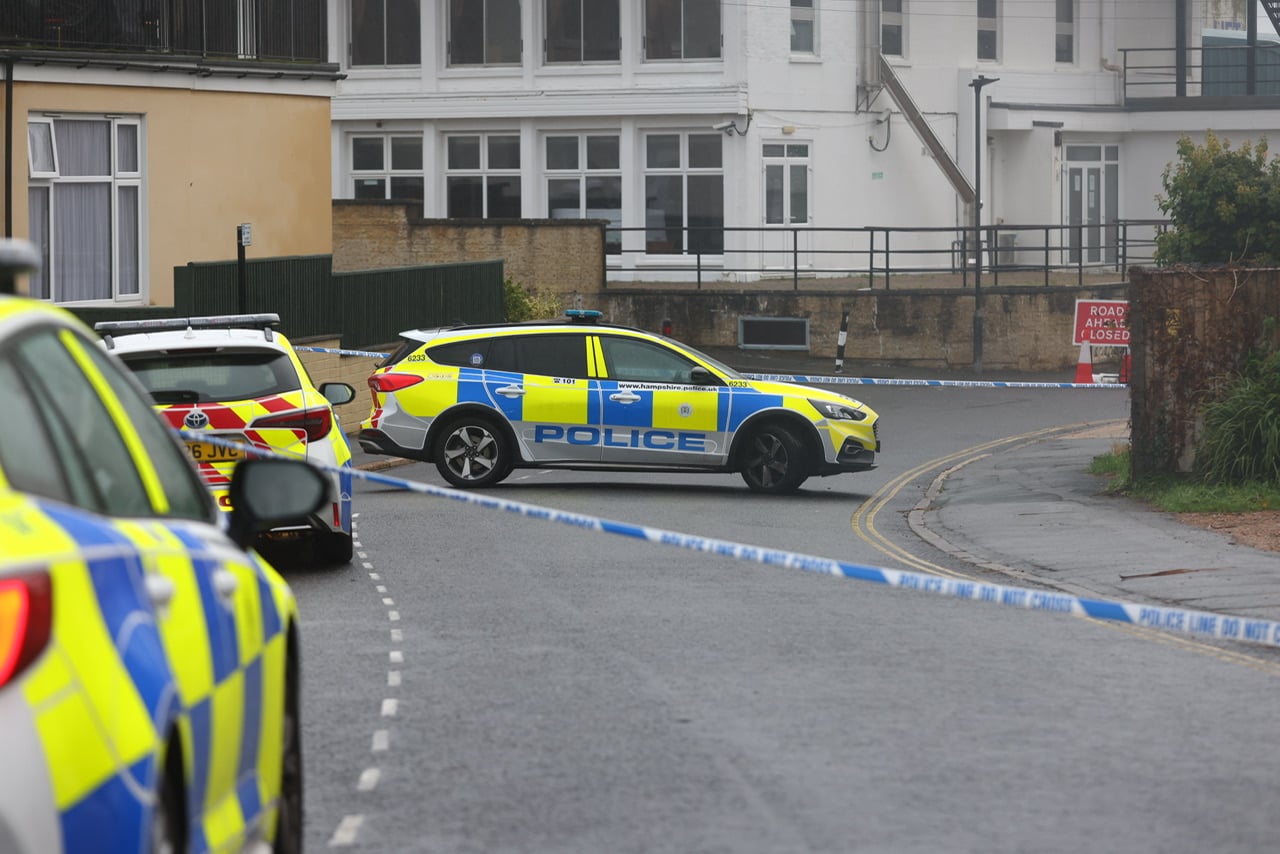
It was just gone 17:20 on Saturday evening that Hampshire & Isle of Wight Fire and Rescue Service mobilised to the former hotel when a blaze broke out, as first reported by Island Echo.

Although the hotel was derelict, it was treated as a ‘persons reported’ fire because it had been occupied by a homeless person. The fire has since been declared suspicious, with a 14-year-old boy arrested on suspicion of arson.
Despite the seriousness of the situation, the service was unable to initially send the right number of fire engines (3) due to the poor availability of appliances on the Island. Instead, it sent just 2, leaving only 2 fire engines available to cover the rest of the Isle of Wight.
The service was also unable to provide a second aerial ladder platform, again due to a lack of firefighters. When the second aerial did eventually respond, it was only possible because it called on retained firefighters and used oncoming nightshift firefighters on overtime to piece together a crew.

The deployment of both Ryde’s and Newport’s ALP will undoubtedly bring about political ramifications, as the decision was recently made to remove the Island’s second ALP to save money. Saturday’s blaze shows that there would have been a significant delay in getting a second ALP on scene if it had to come from the mainland.
According to the Fire Brigade Union (FBU), at 18:22, an hour after the original 999 call, fire officers made the decision to ‘make pumps 6’. However, these were not available on the Island, and fire engines had to cross the Solent from the mainland by ferry to respond.
Appliances from Waterlooville, Grayshott, Gosport, Horndean, Bishops Waltham and Droxford were all sent to the Isle of Wight, leaving the mainland short.
A Command Support Vehicle from Eastleigh arrived on scene some 2-and-a-half hours after the incident began. The Isle of Wight’s own Incident Command Unit was unable to respond.

Dave Hunt, FBU brigade secretary for Hampshire and Isle of Wight, has this week said:
“What we saw on Saturday was a scrapheap challenge approach to running a fire service – firefighters were forced to scrape together resources which should be on hand day and night.
“There are supposed to be 11 fire engines on the Isle of Wight – but due to cuts most of those sit empty. We are now facing yet more cuts to firefighter numbers. That will make things even worse.
“Residents on the Isle of Wight have a right to expect that if a fire happens, the right amount of help will come in the right amount of time. Clearly, they can’t count on that.
“This must be a wake-up call. These cuts must not be allowed to go ahead.”
Steve Wright, Fire Brigades Union general secretary, adds:
“Incidents like these are a damning indictment of the way that the fire and rescue service has been plunged into crisis by austerity. We have lost one in five firefighter jobs since 2010, and that is putting the lives of firefighters and members of the public at risk.
“Central government must step up and reverse these cuts. In the meantime, fire and rescue services like Hampshire and the Isle of Wight need to listen to firefighters and residents, and think again.”

Rob Cole, Assistant Chief Fire Officer at Hampshire and Isle of Wight Fire and Rescue Service, has responded by saying:
“On receiving the first 999 call, two fire engines and an Aerial Ladder Platform were mobilised to the incident immediately, with the first fire engine arriving at scene in 7 minutes 54 seconds. Five minutes after the initial call a third fire engine was mobilised as repeat calls were received within fire control.
“Once firefighters were on scene and had assessed the scale and nature of the incident, resources were increased to six fire engines alongside two water carriers and two aerial ladder platforms. An hour later information was passed to firefighters from another agency, who were not on scene, that there was a possible rough sleeper. As a precaution the incident was then treated as ‘persons reported’ and firefighters bravely entered the building to ensure that no one was inside. The property was empty, and no one was injured or required rescuing.
“All the resources needed to respond to the incident, bar one fire engine, came from Island stations.
“Moving fire engines to provide fire cover to an area where local resources are dealing with a large incident is standard practice for all fire services across the UK. This ensures the ability to respond should a second incident occur in the area. Therefore, we mobilised five fire engines from our mainland stations to provide fire cover, which is one of the benefits that has been realised since the two services combined in 2021.
“Our firefighters worked tirelessly overnight on Saturday 18 October to extinguish the fire at the Cygnet Hotel. We value the dedication of all of our firefighters who provide vital support to their local communities.
“We acknowledge the FBU’s concerns about government funding, as the cost of delivering our vital services has surpassed the funding we receive. We are collaborating with the National Fire Chiefs Council (NFCC) to advocate for increased funding from central government.”








Lucky the fire had not been at one of the larger hotels with guests inside or it would have been far worse. If the people who made the cuts had endured a total loss fire themselves, they would never have done it. Cuts are totally wreckless.
This is not good enough and certainly not the response we expect as council tax payers here on the island.
While unions default to crying wolf at every attempt to save money on this occasion the island cannot be considered in isolation like other stations on the mainland, we are a unique case, if there is more than a gentle breeze blowing across the solent the chances of a ferry leaving port are severly limited. therefore the resources to adequately cover the island must be maintained,
So are you saying that the union is not crying wolf on this occasion or that they always cry wolf and the response was their fault? I don’t understand having a poke at the unions for asking for a return to previous levels while asking for the same thing yourself.
Could you recast your comment in intellible language? The issue seems to be that there is insufficient resource on the Island and that the rammifications of bringing fire appliances across from the mainland make it unviable. The unions have made this point and I think we all know that the public agree. I can’t see why you are therefore having a pop at the unions. This should not be an issue driven by money – lives are at stake and it is obvious that in the event of a major fire time is critical.
I think we all know the probable chain of events that will push the government to return us to previous levels of fire cover. A tourist hotel will have a fire that, god forbid, takes hold and runs out of control. The Fire brigade will respond within minutes and a call for 8 engines for people trapped will be met with blank looks and horror due to bad weather stopping the ferries and our remaining units on another call, or staff unavailable… It is all very well the current Assistant Chief praising the response and bringing 5 units over for cover, but he forgets, we are both isolated and insulated during bad weather, and he chooses to ignore the possibility that Ferries will not run, or are mid transit and an inevitable 90 minute delay would be a disaster. I just wish these folk would remove their heads from the derriere and do some joined up thinking for a change.
When devolution happens build a bridge or tunnel
better still extend Ryde pier by a few extra miles of
timber so when the need arises fire engines can
come directly to the island at speed.
Before some smart arse says I am always complaining
about speeding that is correct.
I am all for Emergency services travelling at speed, but
not numpties.