







































Islanders understand something that mainland buyers often take years to learn. Life on an island runs to its own rhythm: the ferry or flight timetable matters, the community is close, and the sea is never far from view. Perhaps that is why so many British buyers who fall for Ibiza already know the appeal of island living, whether they grew up on the Isle of Wight, holidayed in Cornwall or spent summers sailing the Solent.
Ibiza remains one of the most popular overseas destinations for UK property buyers. But the rules changed when Britain left the European Union, and in 2026 the picture is different from the one many people remember. Having helped buyers of 13 different nationalities purchase homes on the island, here is what British buyers need to know before they start browsing Ibiza homes for sale.
Why British Buyers Still Choose Ibiza
The UK remains one of the leading sources of demand on the island. According to Prestige Properties, foreign buyers accounted for more than 70 per cent of Ibiza property transactions in 2025, with purchasers from the United Kingdom among the most active alongside buyers from the Netherlands, France, Germany and the United States.


The attraction is easy to understand. Direct flights from London and several regional UK airports reach Ibiza in around two and a half hours. The island offers year-round sunshine, a strong international community, good international schools and a lifestyle that now extends well beyond the summer season. It also has a property market that has held its value: island-wide average asking prices rose from about €4,043 per square metre in 2017 to €7,043 in 2025, an increase of roughly 74 per cent, according to LET US Ibiza.
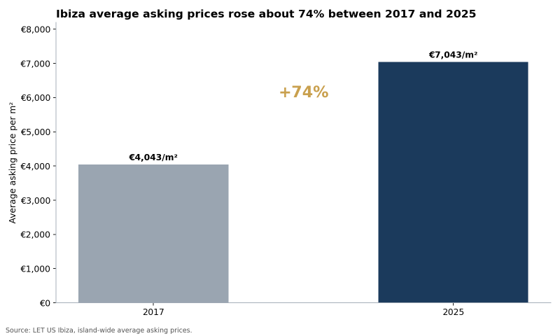
Table 1: The Ibiza property market at a glance
| Indicator | Figure |
|---|---|
| Average asking price, 2017 | €4,043 per m² |
| Average asking price, 2025 | €7,043 per m² |
| Average house price, 2026 (Engel & Völkers) | About €8,844 per m² |
| Prime villas, San José | €10,000 to €20,000 per m² |
| Typical island transaction | About €1.1 million |
| Foreign share of 2025 transactions | More than 70% |
What Changed for British Buyers After Brexit
British citizens can still buy property in Spain freely. There is no ban, no special permit and no restriction on the type of home you can own. What has changed is how long you can stay, how you are taxed, and which routes to residency remain open.
The 90/180-day rule
UK passport holders are now treated as third-country nationals. That means you can stay in Spain, and the wider Schengen Area, for up to 90 days in any rolling 180-day period. Owning a home in Ibiza does not extend that limit. Since April 2026, the EU’s Entry/Exit System records biometric data at the border, so overstays are now reliably detected.
Longer stays need a visa
Buyers who want to spend more time on the island usually look at the non-lucrative visa, which requires passive income of roughly €28,800 a year for the main applicant plus about €7,200 for each dependant, and does not allow paid work in Spain. Remote workers may qualify for the digital nomad visa instead. The property-linked golden visa closed to new applicants on 3 April 2025, so buying a home no longer provides a route to residency.

Higher tax on rental income
Since 1 January 2021, UK owners have paid non-resident income tax (IRNR) on Spanish rental income at 24 per cent, compared with 19 per cent for EU and EEA residents. Whether UK owners can deduct expenses against that income is still contested, so specialist advice is essential.
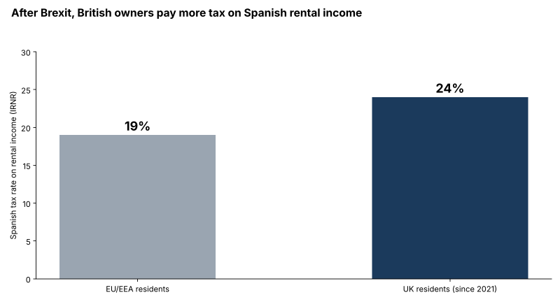
Table 2: Key post-Brexit rules for UK buyers in 2026
| Rule | What it means for British buyers |
|---|---|
| Right to buy | Unrestricted. UK citizens can buy any type of property in Spain |
| Length of stay | 90 days in any 180-day period without a visa |
| Border checks | Biometric Entry/Exit System live since April 2026 |
| Golden visa | Closed to new applicants since 3 April 2025 |
| Non-lucrative visa | Passive income of about €28,800 a year, plus about €7,200 per dependant |
| Rental income tax | 24% for UK residents, 19% for EU residents |
| Unrented home | Imputed income tax on 1.1% or 2% of cadastral value, taxed at 24% |
| Proposed non-EU purchase tax | Proposed in 2025, not passed, left out of January 2026 housing package |
The Proposed Tax on Non-EU Buyers
Many British buyers have asked about headlines from January 2025, when the Spanish government proposed a tax of up to 100 per cent of the purchase value for non-EU, non-resident buyers. Because the UK is now outside the EU, it would have applied to British purchasers. As of 2026, the proposal has not been passed, has not been debated in the Spanish Congress and was left out of the government’s January 2026 housing package. Purchases continue under the existing rules, but it remains sensible to ask your Spanish lawyer for an update before you commit.
Where British Buyers Look on the Island
Ibiza is small, roughly 45 kilometres from end to end, but each area has a distinct character and price level.
Table 3: Popular Ibiza areas for UK buyers
| Area | Character | Best suited to |
|---|---|---|
| Santa Eulària des Riu | Relaxed, family-friendly, lively all year | Families and long-stay owners |
| Ibiza Town and Talamanca | Marinas, restaurants, the old town of Dalt Vila | Buyers wanting town life and easy airport access |
| San José and the southwest | Sunset coast, beach clubs, premium villas | Buyers seeking views and luxury |
| San Antonio and the west | Sunsets, more accessible prices | First-time buyers on the island |
| San Carlos and the north | Countryside, fincas, peace and quiet | Buyers prioritising privacy and space |
In the southwest municipality of San José, high-quality villas commonly trade between €10,000 and €20,000 per square metre, while quieter northern countryside and the west generally offer more space for the money. Santa Eulària has become one of the island’s strongest-performing areas, supported by families and year-round residents.
What It Really Costs to Buy
The headline price is only the start. Purchase taxes in the Balearic Islands are among the highest in Spain. Resale homes pay Property Transfer Tax (ITP) on a sliding scale, from 8 per cent on the first €400,000 to 13 per cent on the portion above €2 million. New-build homes pay 10 per cent VAT plus stamp duty instead.
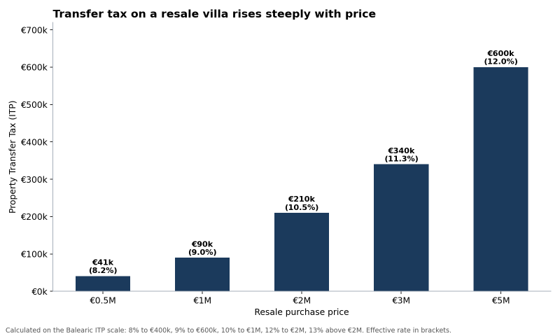
Table 4: Estimated purchase costs on a €1.5 million resale villa
| Cost item | Estimate |
|---|---|
| Purchase price | €1,500,000 |
| Property Transfer Tax (ITP), calculated on the Balearic scale | About €150,000 (10% effective) |
| Notary, land registry and legal fees (about 1% to 2%) | €15,000 to €30,000 |
| Estimated total acquisition cost | €1,665,000 to €1,680,000 |
Currency matters too. Your budget is set in pounds, but the price is in euros, so a movement in the exchange rate between offer and completion can add or remove thousands. Many British buyers use a specialist currency provider to fix a rate in advance. If you plan to borrow, Spanish lenders typically offer non-residents 60 to 70 per cent of the property’s value.
The Buying Process, Step by Step
Table 5: How a British buyer purchases in Ibiza
| Step | What happens |
|---|---|
| 1. Get an NIE | Obtain your foreigner identification number, needed for any purchase |
| 2. Open a Spanish bank account | Used for the purchase, taxes and utilities |
| 3. Appoint an independent lawyer | Checks title, debts, planning status and any rental licence |
| 4. Reserve and sign the private contract | Usually with a deposit of around 10% |
| 5. Complete at the notary | Pay the balance, sign the deed and take the keys |
| 6. Register and pay taxes | ITP or VAT paid and the deed registered at the Land Registry |
One check deserves special attention. Ibiza tightly regulates short-term holiday lets, and not every villa holds a tourist rental licence. If you hope to rent your home while you are back in the UK, confirm the licence before you make an offer. Homes that already have one often sell at a premium.
Working With a Local Agency
Many of the island’s best homes never appear on the big property portals. They are sold privately through agencies trusted by local owners. At CW Real Estate Ibiza, around 80 per cent of our buyers come from European countries, including the UK, Germany, the Netherlands and France, and we guide each client from the first viewing to the handover of the keys, covering negotiation, contracts, legal checks and financing.
For British buyers exploring luxury villas Ibiza has to offer, from restored fincas in the north to sea-view homes in the southwest, CW Real Estate Ibiza can arrange viewings in person or by video before you travel.
Frequently Asked Questions
Can British citizens still buy property in Ibiza after Brexit?
Yes. UK citizens can buy any type of property in Ibiza without restriction. Brexit changed how long you can stay and how you are taxed, not your right to buy.
How long can I stay in my Ibiza home each year?
Without a visa, British citizens can stay for up to 90 days in any rolling 180-day period across the Schengen Area. Longer stays require a visa, such as the non-lucrative visa.
Does buying a house in Ibiza give me residency?
No. Spain’s golden visa closed to new applicants on 3 April 2025, so a property purchase no longer leads to residency.
What taxes do British owners pay in Ibiza?
Resale purchases pay ITP of 8 to 13 per cent. Owners then pay non-resident income tax of 24 per cent on rental income, or imputed income tax if the home is not rented, plus local property tax (IBI).
Will Spain’s proposed 100% tax affect UK buyers?
The proposal would have applied to non-EU buyers, including the UK, but as of 2026 it has not been passed and was left out of the January 2026 housing package.
Can I rent out my Ibiza home when I am not there?
Only if the property holds a valid tourist rental licence. Licences are limited, so check before buying.
About the Author
Christian Wolf is the CEO, Founder and Owner of CW Real Estate Ibiza, a luxury real estate agency specialising in villas, fincas and off-market homes across Ibiza. He founded the business in 2010, moved its operations to Ibiza in 2014 and has lived on the island for more than twelve years. The agency completes around 30 exclusive villa sales a year and was recognised as Ibiza’s number one luxury villa and mansion agency in 2024 and 2025.
This article is general information only and does not constitute legal, tax or financial advice. Readers should take independent professional advice in both the UK and Spain before buying property abroad.