






















































Isle of Wight farmers hit by the financial pressures of this summer’s drought will be able to apply for emergency £2,000 grants from next week, with only up to 200 grants available across the South East.
RABI – the Farmers Charity – has launched a £2million Emergency Drought Grant campaign to provide direct financial support to farming households affected by prolonged dry conditions.
The Isle of Wight is included in the South East wave of the scheme, which opens for applications at 12:00 on Monday (21st September).


Up to £400,000 has been allocated to the region, enough to provide a maximum of 200 grants worth £2,000 each.
Applications are scheduled to close at 15:00 on Friday (25th September), although the window will shut earlier if all available funding is committed.
Farm owners and tenant farmers experiencing financial pressure linked to drought conditions are eligible to apply, provided their principal farming business is in an area officially designated as being in drought when applications open.
A maximum of one £2,000 grant is available per applicant, with the money paid directly to successful applicants.
Importantly, the grant is intended solely to help with personal and household living costs and cannot be used to cover farm or business running costs.

RABI says the funding is designed to ease immediate pressures on farming households rather than compensate farmers for business losses or additional operating costs caused by the drought.
The emergency support follows an exceptionally dry period which has caused problems for agriculture across England and Wales.

According to RABI, spring 2026 was the warmest on record for both England and Wales, while England received just 65% of its average rainfall.
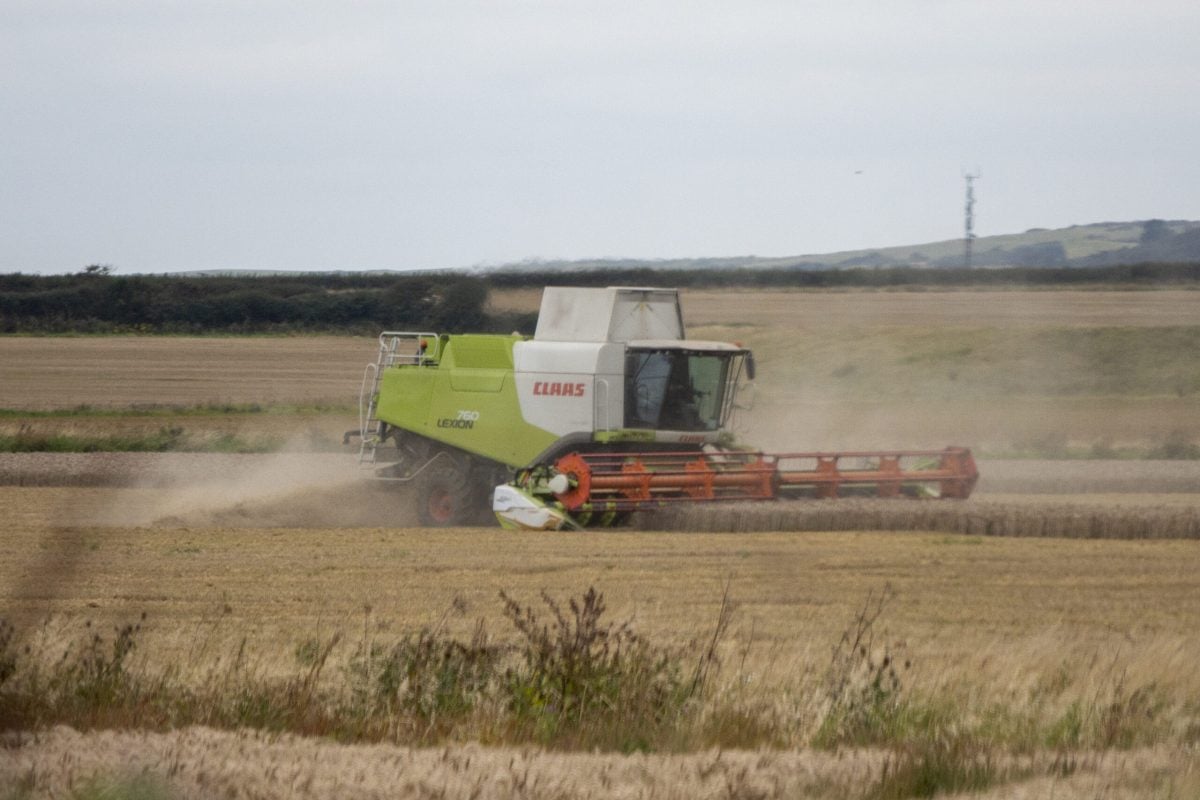
Prolonged dry weather throughout the summer has left farmers dealing with pressures including supporting livestock, restricted irrigation, earlier harvests and lower yields.
Here on the Isle of Wight, the Environment Agency placed the Island into the first stage of drought response on 10th July, as previously reported by Island Echo.
The ‘prolonged dry weather’ designation came amid growing pressure on the environment and demand for water, with river flows, groundwater levels and reservoirs affected by below-average rainfall.
A hosepipe ban also came into force on the Isle of Wight on the same day, with water levels in the River Test reported to be around 25% below what would normally be expected for that time of year.
It marked a dramatic turnaround from the beginning of 2026, when the Island experienced one of its wettest starts to a year on record.
Figures showed 176.1mm of rain fell in January – 245% of the monthly average of 71.9mm – while Southern Water said the equivalent of 6 months’ rainfall fell during January and February.
Despite that exceptionally wet start, conditions changed significantly as the year progressed and the Isle of Wight was officially declared to be in drought later in July.
RABI says the financial consequences of the dry spell can extend beyond the farm business itself and place additional pressure on farmers’ personal and household finances as autumn and winter approach.
Alicia Chivers, Chief Executive at RABI, has said:
“The prolonged dry conditions are having a significant impact on farming people and households across England and Wales, with many facing increased financial pressure as the effects of the drought continue.
“I am proud of RABI’s ability to respond at pace when farming people face challenges on this scale. Through this £2million commitment, the Emergency Drought Grant will provide direct financial help to ensure farming people can afford to pay for core living costs during a time of increased stress and financial pressure.
“The charity’s ability to respond at this scale is an important aspect of our work as the Farmers Charity.
“I would encourage eligible farming people to apply when the grant opens in their area and to remember that RABI’s wider support services are available to our farming community whenever needed.”
The £2million fund is being released through 5 regional waves, with up to £400,000 and 200 grants available in each region.
The South East – including the Isle of Wight – will be next to open on Monday (21st September).
Eligible Isle of Wight farmers wishing to secure support will therefore have a 5-day application window at most, with the possibility of applications closing sooner if the South East’s £400,000 allocation is fully committed.
Further information about the Emergency Drought Grant and how to apply can be found at www.rabi.org.uk/drought-support/.