
































































Playing cards have carried kings and queens for centuries, but the people pictured on them have a complicated history. French card makers gave their royal figures names, artists changed their appearance, and politicians even tried replacing them. The standard deck still has stories to tell as to where those characters came from.
Everyone knows the King of Hearts. You have probably held him hundreds of times, whether playing poker or blackjack, or simply dealing cards at home. But who is the bloke in the picture? Is he an actual king, and do the other kings and queens represent real people? The answer gets surprisingly complicated once you start looking at where playing cards came from.
The Kings and Queens Aren’t Quite Who You Think
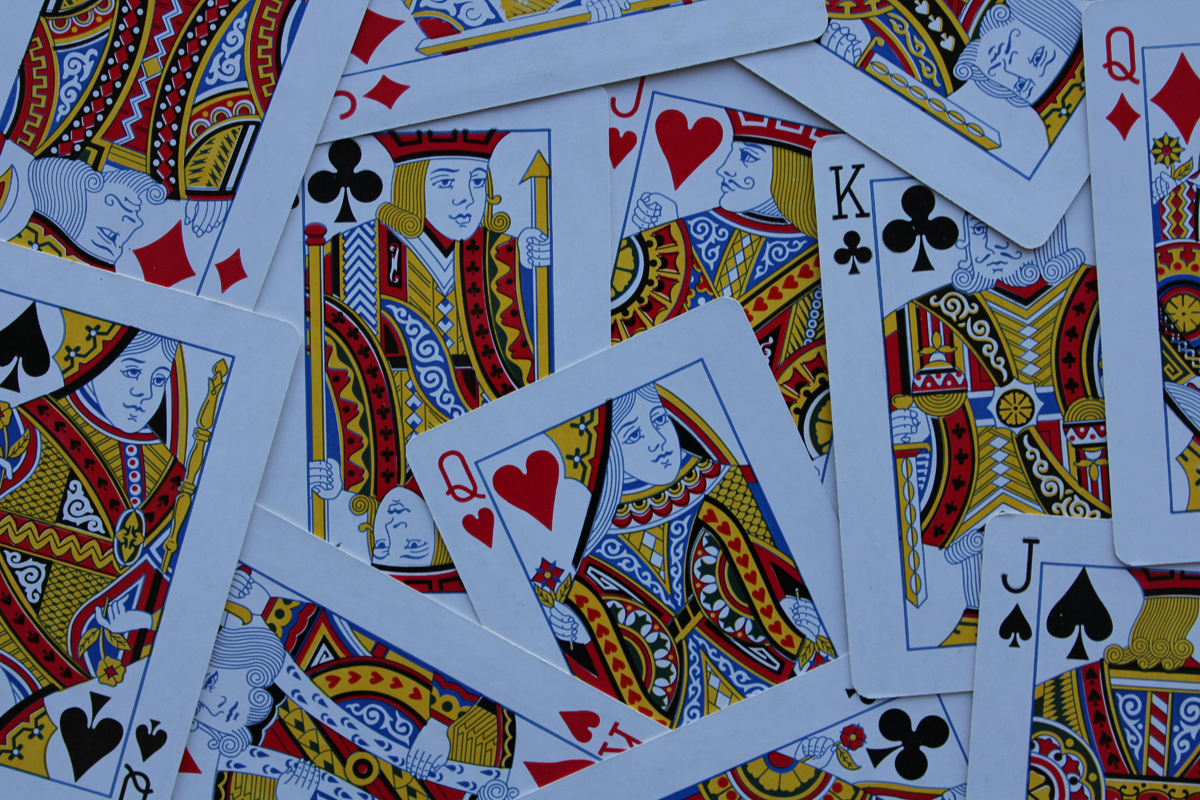
The court cards used across Britain and New Zealand do not officially represent particular historical people. The King of Hearts is therefore not definitely Charlemagne, despite that claim turning up regularly in books and online trivia. The same applies to the other kings and queens.


The confusion comes partly from France, where court cards were given names. Those names became attached to the characters themselves, even though playing-card designs developed differently across Europe. What did survive was the basic system of ranks and suits, which still lets you recognise a card almost instantly.
That becomes important whenever traditional card games move onto a screen. The Smokos online casino NZ catalogue includes table games and live-dealer play, where the cards still use the ranks and suit symbols inherited from the physical deck.
The screen may replace the card table, but the information has to work in much the same way. A player seeing the King of Hearts needs to recognise the card immediately; who the chap in the picture is supposed to represent is a much harder question.
Meet the French Royal Court
French card makers made things easier for anyone determined to put names to the faces. The Paris pattern assigned identities to its kings and queens, drawing its characters from history, classical mythology and the Bible.
| Suit | King | Queen |
| Hearts | Charles, traditionally identified as Charlemagne | Judith, the biblical heroine who killed the Assyrian general Holofernes |
| Spades | David, the biblical King of Israel | Pallas, another name for the Greek goddess Athena |
| Diamonds | Julius Caesar | Rachel, the biblical wife of Jacob |
| Clubs | Alexander the Great | Argine, whose identity remains uncertain |
That gives the King of Hearts his association with Charlemagne. The King of Spades became the biblical David, while Caesar took diamonds and Alexander took clubs. The queens included Judith and Pallas, with Rachel on diamonds.

Argine is the awkward one. Her name has generated competing explanations rather than a clean historical identity, which is a useful warning against treating the whole French court as a set of accurate royal portraits.
The title of queen itself has survived rather better than the identities behind the cards. The Latin regina means queen, and royal titles remain part of everyday British cultural language. The Isle of Wight has a direct connection through Queen Victoria, who died at Osborne House on 22 January 1901 after a reign lasting more than 63 years.
A 52-Card Deck Looked Very Different 550 Years Ago
A deck from the 15th century shows just how old the basic idea is. The Metropolitan Museum of Art dates the Cloisters Playing Cards to about 1475–1480 and describes them as the only known complete set of ordinary illuminated playing cards from that century.
There are 52 cards, divided into four suits. Each suit contains a king and queen, followed by a knave and ten numbered cards. That sounds remarkably close to a pack bought today until you reach the suit symbols.
There are no hearts or diamonds. The four suits use hunting horns and dog collars, with hound tethers and game nooses completing the pack. Each card measures about 13.2 by 7cm and was made from four layers of pasteboard, with gold and silver used in the decoration.
Modern table games at Smokos use the standard suits players recognise today, but the 52-card structure behind them was already in use roughly five and a half centuries ago.
The Odd Details Have Survived for Centuries
Looking closely at modern court cards produces another question: what on earth happened to these people? The King of Hearts appears to put a sword through his own head, other figures have missing hands, and several objects make little sense without their earlier designs.
Playing-card historian and Oxford philosopher Michael Dummett offered a useful warning about reading too much into those details. Writing in The New York Review of Books in 1981, he said: “Such a history forms an essential basis for any theory about their iconography.”
Several oddities make more sense once that history is considered:
- The King of Hearts once carried an axe, which later became a sword as the design was repeatedly copied.
- The King of Spades lost a hand during the development of the picture.
- The King of Clubs once held his object in a visible hand. Later versions left the object apparently floating.
- The Jack of Hearts carried a long weapon whose details became increasingly unclear in later copies.
The strange pictures were therefore produced by generations of card makers copying and altering earlier artwork. A missing hand does not need a secret meaning when a printing history provides a simpler answer.
Even Napoleon Couldn’t Redesign the Deck
Governments have tried changing the court as well. France provides one of the better examples because playing cards became caught up in the country’s political upheavals.
The French Revolution created an obvious problem for a deck covered in kings and queens. In 1793, Urbain Jaume and Jean-Démosthène Dugourc patented cards that replaced kings with “Geniuses” and queens with “Liberties”. Jacks became “Equalities”.
Napoleon’s government took another run at card design. The French Playing Cards project at MIT records that officials commissioned artist Jacques-Louis David to produce a uniform national design in 1808. His historically dressed kings and queens proved unpopular, and Nicolas-Marie Gatteaux produced a more traditional replacement in 1811.
Players knew what they expected a deck to look like. Historical accuracy was less useful when the redesigned cards interfered with an established visual system.
The Deck Became an Interface
Card design kept developing because players needed to read a hand quickly. Double-ended court cards became established in Britain during the 19th century, removing the need to turn a king or queen the right way up. Corner indices appeared shortly before 1870, allowing players to identify cards while holding them in a fan.
That also helped kill off the word “knave”. Using K for king and Kn for knave became clumsy once ranks appeared in the corners, whereas K, Q and J were easy to tell apart.
The same principle carries into browser-based card games at Smokos, where rank and suit still need to register immediately on screen. The physical card may be gone, but the basic design still does the same job.
The four kings and four queens in a British-style deck therefore have no confirmed historical identities. Names including Charles, David and Caesar come from the French tradition, while the pictures themselves changed through generations of copying.
A standard deck still has 52 cards across four suits, including four kings and four queens. Whoever the geezer on the King of Hearts was supposed to be, you still know exactly what card has landed on the table.
18+ only. Gambling involves financial risk and is intended as entertainment. Only gamble with money you can afford to lose.