














































Queen Victoria passed away at Osborne House, bringing to an end the longest reign in British history at that time, on this day 125 years ago.
Following a tradition she had kept throughout her widowhood, Queen Victoria spent the Christmas of 1900 at Osborne House, her retreat on the Isle of Wight. It was to be her final visit. By then, rheumatism had left her almost immobile, and cataracts clouded her eyesight. Through early January, she felt “weak and unwell”, and by mid-month she was described as “drowsy, dazed and confused”.
The corridors of Osborne fell silent as her condition worsened. Her son, the Prince of Wales – soon to become King Edward VII – came to her side, joined by her grandson Kaiser Wilhelm II of Germany and several of her daughters. In her last hours, her beloved Pomeranian, Turi, was laid on her bed at her request.


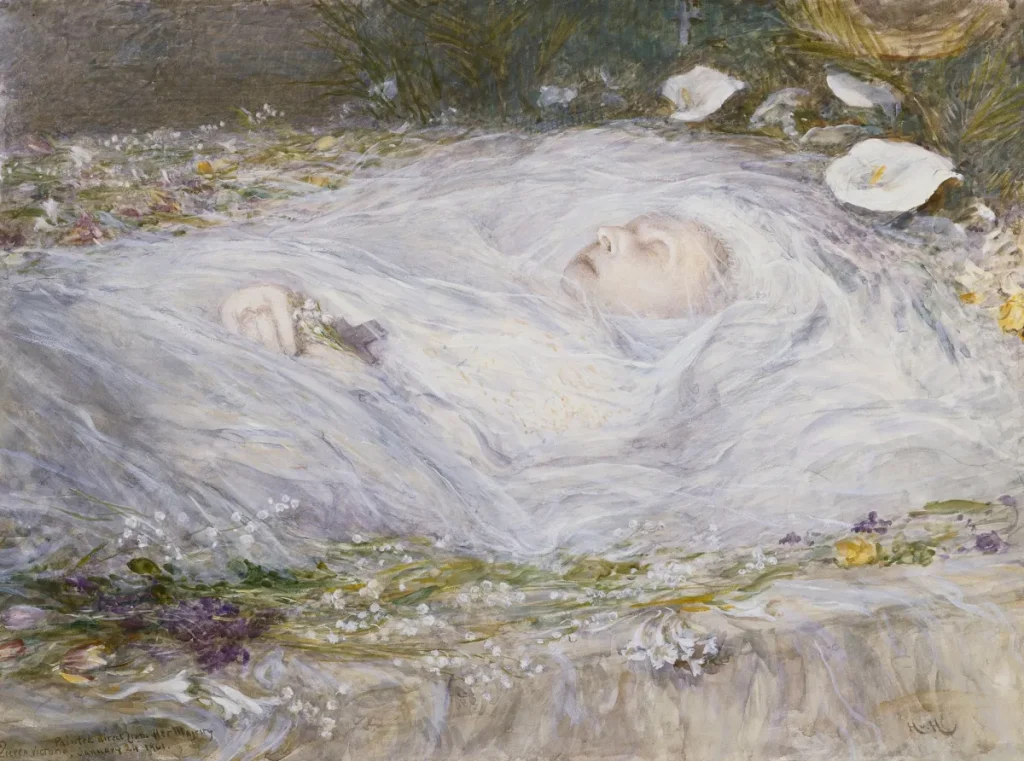
As the winter light faded over East Cowes on 22nd January 1901, the Queen’s breathing slowed. At precisely 18:30 she passed away peacefully, with her family at her bedside. Her son – the future King Edward VII – held her hand as her eyes closed for the final time. After more than 63 years on the throne, the Victorian age had ended in silence, in a room overlooking the Solent.
That evening, news of the Queen’s death spread quickly across the Isle of Wight. Telegraphs carried the announcement to London, and by nightfall it had reached the farthest corners of the Empire. Across Cowes, Newport, Ryde and Ventnor, flags were lowered to half-mast and church bells tolled into the cold night air. Islanders gathered in the streets, mourning the monarch who had made their shores her sanctuary.
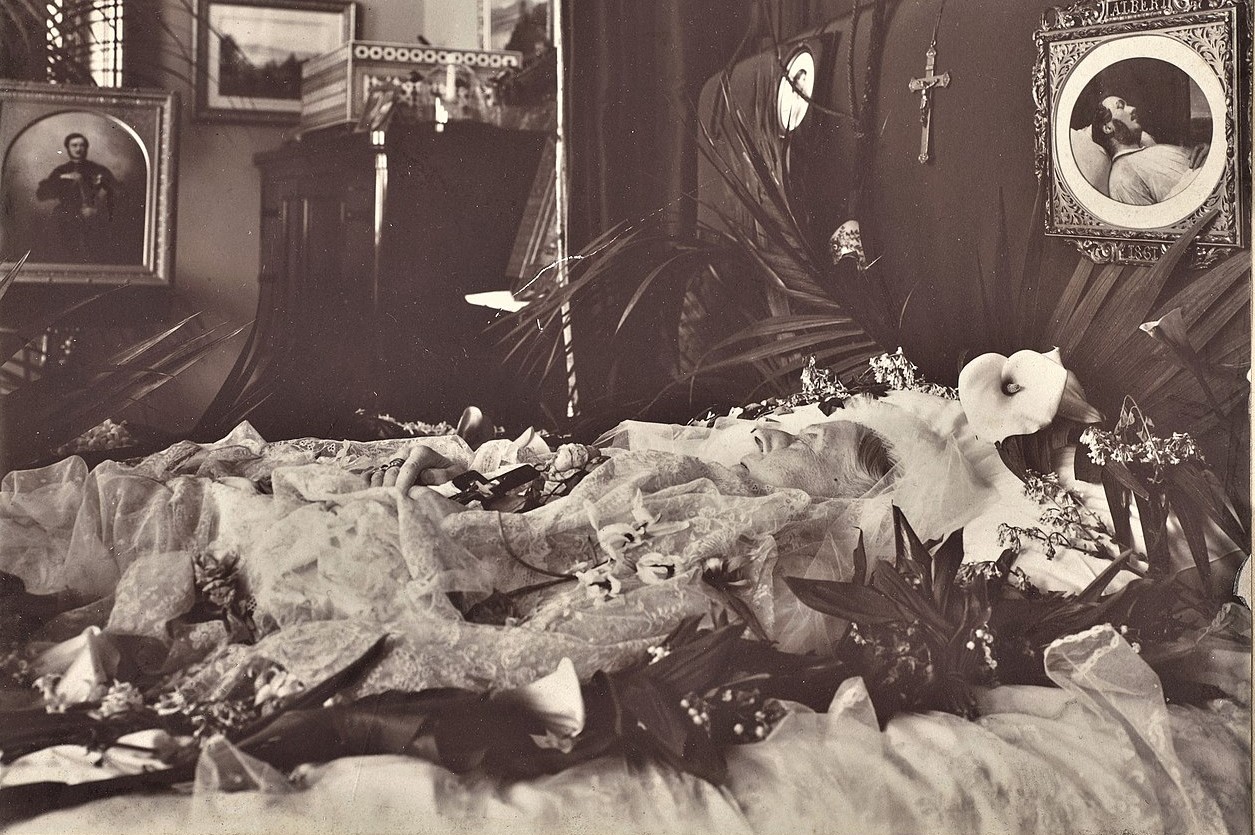
In 1897, Queen Victoria had written clear instructions for her funeral. It was to be military, befitting a soldier’s daughter and the head of the army, and it was to be white rather than black. She wished to be dressed in a white gown and her wedding veil, symbolising purity and reunion with Prince Albert.
On Friday 25th January, King Edward VII and Kaiser Wilhelm II helped place her body into the coffin. Around her were laid treasured keepsakes: one of Albert’s dressing gowns, a plaster cast of his hand, and a lock of his hair. Concealed beneath flowers in her left hand was a small picture of her loyal servant John Brown, along with a lock of his hair and the wedding ring of his mother – mementoes the Queen had kept close for years.

The coffin rested in the dining room at Osborne House, draped with the Royal Standard and surrounded by white flowers. Members of the Royal household and long-serving staff paid their final respects in quiet procession.

1st February 1901 brought the Isle of Wight procession. From the early hours, crowds lined the route from Osborne House to East Cowes town centre. The sky was pale and still, the air cold and sharp. At 10:00, sailors from the Royal Navy carried the coffin down the grand staircase and placed it on a gun carriage. Behind walked the new King and Kaiser Wilhelm, heads bowed.
The procession moved slowly along York Avenue. Every window was draped in black, and every bell tolled. Islanders stood in silence as the cortège passed, the muffled drums and rhythmic tread of sailors echoing along the road.
At Trinity Pier, the Royal Yacht Alberta waited at anchor. As the coffin was carried aboard, a 15-gun salute thundered from the ships in Cowes Roads, answered by the guns of Portsmouth. The thunder rolled across the Solent, carrying the sound of farewell to every corner of our Island.
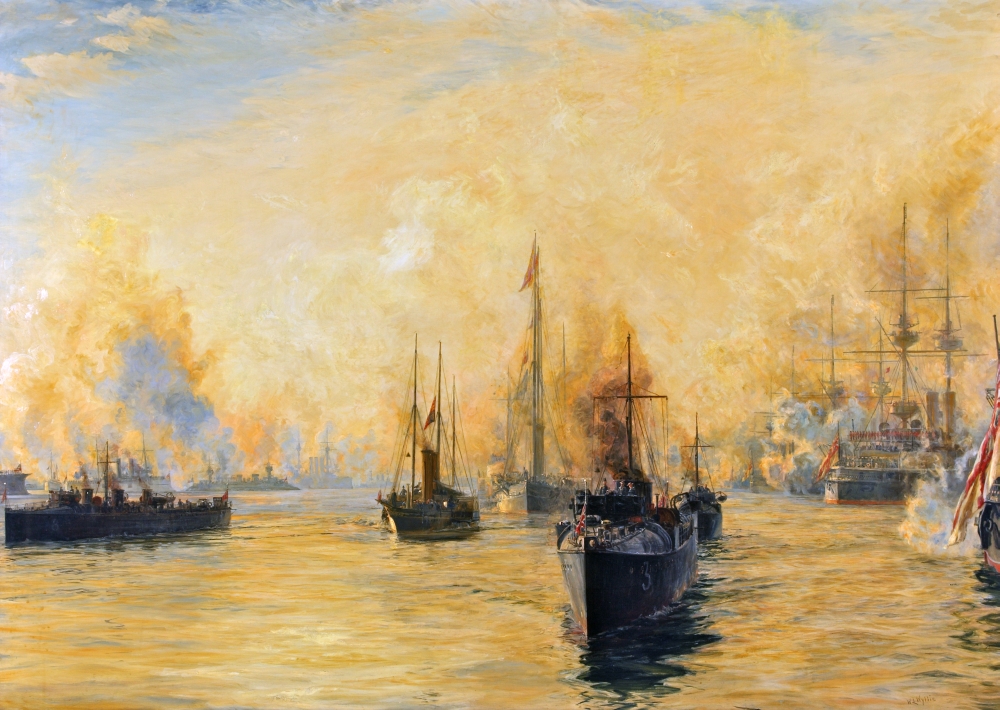
Shortly after midday, Alberta set sail for Gosport, escorted by a flotilla of warships. Thousands watched from the shoreline as the yacht disappeared into the mist, the coffin visible beneath its canopy of white flowers. It was the Queen’s final departure from the place she had called her “heaven on earth”.
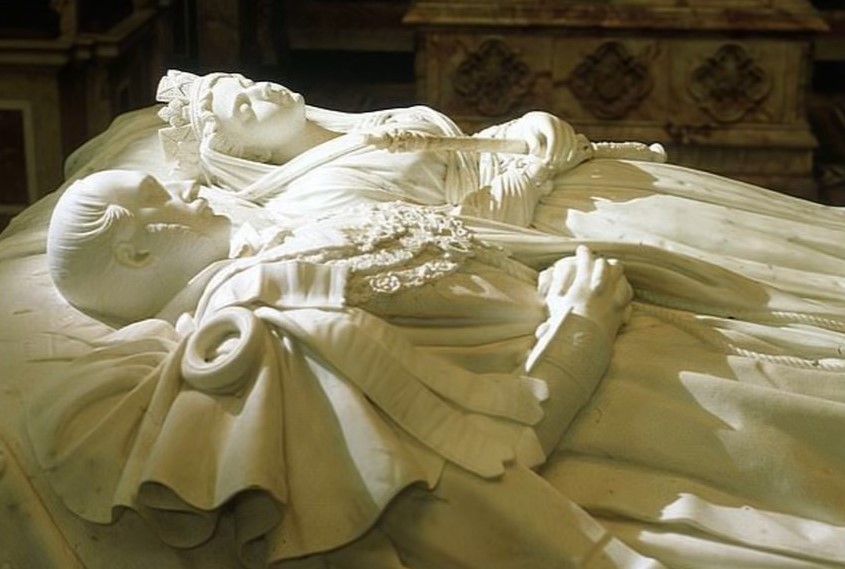
From Gosport, the coffin travelled by train to London and later to Windsor. On Saturday 2nd February 1901, following 2 days of lying-in-state, Queen Victoria was laid to rest beside Prince Albert in the Royal Mausoleum at Frogmore, within the grounds of Windsor Castle.
Her death marked the close of a remarkable chapter. Osborne House, once a private retreat, became a Royal memorial. When King Edward VII opened it to the public in 1904, visitors could still see the rooms as she had left them – the bed where she died, her writing desk, her view over the Solent.
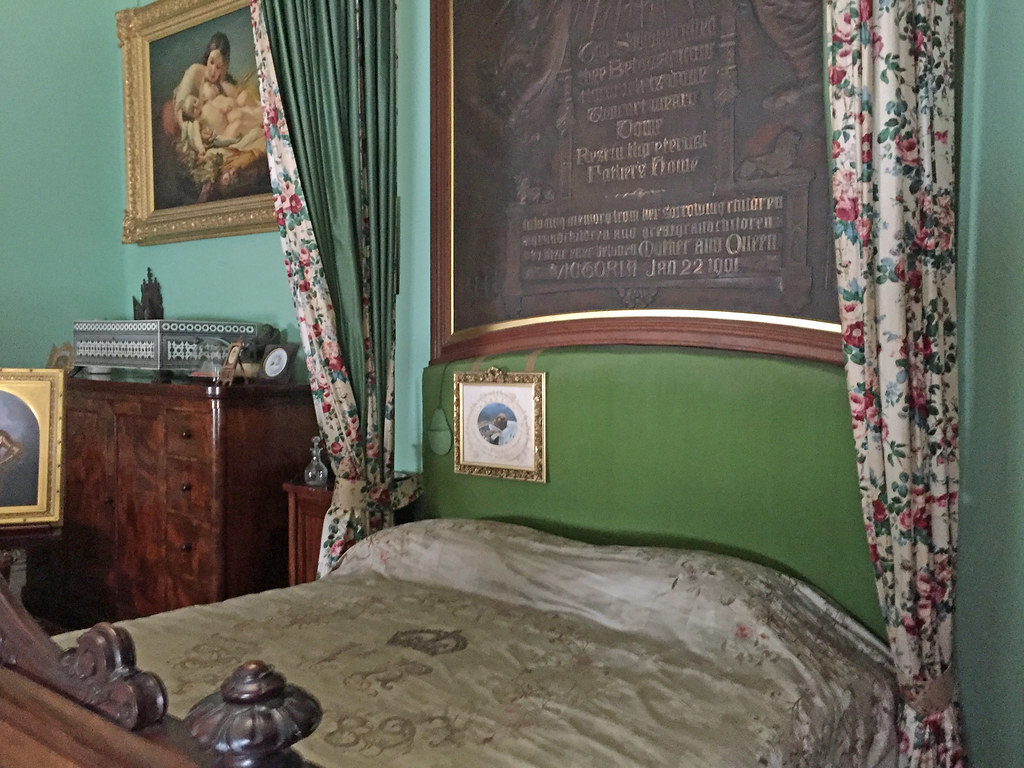
Today, 125 years later, Osborne House remains a place of reflection.
The quiet halls and sunlit terraces still hold the memory of that January evening when Britain’s longest-reigning monarch slipped peacefully into history.









Lovely piece and photos.