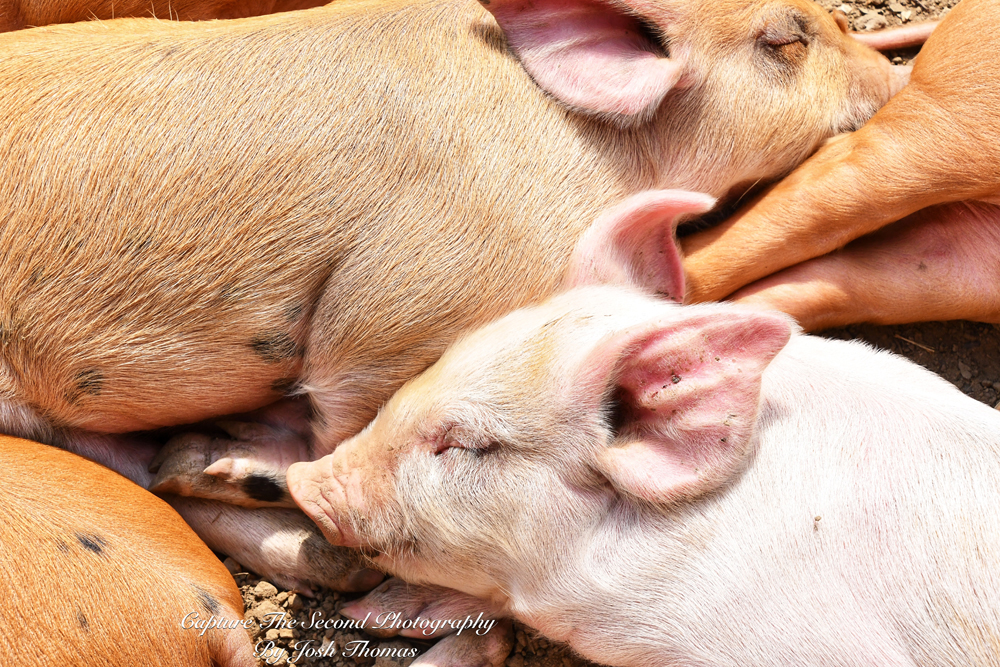























































Isle of Wight shoppers are being urged to make small changes to the amount of meat and dairy they consume, with the RSPCA claiming a 3% annual reduction could help spare nearly 1billion land animals from lower-welfare farming by 2050.
New research from the University of Lincoln suggests that reducing animal product consumption by just 3% each year could have significant global benefits.
The RSPCA says the reduction could spare nearly 1billion land animals from lower-welfare farming, save up to 3billion wild-caught fish used for animal feed and free up millions of hectares of land for nature and wildlife.


It could also significantly reduce agricultural greenhouse gas emissions.
According to the charity, a 3% reduction could equate to just 3 fewer burgers or 2 fewer steaks each year.
Other examples include 7 fewer sausages or 3 fewer pork chops, half a whole chicken or 4 fewer chicken breasts, 45 fewer bowls of cereal with milk or 5 fewer eggs annually.
The RSPCA says the aim is not to encourage people to completely give up animal products, but to make small reductions while choosing higher-welfare products where possible.
Emily Harris, Campaigns Manager at the RSPCA, has said:

“Small, easy, everyday choices can make a real difference. This doesn’t require big restrictions or giving up favourite foods – it starts with small, achievable shifts. Together, savvy choices add up to really impactful results.
“It is easy to doubt whether one person’s choices make a difference, but savvy shoppers have genuine power through the choices they make. Small adjustments add up and send a clear message to the food industry and create a profound real-world ripple effect for farm animals everywhere.
“If everyone made tiny adjustments to what they eat, new research tells us that 1billion animals could be spared from lower-welfare farming by 2050.”
The charity is encouraging shoppers to take 3 simple steps, beginning with checking food labels.
It recommends looking for animal welfare assurance schemes such as RSPCA Assured and Soil Association Organic.
The RSPCA says terms such as ‘British’, ‘English’ or ‘Welsh’ do not necessarily mean higher welfare, while images of fields or phrases such as ‘room to thrive’ are not guarantees of how animals were reared.
Shoppers are also being encouraged to look beyond the most prominent supermarket shelf positions.
The charity says standard, lower-welfare chicken often dominates shelf space and is frequently placed at eye level, while higher-welfare products may be less visible or available in fewer pack sizes.
Its third recommendation is to use the RSPCA’s online food impact calculator, which allows shoppers to calculate a personalised annual reduction target based on their current habits.
Emily added:
“Every small swap at the supermarket sends a powerful signal, and if everyone pledged to follow these 3 tips, the results could be incredibly impactful by 2050.
“It can be challenging for people to understand that even small changes to their own routine can make a huge impact. But by making minor, simple changes in our daily routines, each of us has the power to drive an extraordinary movement.
“Small reductions in meat and dairy consumption, knowing our labels, and looking out for higher welfare produce can contribute to helping literally billions of animals.
“Creating a better world for farm animals doesn’t require perfection or giving up the foods we love: it starts with the power on our plate, and will spare millions of farm animals and build a kinder, more sustainable future for us all.”
More information about the RSPCA’s work on farm animal welfare is available online.