






















































Red Funnel and Artemis Technologies have this week demonstrated the e-foiling technology that will underpin the next-generation Red Jet, the build of which is already well underway.
The Isle of Wight’s first fully electric high-speed ferry is set to enter service in early 2026, it has been confirmed, and could well be seen on the Solent later this year. It is currently under construction, alongside 2 sister vessels destined for elsewhere, in Northern Ireland.
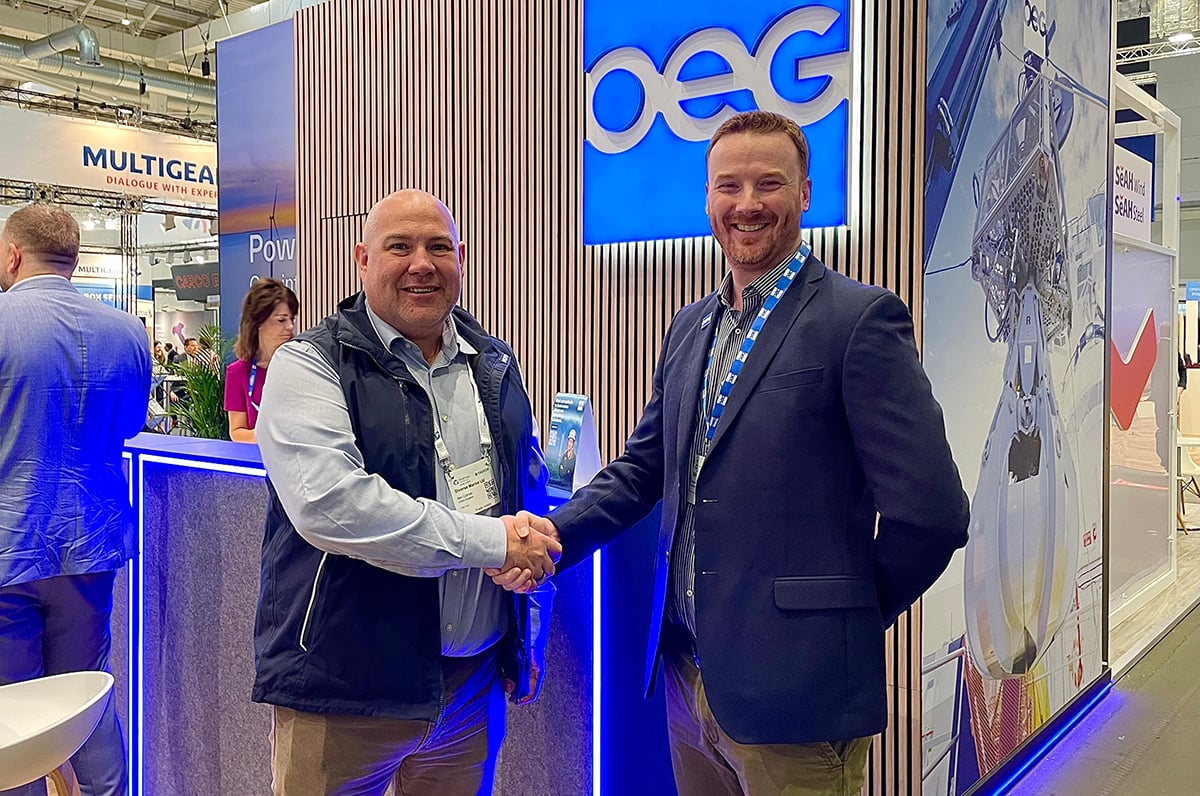
At an event held in Cowes on Thursday morning, Artemis CEO Iain Percy and Red Funnel CEO Fran Collins reiterated their joint commitment to revolutionising maritime transport with a zero-emission solution tailored for cross-Solent travel.


Industry figures, local and national press and even Olympic sailing champion Shirley Robertson were given a live demonstration of the technology, utilising a smaller electric Artemis vessel. This enabled guests to see for themselves the foiling propulsion system that will feature in the upcoming Red Jet.

The demonstration drew praise for the quiet, stable performance of the foiling system aboard the smaller test craft, with the Artemis vessel lifting cleanly out of the water at speed.
The new Red Jet will be twice as long and three times as wide as the demonstrator and will be powered by 800v maritime batteries capable of delivering a 70 nautical mile range – enough for 8 return trips between Southampton and Cowes. Charging will be completed overnight, with a rapid charge during each turnaround at port to enable the vessel to continue operating throughout the day.
With significantly fewer moving parts compared to traditional diesel vessels, Artemis and Red Funnel anticipate increased reliability and reduced maintenance needs. However, the battery packs will need replacing every 4 years.

The new Red Jet’s top speed will be on par with the current fleet at 36 knots, and the vessel will carry 150 passengers, considerably less than Red Jet 7’s 277 passenger capacity. The all-electric craft will include a collision avoidance system capable of identifying submerged objects, adding an extra layer of safety.

The vessel will enter a 3-year trial period once launched, with the commercial agreement with Artemis involving no upfront risk for Red Funnel.
Talking to Island Echo about the new arrival of a new Red Jet next year, Fran Collins, CEO of Red Funnel, said:
“The idea is – because it’s new technology – we’ll integrate the new Red Jet slowly. So she won’t come in on day one and do the full single Jet service, we’ll introduce her gradually.
“We’ve done all of the theoreticals, but we need to make sure the charging cycles work, we’ve got to test it in all weather conditions, all states of tide etc. Eventually, she will take over the day boat, as we call it – the one that runs all the way through the day.
“We’ve got three years of trialling alongside the existing Red Jet fleet, which is the beauty of being able to do it when the Red Jet fleet is in the middle point of its life. If you’re going to replace a lifeline service with something that’s a bit bleeding-edge technology, this is how to do it.
“We’re not putting any extra cost into the business to do this, and at the end of the three years we take the vessel – assuming it meets the performance criteria.
“I’m sure there will be challenges along the way. There’ll be things we learn about it. But that’s where the partnership is really good.

When asked if the journey time would be cut, Fran said:
“We will start on the same Red Jet timetable, the 35 minutes, but our hope and intent is that we will be able to operate on the 30-minute timetable in the future.
“The hydrodynamics of the Artemis are such that she doesn’t drag that big wave. You won’t have to do that big zig round and dump the wash when entering the harbour. So whilst it won’t actually go any quicker, we can make the journey time faster.











Red Funnel already have zero emissions vessels, they are tied up and not working. Instead of pursuing a dubious future dream why not invest in reliable, established marine technology that works and offer a service that is both trustworthy and affordable.
Matters not, they only have to have thethreat of a light breeze, visibility less than five miles or the some previouslu undiagnosed fault which cannot be fixed for three months and they will all be cancelled.