

























































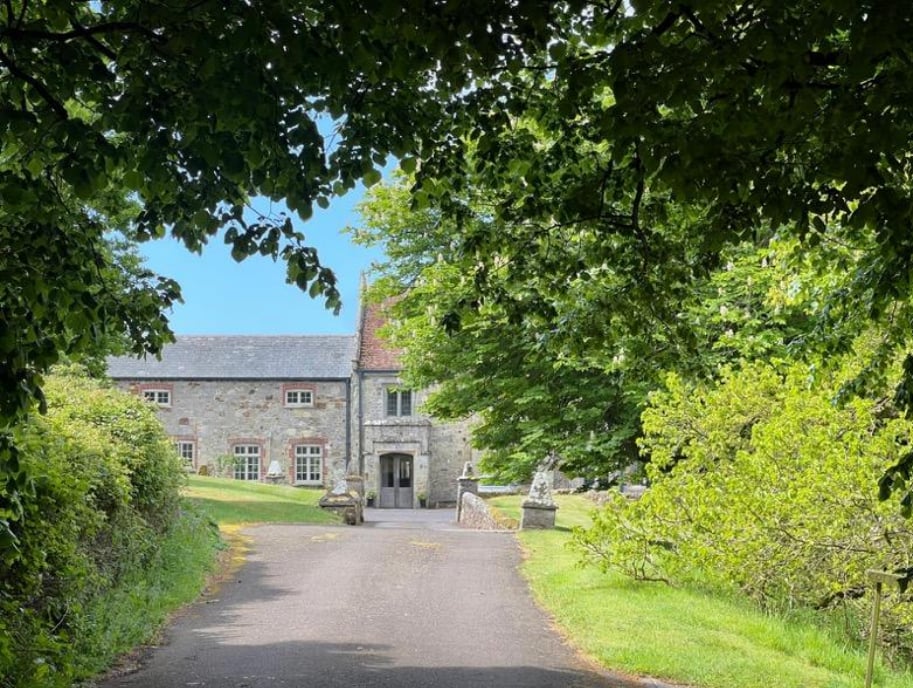

Up to 10 licensed wedding ceremonies a year could take place within the grounds of an historic, Grade II* listed building in the Isle of Wight National Landscape.
Planners have approved Gwyn Palmer’s proposal for the continued use of the stone barn and specified areas of curtilage at Kingston Manor for occasional use as a licensed wedding ceremony venue.
Andrew White Planning Consultancy previously said the plan supports the conservation and long-term sustainability of the site by generating income which contributes to the maintenance of the ‘nationally important’ heritage asset.


The applicant’s agent said the Isle of Wight Council’s registrar inspected the barn and gardens, confirming their suitability for the grant of a civil ceremony licence.
However, County Hall received 6 third-party letters of objection to the application, raising concerns such as the impact on neighbouring residential amenity with regard to noise nuisance, historic disturbance from past events, and a need for extra parking.
A council decision report said officers understand the barn has previously been used for unlicensed wedding ceremonies and events, for around 8 years.
It said the use would allow an historic barn to be ‘actively used’ and that the broad principle of the proposal would be ‘acceptable’. To said:
“The use of the land and building for a limited number of events over an eight month period each year would not result in harm to the setting of the listed building, or its curtilage listed structures.
Article continues below this advertisement “The submitted Noise Management Plan (NMP) has identified various controls and limits as a means of seeking to stifle disamenity on noise grounds.
“Officers consider that subject to the implementation and strict accordance with this NMP, the proposal would not result in an unacceptable level of harm to neighbouring residential amenity.”

The report said traffic generation associated with the proposal would not have a severe impact on the capacity of the highway network.
Planning permission comes with 6 conditions in the interests of residential and local amenity, to prevent the venue causing nuisance, for highway safety as well as legal and planning policy compliance.





































“stifle disamenity”. Weird words.
My thoughts exactly
Layman’s terms would be more ideal.
And high above it stands a pretty church, now closed.
How sad.