



































At the end of the Second World War, Cowes and East Cowes supported around 40 pubs between them, yet only 8 stood on the East bank of the River Medina.
That imbalance has shaped how Cowes drinks. While West Cowes developed a dense network of inns and beer houses, East Cowes relied on a smaller set, where people were forced to pause: waiting for ferries, tides, wages or instructions from Osborne House. The river set the hours as much as the clock. Most of those pubs have now gone. What survives, and what has been lost, tells a tight story of geography, habit and change.
White Hart Inn (Dover Road – demolished)
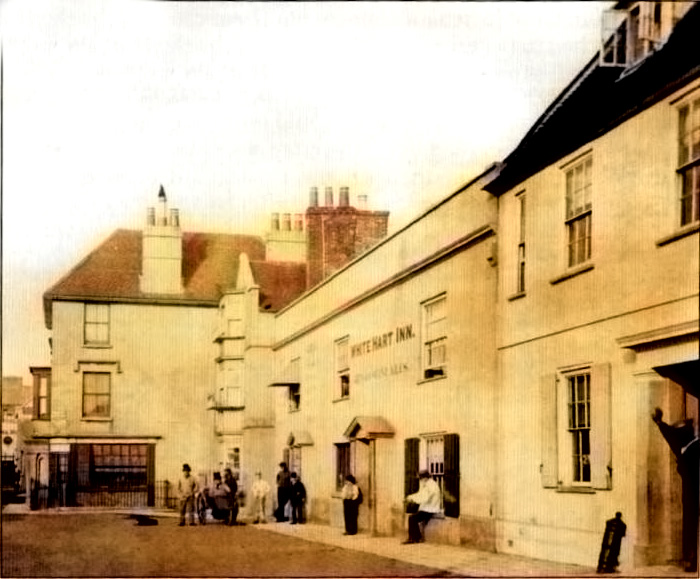
The White Hart Inn stood close to the ferry terminal on Dover Road and for many years was East Cowes’ first or last pub for travellers.


An inn of this name is recorded on the site by the mid-18th century, with 1748 usually cited as its documented starting point. The building remembered by later generations dated from a major late-Victorian rebuild around 1890, giving it a solid, practical mock-Tudor form suited to constant daily trade.
In local legend, the figure most closely associated with the White Hart was a lady’s maid from the Royal Estate at Osborne, believed to have had an affair with a former landlord and said to linger in the back bar. Staff and regulars spoke of unexplained sounds after closing time and the uneasy sense of someone present when the pub should have been empty. Fleeting glimpses of a young woman were occasionally reported, usually on the edge of vision rather than directly seen.
When ferry-terminal redevelopment led to the pub’s demolition, a full historic building survey was carried out before it disappeared. The White Hart itself is gone, but its reputation and memory remains.
The Folly Inn (Whippingham)
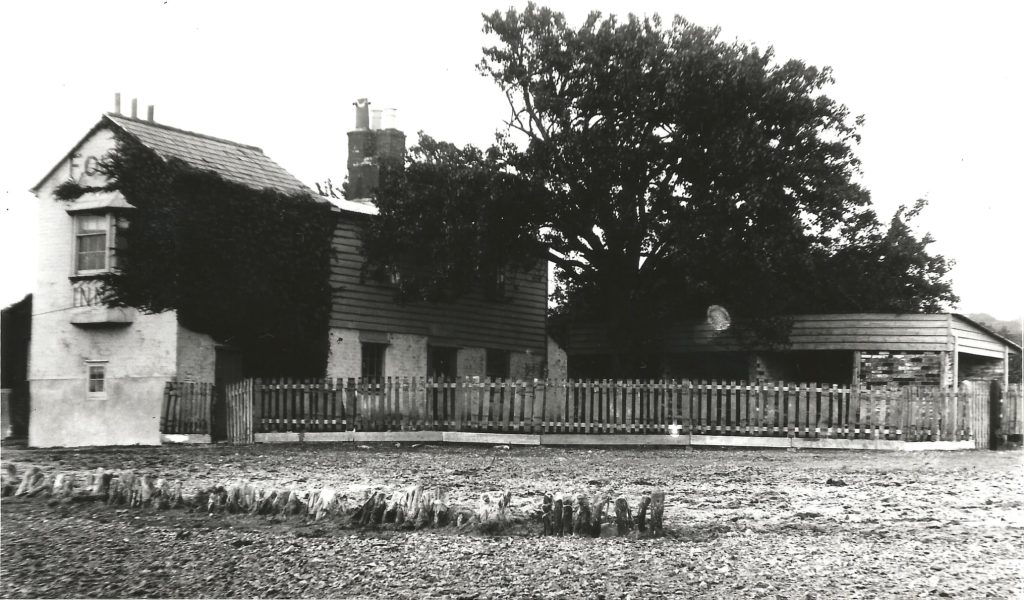
Although technically in Whippingham, the The Folly Inn has always belonged to East Cowes’ orbit.
Set directly on the River Medina, it is a pub shaped by tide and water rather than roads. Local history places its origins around 1783, when spirits were sold from a moored smuggling barge to passing river traffic. In 1792 the barge is said to have broken free and been washed ashore at Folly Reach, after which an inn was built on the site, attributed to Captain Thomas Burnett. From the outset, the Folly prospered by serving customers who could not easily move on until the river allowed it.

The river also placed the pub briefly at the centre of a manhunt in January 1948. On the morning of 28 January, landlord G. B. Snow noticed an inexperienced oarsman crossing the Medina by dinghy. The man was Ernest Joseph Jones, an escaped Parkhurst Prison inmate serving a five-year sentence. He was later found resting in nearby woodland and surrendered quietly. Jones had 58 convictions and was described at the time as a highly skilled burglar.
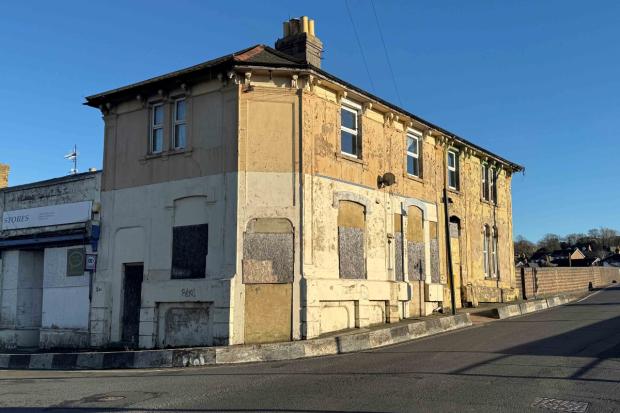
Victoria Tavern (Clarence Road – closed)
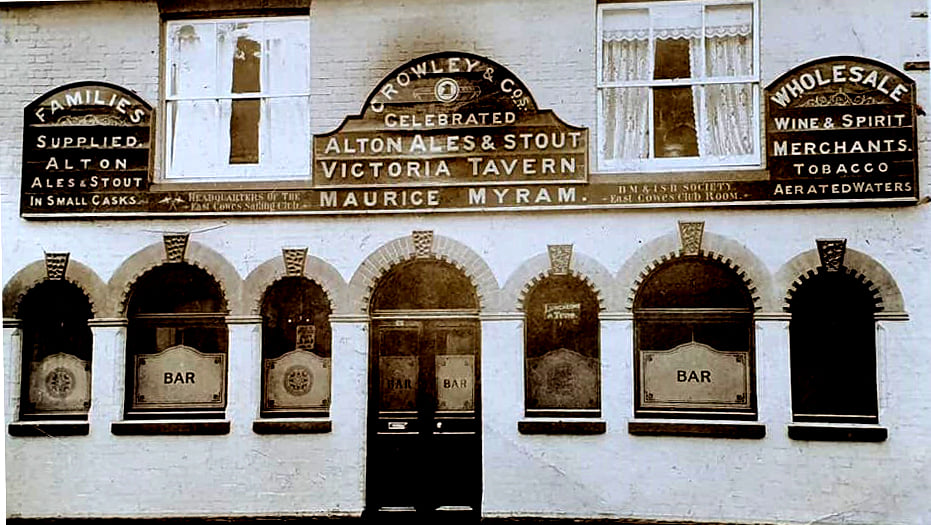
The Victoria Tavern, built in 1860, was one of East Cowes’ most recognisable town pubs.
Maritime in character, it featured a clinker-built boat worked directly into the bar and retained an original pub sign dated 1867 well into modern times.
For generations it was known locally as “Myrams”. Maurice and Daisy Myram ran the pub before passing it on within the family, and Violet Myram later kept the Victoria going for more than a decade. For around half-a-century, the Myrams provided continuity and familiarity, turning the pub into a dependable social centre rather than a passing business.
In its busiest years the Victoria Tavern was among the Island’s busiest pubs. Boxing Day was known for late sessions, while a club room at the back hosted both trade union meetings and sailing circles, bringing working East Cowes and boating East Cowes under the same roof.
The Victoria Tavern has now closed. With it has gone not just another pub, but a name that still lingers in local speech.
PRINCE OF WALES (YORK AVENUE)
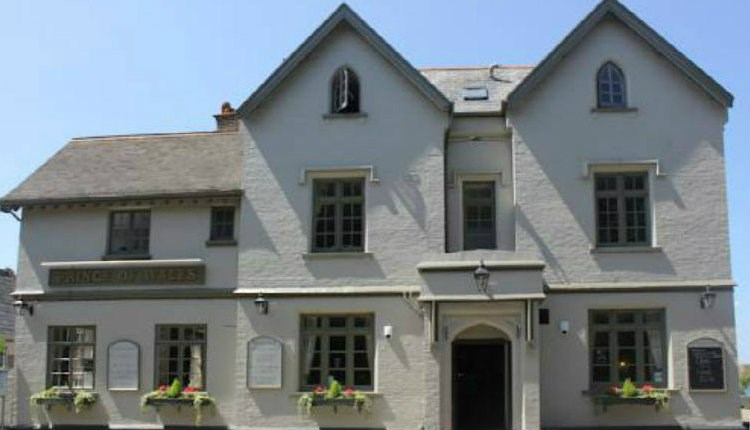
The Prince of Wales sits directly opposite the gates of Osborne House.
Built around 1850, it served the machinery of the royal household rather than royalty itself: coachmen, messengers and estate workers waiting on instructions from across the road.
The name carried real meaning. The Prince of Wales at the time was Albert Edward, later Edward VII, whose appetites stood in open contrast to his mother’s austerity. Where Queen Victoria prized discipline and moral seriousness, her son favoured cigars, late dinners and lively company, along with a well-known taste for female companionship. In an East Cowes shaped by Victoria’s rigid court, the title hinted at warmth just beyond the gates of formality.
Now run by Ronnie and Sam of ~Rocket Ronnie’s fame, the Prince of Wales remains a working local first and a landmark second, offering release from ceremony directly opposite one of the most ceremonial places on the Island.
FURTHER EAST COWES PUBS…
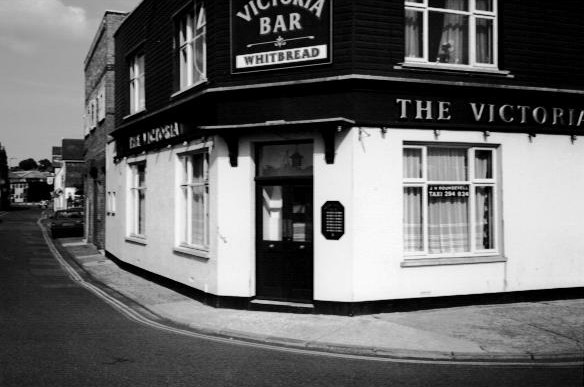
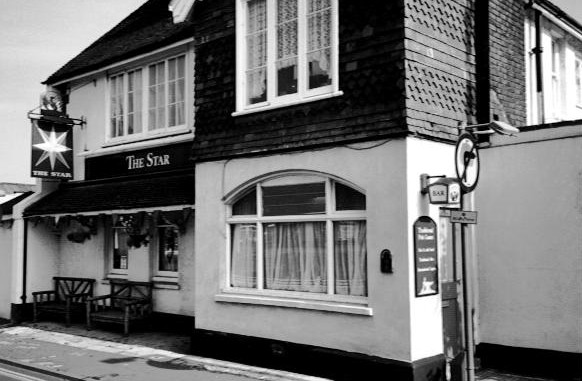
Of the 8 pubs operating on the East bank of the Medina at the end of the Second World War, several are not explored in detail above. These included the Crown Inn, the Star Inn and the Victoria Bar, all now sadly lost, along with the Osborne Cottage Hotel and the Robin Hood, later renamed the Ship & Anchor. Two further pubs, the Ship and Launch and the Vine, also feature in historical records and have since disappeared.
More recently, new venues have appeared to reflect a changing East Cowes. The The Lifeboat has opened beside the marina, while Craft 101 has brought a modern craft-beer focus to the town centre.
Are there East Cowes pubs we’ve missed, or moments from these ones that still stick with you? Where did you drink, and what do you recall?








Locations of the “Further East Cowes Pubs” please anyone? The Victoria Tavern was in Clarence Road (still is but empty) – was the Victoria Bar on the corner by the floaty?
Yes used to go in a lot back in the 80s..nice pub.
Maybe Warren ran out of time. Maybe he accidently pressed delete instead of save. Or maybe he’ll do the part 2 next week.