

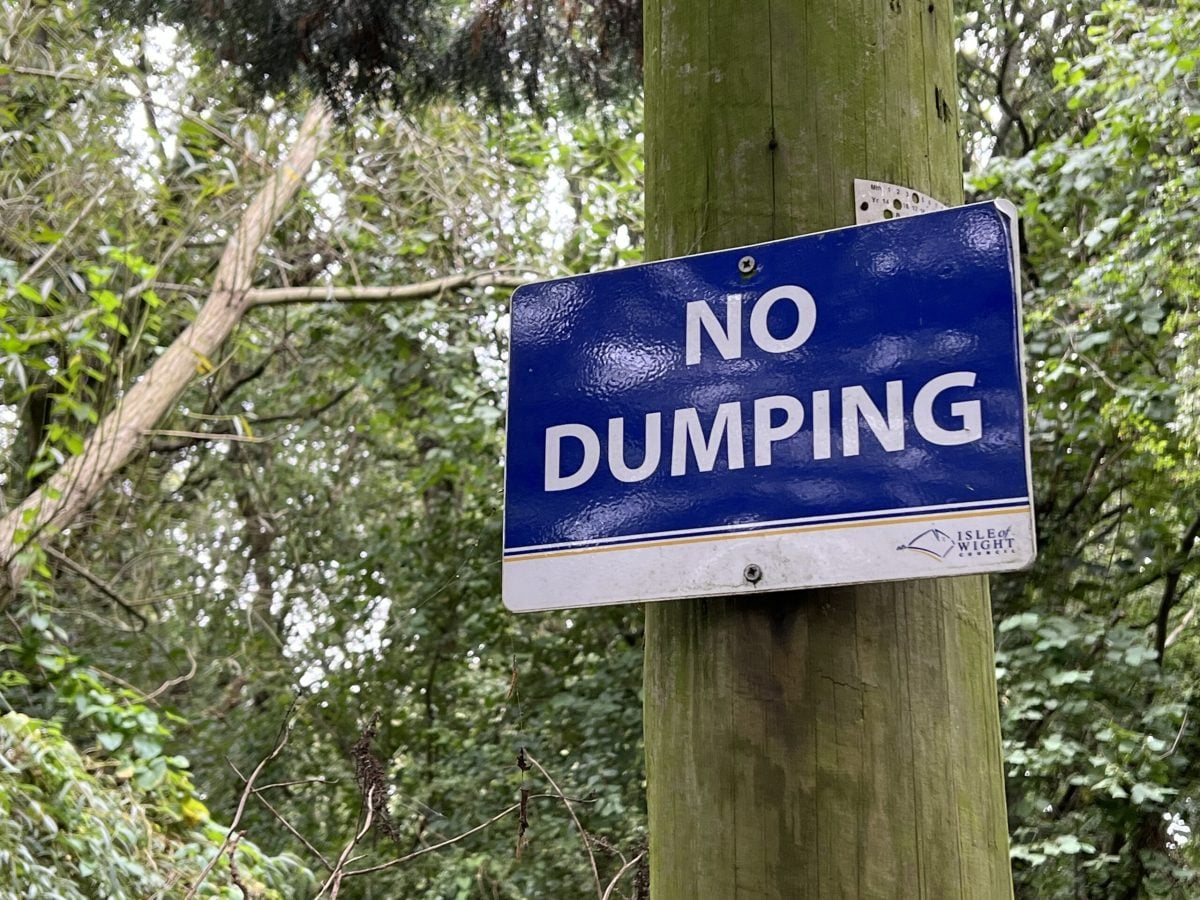










































The number of recorded fly-tipping incidents on the Isle of Wight has fallen by almost 30% compared to last year’s figures, according to the Isle of Wight Council.
A total of 145 fly-tips were documented in quarter one of 2026/27, between April and June, compared with 198 during the same period in 2025/26, according to the Isle of Wight Council.
County Hall’s latest environment and community protection committee performance report says the reduction of 53 incidents continues the positive trend of reducing fly-tipping across the Island.


Most reported fly-tips are on highways, and household waste is still the dominant waste type deposited, despite a significant fall in instances involving black bag rubbish compared with the previous year.
The report says:
“While overall incident numbers have reduced, a greater proportion of reports relate to larger transit van-sized loads rather than smaller fly-tips.
“This suggests that although fewer incidents are occurring, some waste deposits remain significant in scale and continue to require officer intervention and clearance.
“Overall, the reduction in reported incidents demonstrates encouraging progress and reflects ongoing efforts to tackle environmental crime and promote responsible waste disposal practices.”
Article continues below this advertisement

The council says the reduction in incidents during quarter one has been driven mainly by fewer reports on highways and public rights of way which have historically had the greatest concentration of cases.
Environment committee councillors will consider the report at a County Hall meeting on Thursday.
The news comes just weeks after residents of the Isle of Wight raised concerns about a potential increase in flytipping cases as a result of new DIY Waste charges at the Islands waste recycling centres.
As previously reported by Island Echo, the charges came into force on 14th September as part of the Isle of Wight Council’s budget in February 2026. They will see the disposal of an additional 50-litre sack of rubble and hardcore, including bricks, tiles and ceramics, costing £4. A small load of up to 4 sacks will cost £15, while a large load equivalent to a car boot or trailer will cost £30.
In response to this, Isle of Wight business owner Daniel Moss launched a petition arguing that many residents carry out their own DIY because they cannot afford contractors and that relatively modest projects could generate more waste than the free allowance permits.
Campaigners also raised concerns that charging for DIY waste could encourage fly-tipping.
The petition calls for the charges to be scrapped or for alternatives to be considered, including a larger free allowance, a monthly free quota, exemptions for essential home repairs and a full public consultation.
To read more abou the petition, visit Change.org here.







What a load of rubbish, with the tip
charges flytipping will increase.