
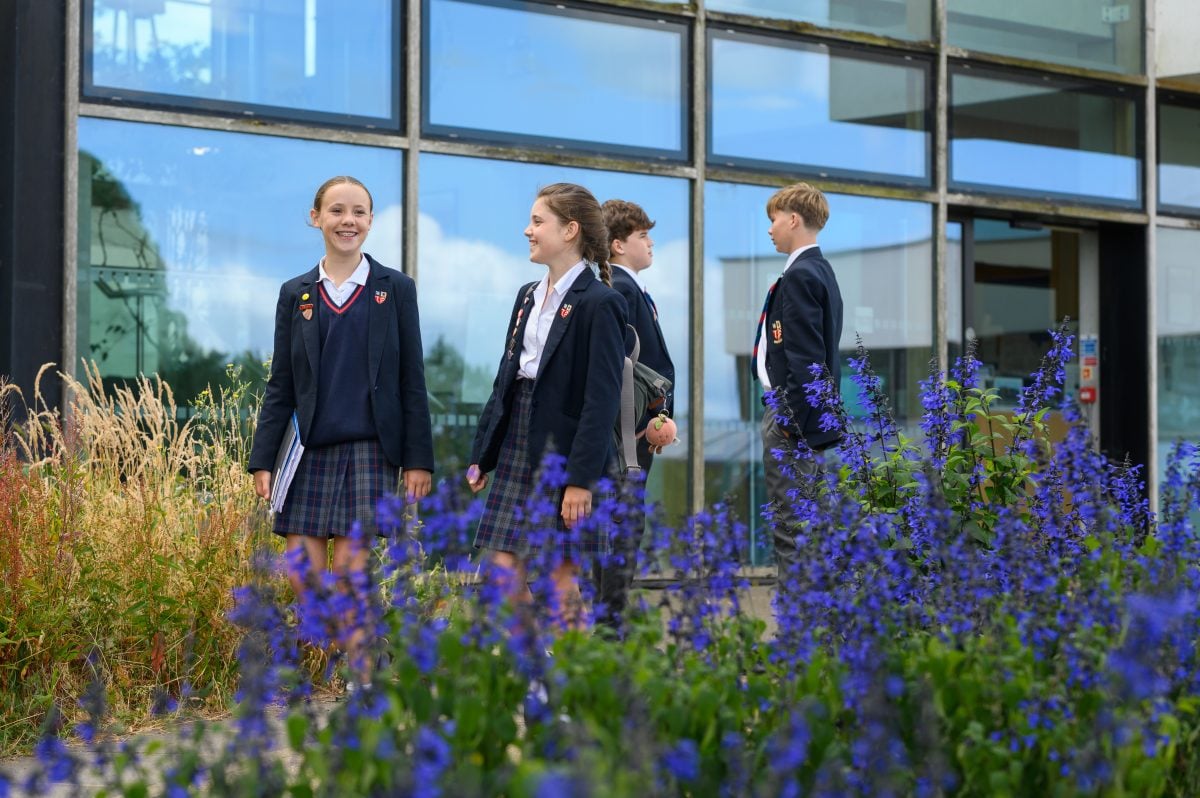





















































Ryde School has received a prestigious award recognising its mental health and wellbeing provision for pupils and staff, with assessors describing the impact of its work as ‘clear, significant and far-reaching’.
The Isle of Wight school has received the Wellbeing Award for Schools after delivering the national framework to an ‘excellent level’ and developing what has been described as a ‘whole-school culture’ around mental health.
A Verification Report by Optimus Education, which works in partnership with the National Children’s Bureau, highlighted a number of areas which led to Ryde receiving the award.


Assessors said the school had embraced wellbeing as ‘everybody’s business’, helping to normalise conversations around the subject, remove stigma and promote safety, transparency and reflection.
Pupils reported feeling safe, listened to and supported, while feedback from staff showed a strong impact from the school’s approach, while pastoral care was described as highly personalised and proactive, as well as being embedded throughout the school.
Jemma Harding, Deputy Head (Pastoral) at Ryde School, has said:

“We are so thrilled to win this award, and it’s a wonderful testament to the daily dedication of our entire Ryde community.
“We believe emotional resilience and mental clarity are key foundations for academic success and personal growth.
“This award celebrates an ongoing, inclusive culture where every student and staff member feels safe, valued, and heard.
“This work is very much at the heart of school life at Ryde, and we will continue to do everything we can to nurture and support well-rounded individuals across our school community.”
Investment in facilities designed to support wellbeing was also recognised, with Ryde School’s Health and Wellbeing Centre and Prep Heart Centre both praised in the report.
The school’s outdoor spaces were highlighted too, including its yurt, alongside wellbeing walks and visits to the beach.
Assessors said these provided opportunities for pupils to reflect and connect.
The report concluded that Ryde School had developed a sustainable culture in which pupils, staff and parents understand wellbeing as a shared responsibility.
It said the school’s approach had strengthened relationships, improved confidence in its systems, increased trust among parents, supported pupil voice and helped create a more proactive pastoral model.