














































Staff at Isle of Wight NHS Trust and Portsmouth Hospitals University NHS Trust are urging women to prioritise their health during Breast Cancer Awareness Month by attending screening appointments and checking for unusual changes.
Breast cancer is the most common cancer in the UK, affecting around 1 in 7 women during their lifetime. However, early detection remains the key to successful treatment.
Regular screening helps identify cancer at an earlier stage, often before symptoms are noticeable, giving patients more options and a better chance of recovery.


The dedicated multi-disciplinary teams of radiographers, assistant practitioners, nursing staff, doctors and surgeons work together to deliver high-quality breast screening services for patients across the Island and Portsmouth.
They play a vital role in detecting and diagnosing breast cancer early, providing reassurance, care, and expert advice at every stage of the process.
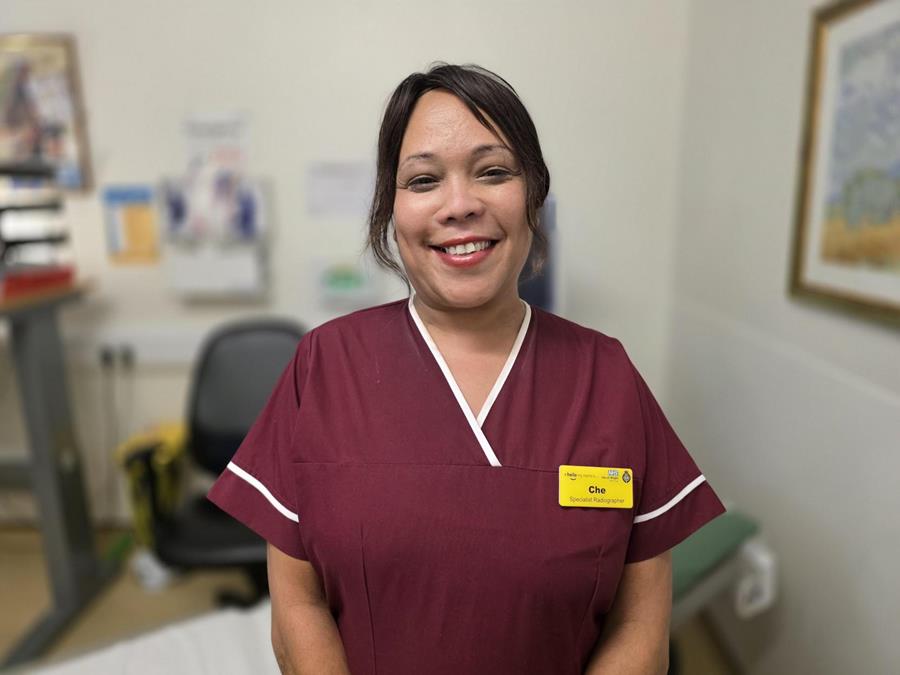
Che Smith, Specialist Radiographer at Isle of Wight NHS Trust, says:
“It’s so important to attend your screening appointments. Sadly, I lost two family members to breast cancer, so I’ve seen first-hand how devastating it can be. Early detection really does make a difference, when breast cancer is found sooner, the treatment options are wider and the outcomes are so much better.”
For many, attending a screening appointment can feel daunting, but staff want to reassure patients that the experience is quick, safe, and supportive. The team encourages anyone who receives an invitation to make time for their appointment, even when life feels busy.
Julie Douglas, Breast Services Advanced Nurse Practitioner at PHU shares further advice and what symptoms to look out for:
“Breast awareness means being familiar with the look and feel of your breasts so you can notice any changes early. By examining yourself regularly, once a month after your cycle, you’ll know what’s normal for you and can spot changes such as a new lump or thickened area, nipple discharge, redness, rash, or crusting around the nipple.”
The teams across both Trusts works closely with clinical teams, as well as support staff and administrative teams, GPs, and national screening services to ensure patients receive the highest standard of care and timely access to diagnostics and treatment.
Jill Shead, Head of Department at IWT highlights how it is important to seek advice when you notice any changes:
“The stories you hear about breast screening being painful are as diverse as the stories about having babies. They never put anyone off having babies. A mammogram takes 5 minutes and could save your life.
“Women aged between 50 and 71 are invited for breast screening every three years as part of the NHS Breast Screening Programme. However, anyone who notices changes in the look or feel of their breasts, such as a lump, thickened tissue and skin dimpling, or nipple changes, should speak to their GP as soon as possible.”
For more information about breast screening and local services, visit: www.iow.nhs.uk/services-and-departments/breast-screening








One of the most important things to do. I was not going to go but went and they found a very tiny nasty lump all sorted very promptly and as it had been found early all good.
St Marys were first class, glad I went
I believe anyone can request breast cancer screening by contacting the centre at St Mary’s Hospital Newport particularly those over 71 who become more at risk as they age.
I was sent two separate appointments for afternoon which I cannot attend , only mornings. I requested a change and never heard nothing more .
All done on line is not for everyone and noone picks up the phone when you call .
So much for urgency in making sure you get tested .
No different to ringing GP Surgeries, staff
are shy picking up the phone.
The No Hope Service is falling apart.
My advice is go back to the old NHS pre pandemic
No more shirking from home, what can any NHS
employee do from home!!