












































Wootton Station has seen rise, decline and a volunteer-led rebirth – a tiny cutting that now sings with steam once again.
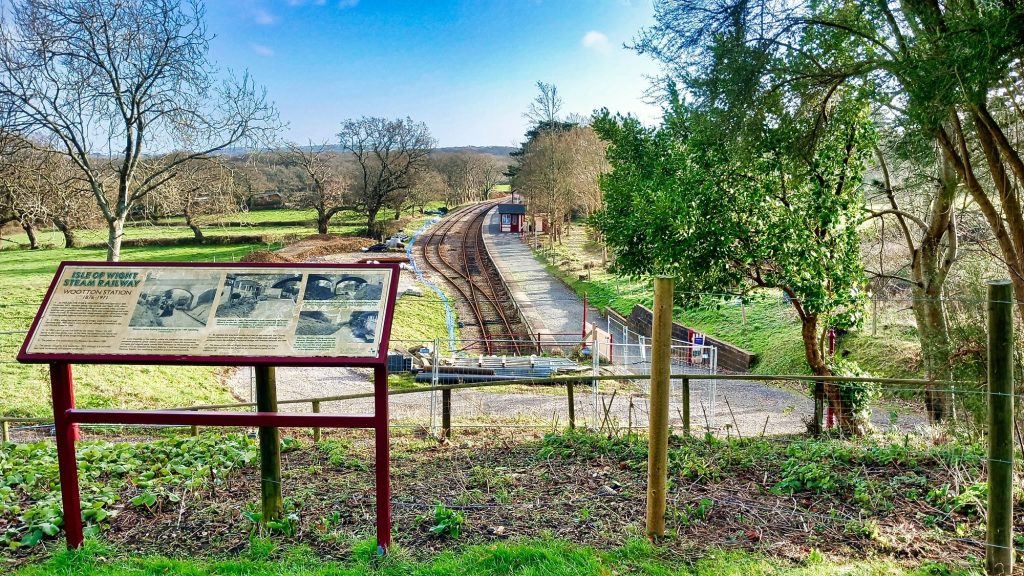
When the Newport–Ryde line opened in December 1875, Wootton was described as a “new road-side station” – no clock, no nameboards, no conveniences, just a wooden platform tucked beneath Station Road in a deep clay cutting. The station was built almost half a mile from the heart of Wootton village, but the Methodist chapel and the Woodman’s Arms pub were close at hand for waiting passengers. A three-arch bridge spanned the line, with the station offices fitted snugly into the arch closest to the village. Practical, unpretentious, and unmistakably rural.
By the 1890s, Wootton had grown in importance. A 110-foot siding was added east of the bridge for goods and livestock, worked by a ground frame. Farmers from across the parish brought animals and produce here, bound for Newport and beyond. In 1907, a stationmaster’s house appeared high above the cutting, while ladies’ toilets were fitted by bricking in one of the arches. The station’s fabric reflected the rhythms of village life.


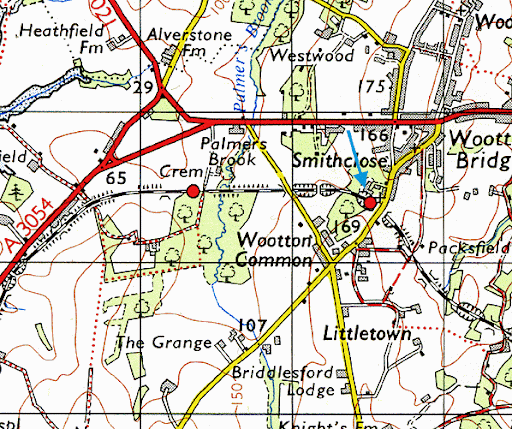
Ownership changed hands over the years. Wootton passed into the Isle of Wight Central Railway in 1887, Southern Railway in 1923, and finally British Railways in 1948. Through all these changes, it remained a quiet but valued stop. Yet beneath the platform, trouble brewed. The “blue slipper clay” on which the station was built shifted and slid with heavy rain, demanding constant repair.
By the early 1950s, costs were mounting and passenger numbers dwindling. Closure came on 21 September 1953. Freight continued until 1966, but soon the line was lifted, the cutting filled, and the bridge buried. Wootton vanished from the map.
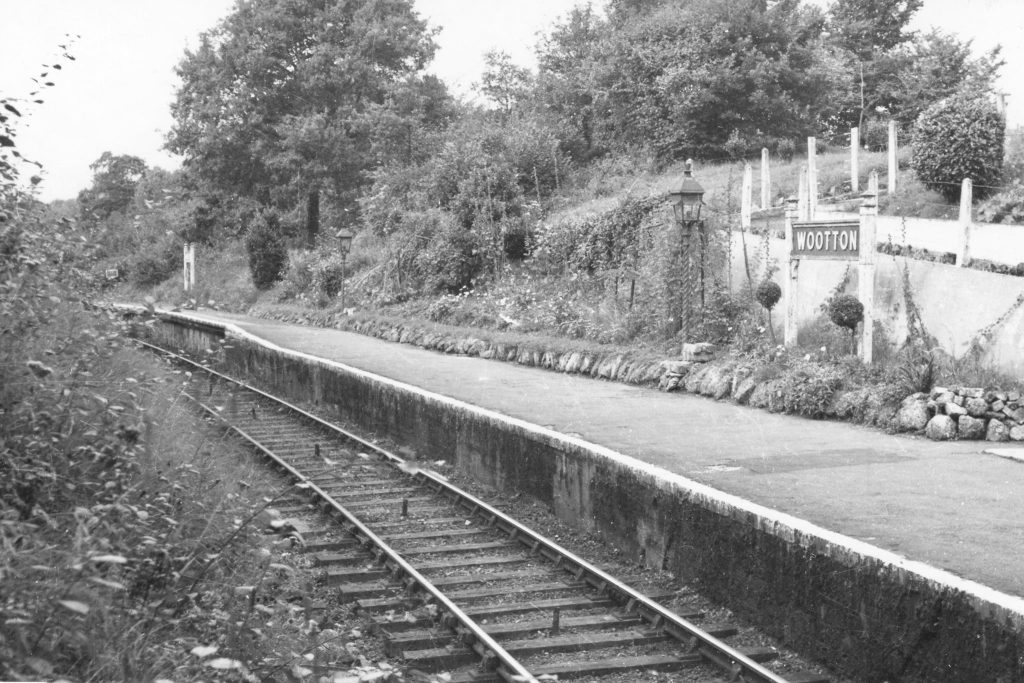
Yet Wootton lived on in memory. Parish records recall the farewell of a Sunday School outing in May 1953. Villagers remembered the bustle of market days, when livestock wagons waited in the siding, and the long, echoing whistle that carried over the fields at dusk.

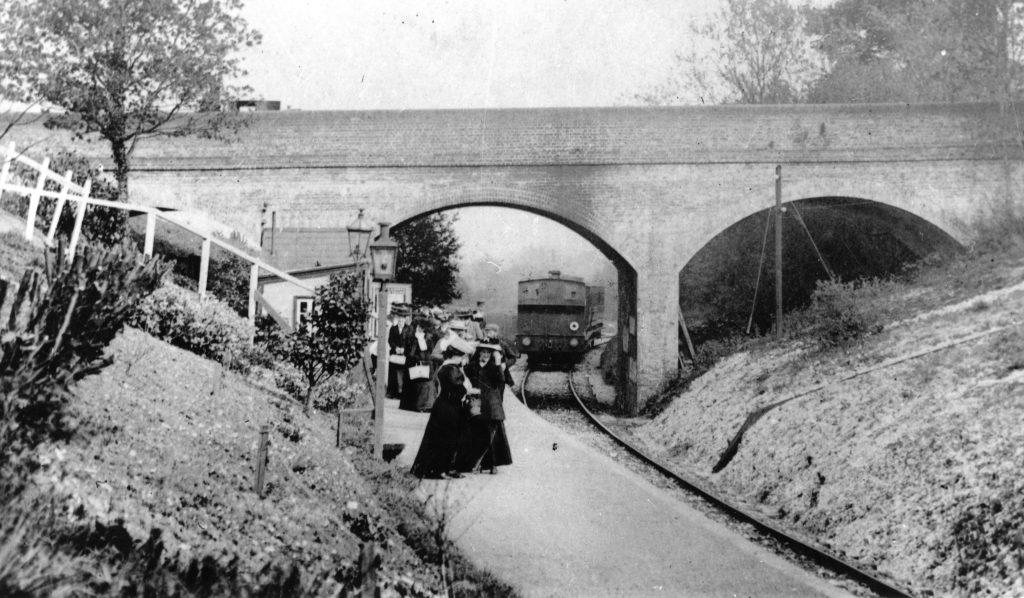
The turning point came with the creation of the Isle of Wight Steam Railway (IWSR) in 1971. Volunteers dreamed of rebuilding Wootton, but surveys showed the old clay cutting was dangerously unstable. Rainwater proved the point, sending more landslips down the banks. The decision was made to move east of Station Road, to a level site where the dream could safely take root.
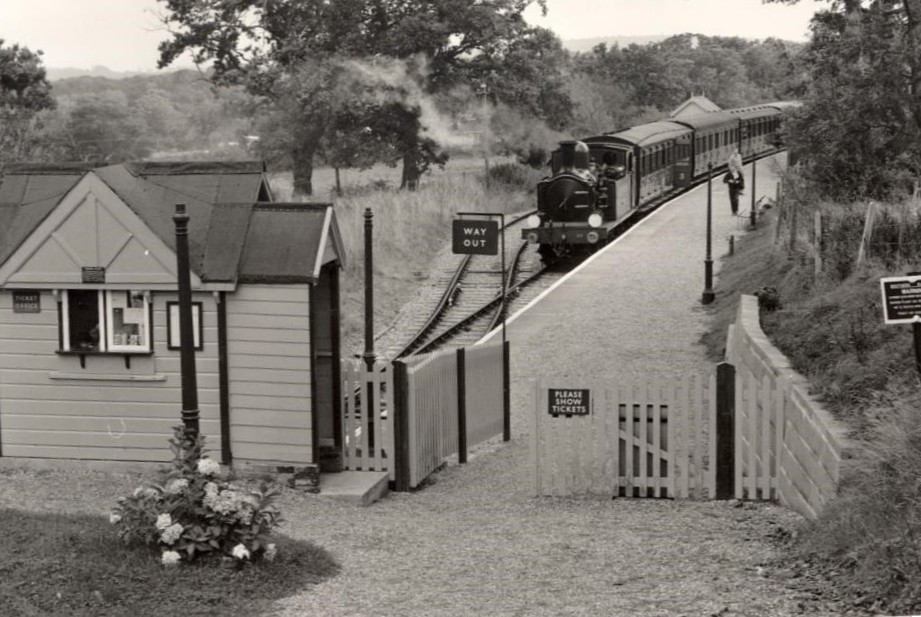
On a summer day in August 1986, the first trains steamed once more into Wootton. It wasn’t a grand station, but it was alive, and that mattered more than anything. From the beginning, the IWSR set out to capture the atmosphere of an Edwardian halt, somewhere between working railway and time capsule.
Over the years, the site has been lovingly developed. A replica station building — modelled on Havenstreet — opened in 2012. The signal box combines parts from Shanklin and Freshwater, while the booking office once stood on Ryde Pier Head. Platforms have been extended, a headshunt added, and a Shanklin lever frame installed to bring proper signalling back to life.
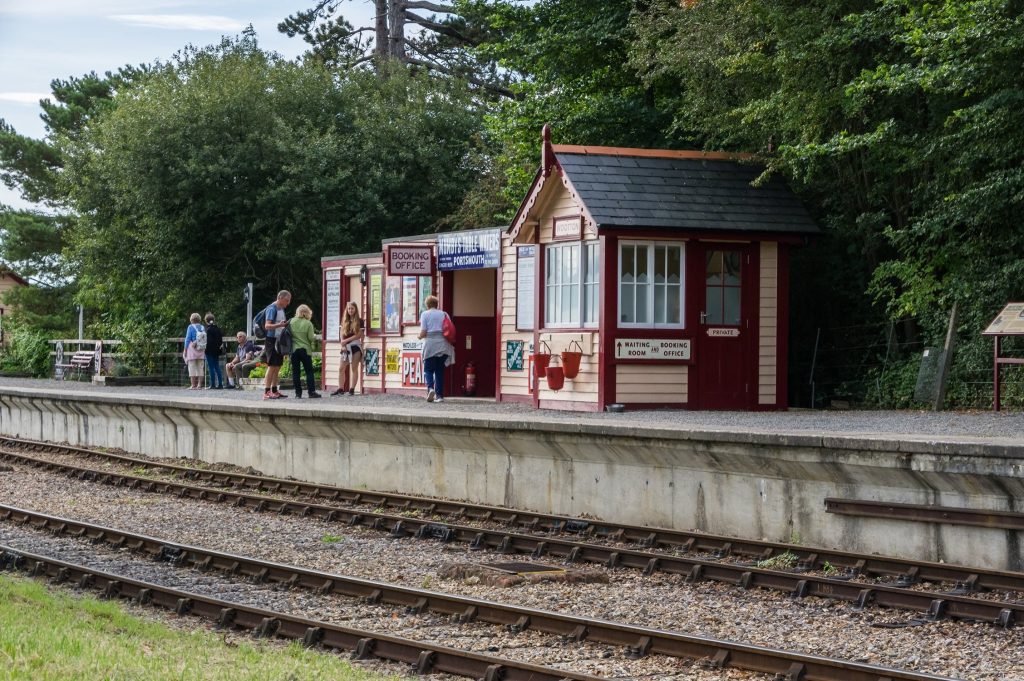
Plans for the future include a goods shed and coal yard, modelled on Ventnor West, to showcase the freight story that shaped rural stations. Here, visitors will be able to picture livestock being loaded, coal wagons shunted, and the business of a working railway played out in miniature.
Today, Wootton is more than a terminus. It is a living museum where families ride through the countryside, children press noses to carriage windows, and older visitors revisit the sound and scent of steam.
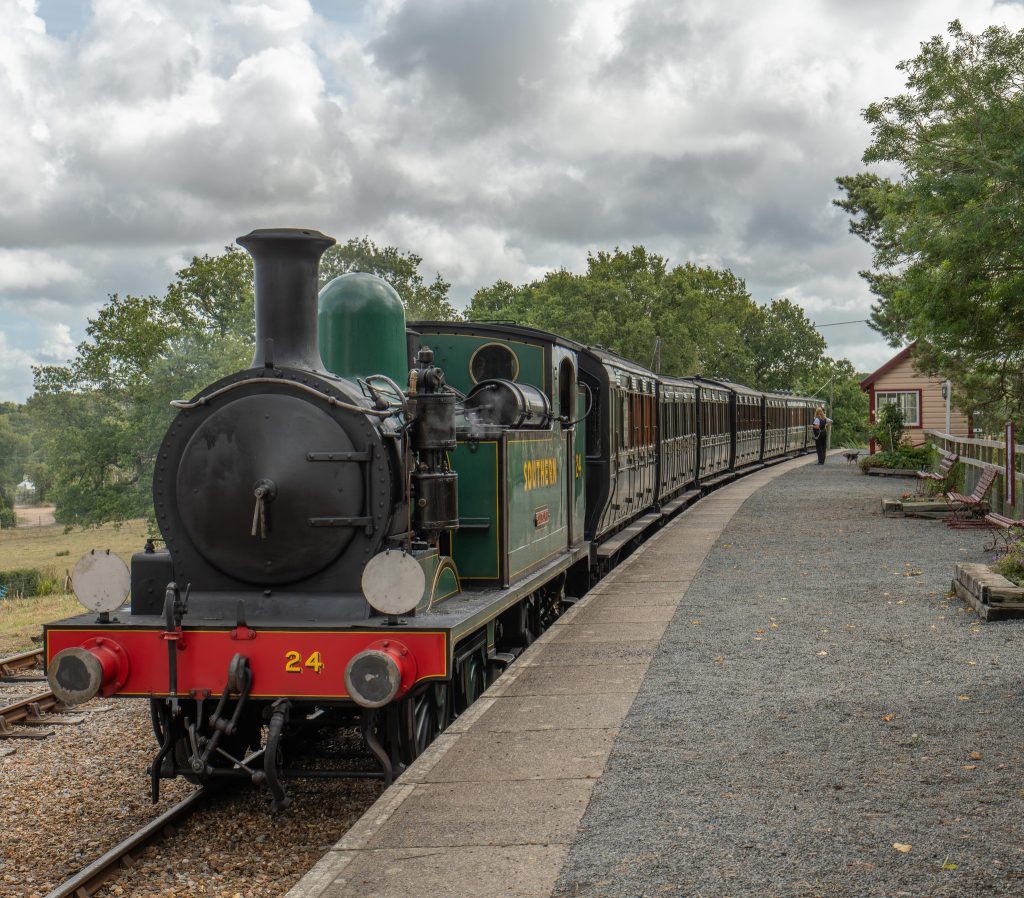
From its humble beginnings in 1875, through closure in the 1950s, to its rebirth in 1986, Wootton’s story is one of resilience and revival. Thanks to volunteers’ dedication, the station now stands as a tribute not only to the Island’s railway past but also to the community spirit that brought it back to life.
Have you ridden the line to Wootton lately? Does anyone still remember the station before its closure in 1953?








Great it’s still going.
Great bits of Island history, thank you.
Another lovely story – many thanks!