






























































Quakes can take place at any time and without any prior notice. Did you know earthquakes closer to the planet’s surface tend to do more damage than those further down under the earth’s crust? The point right above the epicentre on the surface is known as the HYPOCENTER, and the location where the shaking truly happens in the ground is known as the EPICENTER. Understanding the vocabulary and characteristics of an earthquake will help you become more prepared if you are ever in one. The following are three fundamental components that can help you increase your knowledge about earthquakes and help you escape the devastation that might result from them.
Plate Boundaries
Large plates constantly moving, known as tectonic plates, make up the world’s crust. The lines denoting these plates’ intersections are referred to as plate boundaries. The majority of earthquakes take place along the boundary of tectonic plates. The Pacific Plate, which encompasses the Pacific Ocean, is the biggest of the tectonic plates. It is commonly referred to as the RING OF FIRE and contains more than seventy-five percent of the world’s volcanic eruptions. The Tonga-Kormadec Trench, located northeast of the New Zealand islands, is the starting point of the Ring of Fire. From there, it forms a horseshoe shape that wraps around the Peru-Chili Trench in South America and the South Sandwich Trench just east of the South Sandwich Islands. However, the Ring of Fire still needs to be completed. The planet’s tectonic plates are constantly shifting and colliding with one another. An earthquake will happen whenever these tectonic plates move closer together and exert enough pressure on one another to cause them to slide past one another.


Magnitude
Based on the motion recorded by earthquake-detecting equipment known as a SEISMOGRAPH, one may determine the strength or intensity of an earthquake by referring to its magnitude. The larger the magnitude of an earthquake, the more severe the shaking it causes. For example, an earthquake with a magnitude of 8.1 will be significantly bigger and, as a result, more damaging than an earthquake with a magnitude of 2.1. The magnitude of an earthquake can change based on several factors, such as the surrounding terrain and the depth to which the quake has penetrated. In most cases, a strong earthquake will also be followed by several lesser earthquakes. Aftershocks are the name given to smaller earthquakes that occur in the aftermath of a larger earthquake and can persist for weeks, months or even years after the initial quake. When an earthquake is stronger, it is more likely to create aftershocks, which may also last for significantly longer lengths of time. You can also take time to check asiabet8888.com while learning more about earthquake.
Injury
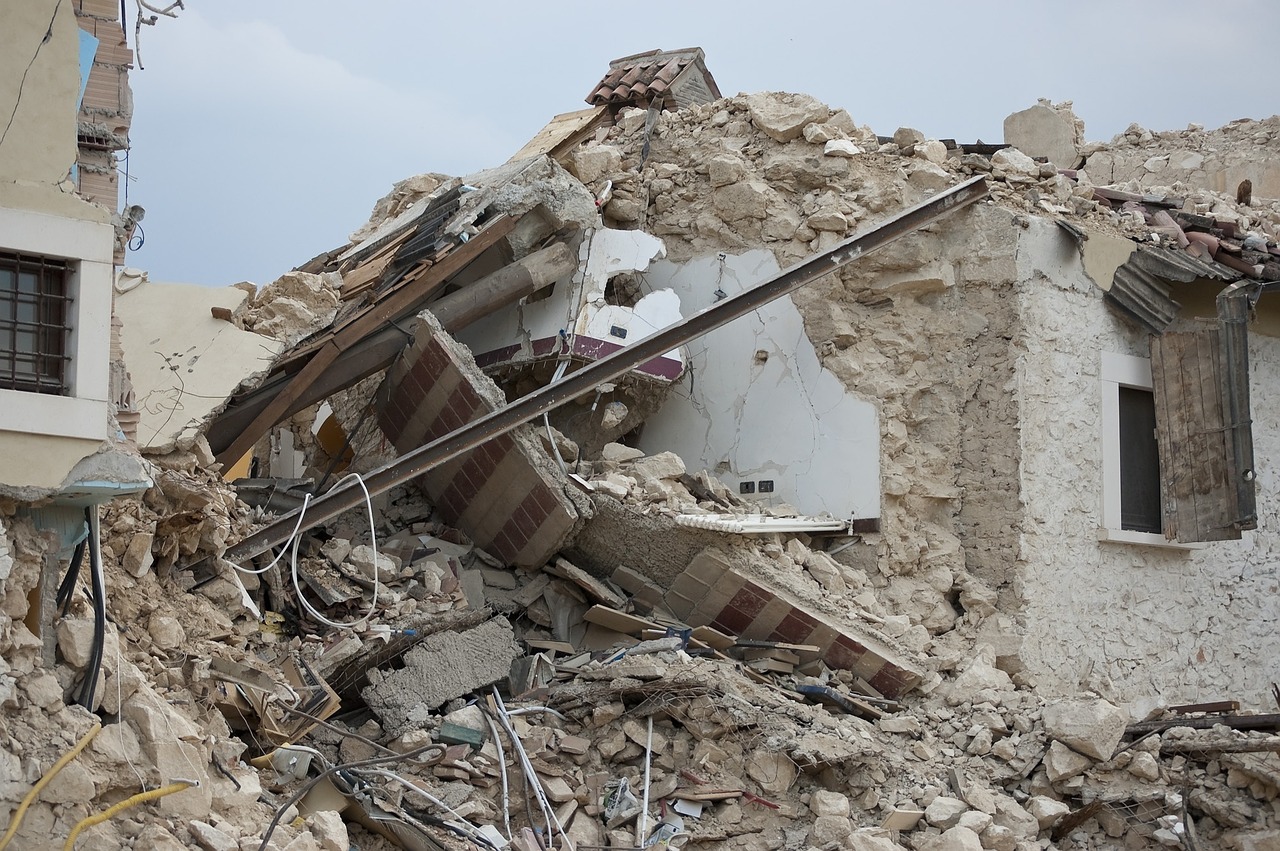
The majority of the time, the damage that is caused by an earthquake is not due to the shaking of the earth itself but rather to the natural and man-made structures that are nearby and have the potential to fall on top of people. If you are outside when an earthquake occurs, you should avoid any buildings, electrical wires, or other objects that might fall on you. If you are inside a building, duck beneath a desk or table to shield any falling objects from your head. You could also shield yourself by standing against an inside wall. Stay away from the outside walls, windows, and anything else that contains glass, fireplaces, and heavy furniture or appliances. If you are at the wheel, safely drive over to the shoulder of the road, away from oncoming traffic, and come to a halt. Parking below bridges or overpasses is prohibited, and drivers should also steer clear of trees, electricity wires, and other possible hazards. Be wary of the likelihood of a landslide if you are in an area that has mountains. You should go to higher ground immediately if you are near the water since there is a possibility that a tsunami may hit the area.
Even while earthquakes happen regularly, most are so mild that people don’t even notice them when they happen. They cannot yet be predicted, which makes them much more dangerous in the event of greater earthquakes than they already are. If you reside in an area prone to earthquakes and want to be ready in case one strikes while you are there, it is smart to educate yourself on the subject and make preparations in advance. It might mean the difference between being hurt and living through the experience.