
















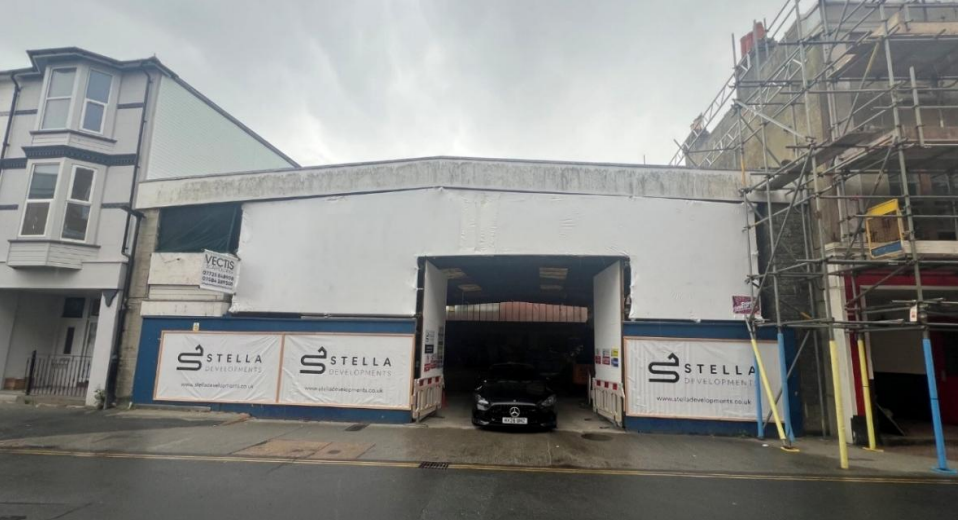
























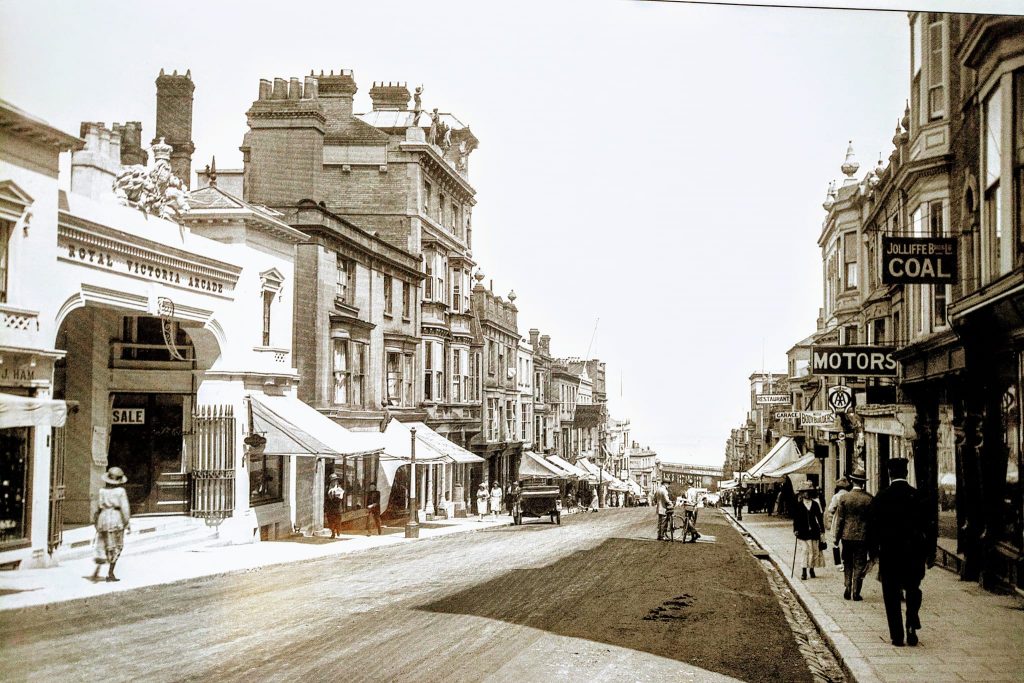
Behind a modest Union Street entrance lies one of Ryde’s most remarkable Victorian buildings – the Royal Victoria Arcade, opened in 1836.
Few buildings in Ryde carry a story quite as remarkable as the Royal Victoria Arcade. Hidden behind its familiar Union Street frontage lies one of the Island’s boldest Victorian projects – an elegant covered shopping street that can make a fair claim to being one of Britain’s earliest shopping malls.
Long before modern retail parks and shopping centres, the arcade offered something new for its time: a place where visitors could stroll and browse beneath a glass roof, protected from the weather while moving between shops.


The building was constructed between 1835 and 1836 to the design of architect William Westmacott. The project was the brainchild of William Houghton Banks, a Ryde apothecary and property developer who believed the rapidly growing seaside town needed a fashionable retail centre to match its rising reputation.
Ryde was booming in the early Victorian era. Steamships from Portsmouth were bringing increasing numbers of visitors to the Island, while travellers passed through the town on their way to fashionable resorts and the royal residence at Osborne House.
Banks’ idea was ambitious – a purpose-built retail arcade inspired by the covered shopping galleries appearing in London and across Europe.
Construction reportedly cost around £10,000, an enormous sum in the 1830s, around £1.5million in today’s values.
The foundation stone was laid on 24th May 1835, Princess Victoria’s 16th birthday. The development was named in her honour as the Royal Victoria Arcade.

When the building opened the following year, it introduced something entirely new to the Isle of Wight.
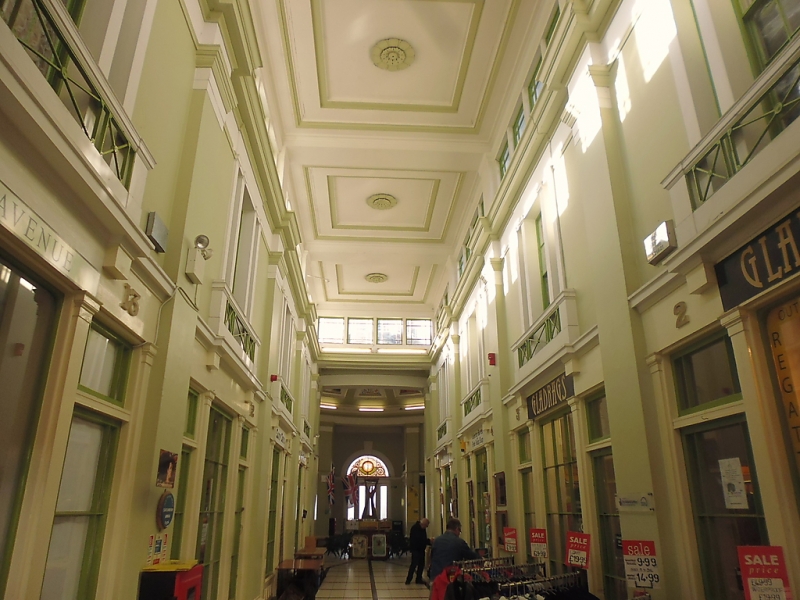
Around 14 small shops lined a narrow indoor passage designed for browsing and socialising. Visitors entered beneath the royal arms and stepped into a covered retail street, with accommodation above and a market area beneath.
At the centre of the arcade, the passage opened dramatically into a circular rotunda beneath a glazed dome.
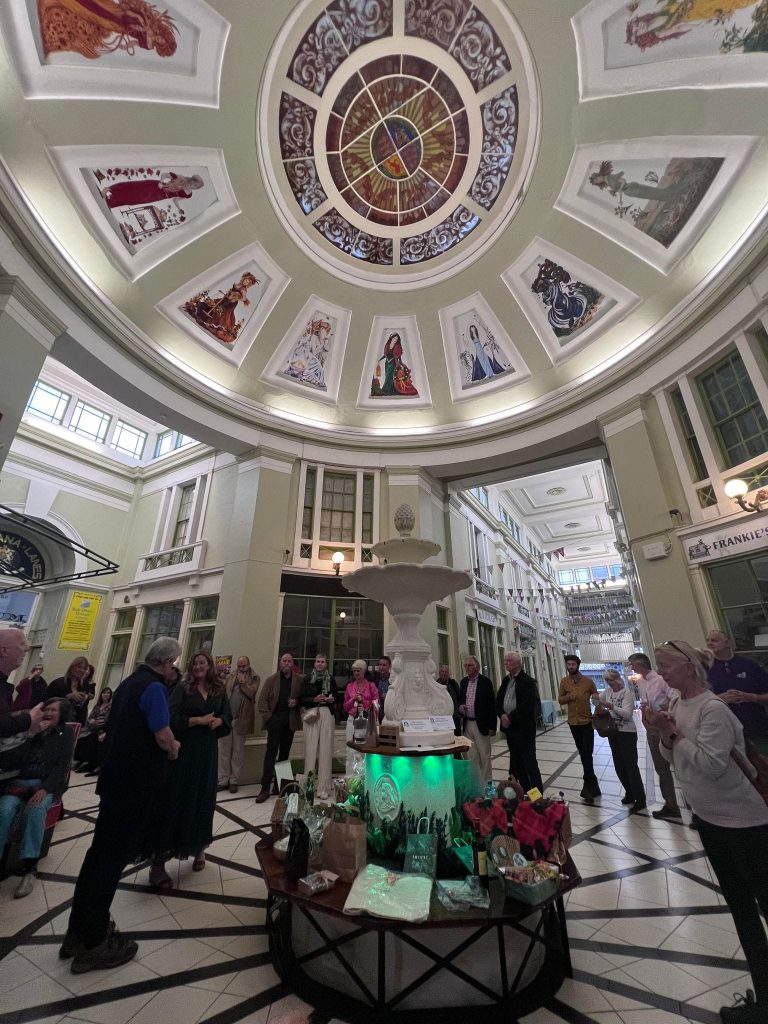
Early illustrations show that a fountain once played beneath the glass roof, creating an impressive centrepiece that must have surprised visitors arriving from the mainland.
Yet despite the grandeur of the project, the story quickly took an unexpected turn.
Banks had borrowed heavily to finance the arcade’s construction and soon ran into financial difficulties. Within months of the building opening, Banks had left Ryde for Belgium, abandoning the ambitious development he had created.
The arcade, however, survived and thrived.
Businesses soon filled the shop units, serving both Islanders and the growing number of visitors passing through the town.
One of the most colourful figures associated with the building was Henry Knight, who purchased the entire arcade in 1856.
Knight was an importer of Italian marble and sculpture and used the premises to sell decorative artworks and ornaments to wealthy visitors.
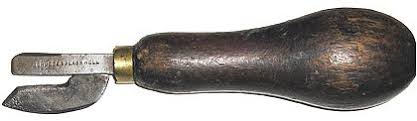
Knight also secured an unusual place in culinary history as the inventor of an early form of tin opener, later sold to the famous food company Crosse and Blackwell.
The arcade also became connected with the early development of photography in Ryde.
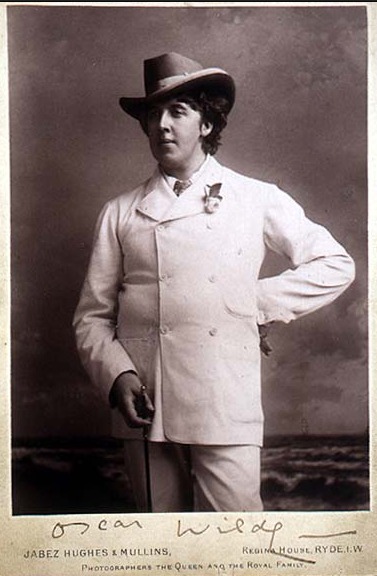
One of the shop units housed a photographic studio operated by Cornelius Jabez Hughes during the Victorian period.
Arcades with glass roofs proved ideal for early photographers, who relied on strong natural light to expose their images during the long exposure times required by early cameras.
Members of the Royal Family are believed to have visited Ryde photographers during this era. Among those associated with early photography in the town were Princess Beatrice, the youngest daughter of Queen Victoria, along with other royal visitors connected with Osborne House.
Architecturally, the Royal Victoria Arcade remains highly unusual. While many later Victorian arcades consisted simply of straight passages lined with shops, the Ryde building was designed around its striking central rotunda and glazed dome.
Hidden beneath the shops lies another remarkable feature that few visitors realise exists.
Below the arcade is an underground market area which once included a deep ice well – a chamber used to store blocks of ice – long before mechanical refrigeration was invented. In the Victorian era such ice was often shipped to Britain from Norway and stored underground so it could last for months.
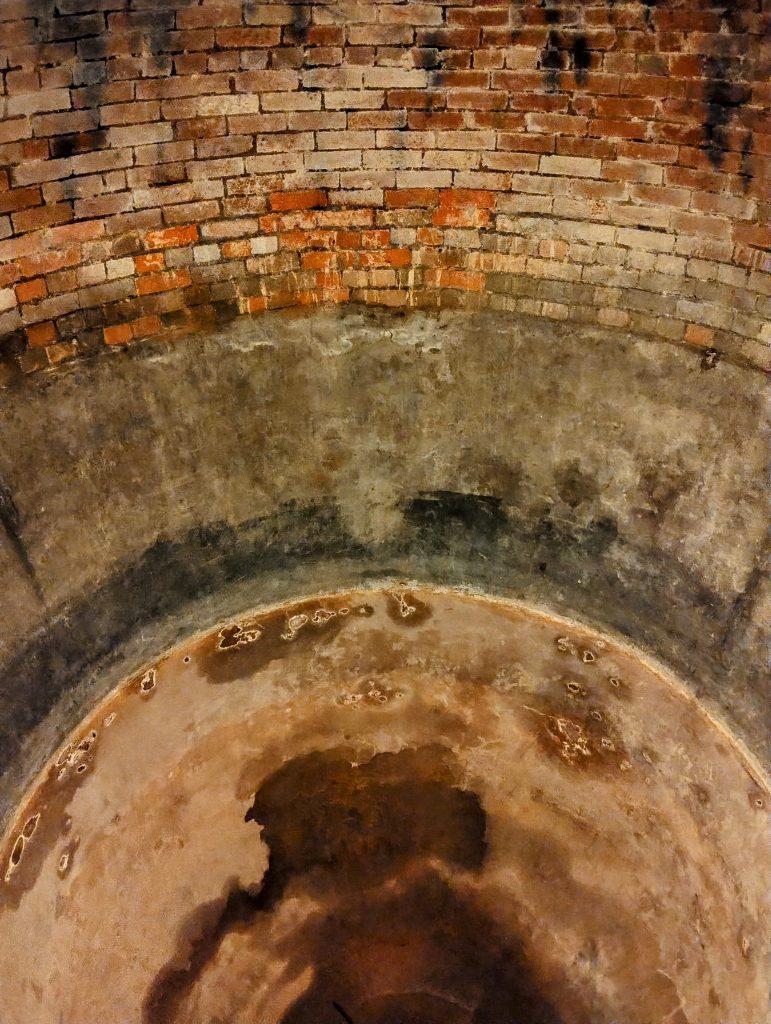
The survival of the rotunda, dome and ice well are among the reasons the building is now listed Grade II*, recognising it as one of the earliest surviving purpose-built shopping arcades outside Britain’s major cities.
Nearly 2 centuries after Victorian shoppers first stepped beneath its glass roof, the Royal Victoria Arcade remains one of Ryde’s most distinctive landmarks.
Today, independent traders still occupy the shop units while markets take place beneath the dome, and the Museum of Ryde now occupies the former market space below.
But while the building itself has endured, the businesses inside it have continually changed with the times.
What shops, traders or businesses do you remember from the Royal Arcade in Ryde over the years? Share your memories in the comments below.








Really interesting article, keep it up. Does anyone know what the original outlets, shops, were?
Although I doubt something like that could be built now at a cost of one and a half million, more like Ten million perhaps.
Please IE would you show a picture of the window at the rear of the arcade with an elegant large PV the initials for Princess Victoria.
Apart from one of the best beaches in the UK, this wonderful
Building is the next best thing about Ryde.
Many happy memories of volunteering at ‘The Time Machine’, a model railway shop run by Alistair. I remember it had a very narrow, steep stairwell used for storing stock. Lately, the shop was a barber’s.
Fabulous little shop owned by my brother, I too loved volunteering for Alastair, he used to take me to the cinema if I could make enough profit to buy my ticket . We sold white metal figures that are now all the rage in Dungeons and Dragons as well as Hornby sets and the original Humbrol take weeks to dry paints. And the stockroom was legendary. The loo was at the bottom of the downstairs market, past the LP record seller and clairvoyant. And my Dad used to smuggle a few antique clocks into the shop, hence the strange name The Time Machine for the business.
Hi just wondering if anyone has any ghost stories paranormal sightings at this place , when I was a teenager I saw a victorian lady staring at me clear anything ,I’ve never seen anything before or after anywhere and still think about it till this day why i seen it and why it also wasn’t aca4y but intriguing