






























































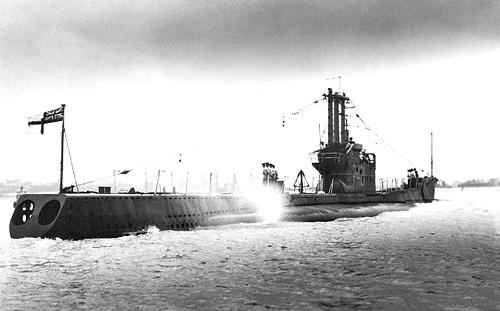
The loss of HMS Affray, Britain’s worst post-war submarine disaster, began with a routine dive south of the Isle of Wight’s St Catherine’s Point on 16th April 1951 – 75 years ago today.
The A-class submarine – built during the Second World War – departed from Portsmouth carrying 75 men, including 25 young trainees, into the English Channel on what should have been a standard exercise.
Shortly after reaching her patrol area 30 miles south of the Isle of Wight, the submarine sent a final, routine signal confirming she was about to dive. There was no hint of trouble or distress, and within moments HMS Affray disappeared without trace, never to be heard from again.


Alarm spread quickly when the submarine failed to report back, prompting a major search operation in the Channel approaches. Naval vessels and aircraft were directed to the waters south of the Island, sweeping the area in tight, methodical patterns in the hope of locating the missing submarine.
On the Undercliff, coastguards at Niton kept watch from their station, while fishermen and coastal residents followed developments just beyond the horizon, aware that something had gone badly wrong. Boats heading out into the Channel and those returning to harbour carried fragments of news and rumour, as warships moved steadily across the water and aircraft passed overhead.
For the first 48 hours, the Channel was searched intensively in the hope that Affray might be found in time to save those aboard, as it was widely believed the crew could not survive much longer if trapped below. During that period, reports emerged that faint tapping signals – interpreted by some as Morse code reading “We are trapped on the bottom” – had been detected by searching ships, although these signals were never confirmed and did not lead to the submarine’s location.
As the days passed with no contact, the disappearance became headline news across Britain, pushing other international developments aside. In the absence of answers, rumours began to circulate, ranging from mechanical failure to mutiny, and even suggestions that the submarine had been seized by Soviet forces.

For nearly 2 months, the sea gave no answer, and the search shifted from rescue to recovery. Then, on 14th June 1951, a breakthrough came when HMS Loch Fyne made a sonar contact on the edge of Hurd’s Deep, a deep underwater valley in the English Channel, close to where an oil slick had been reported at the time Affray vanished.
HMS Reclaim was dispatched to investigate following an urgent report from the captain of HMS Loch Insh, an ex-submariner convinced the contact was no coincidence. A diver was sent down but struggled in the strong current, managing only a brief glimpse of what appeared to be a long white handrail before being swept along by the flow.
With conditions worsening, attention turned to a new piece of equipment – an underwater camera that had previously been treated with some scepticism – and when it was lowered into the depths, the answer came almost immediately. On the film, the first letters to emerge from the darkness were unmistakable: “YARFFA” – Affray, seen backwards on the hull.
The submarine was finally found on the seabed near the Channel Island of Alderney, far to the southwest of her last reported position, in around 280 feet of water.
Attention soon turned to what might have caused the tragedy, with investigators focusing on the submarine’s snorkel mast, a relatively new innovation designed to allow diesel engines to operate while submerged. In the heavy seas reported at the time, it is believed the snorkel may have malfunctioned, allowing water to flood into the vessel with catastrophic speed.
The loss sent shockwaves through the Royal Navy and led to important changes in submarine safety procedures, while also serving as a stark reminder of the risks faced even in peacetime in the busy and unpredictable waters of the English Channel.
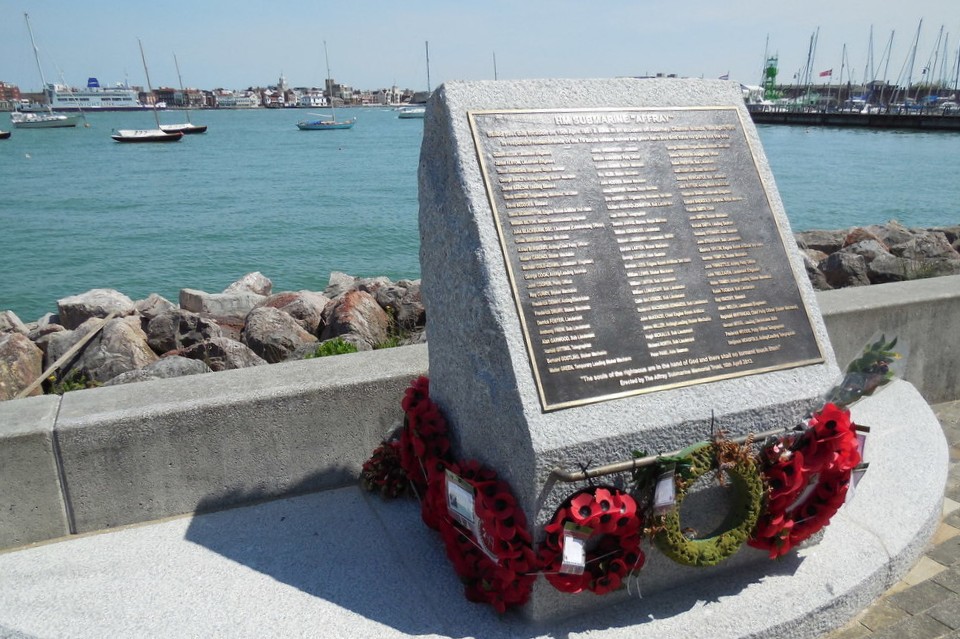
Today, HMS Affray rests undisturbed on the seabed as a protected war grave, and the 75 men who never returned remain there beneath waters that gave no warning and no second chance.











Tragic story, so sad.
How awful
A sad sad story RIP
Tragic story
Amazing. Thank you for bringing this tragic story. RIP to all those all perished.
It’s not a war grave and could be raised and the men given the burials the relatives would want.
I think that raising her and giving these very brave men a decent funeral and burial. I know that the raising of the Mary Rose was in more shallow waters, but they got that up. Bless each and everyone of these sailors.