What might have been… in this week’s edition of Made on the Isle of Wight, Island Echo examines some of Saunders Roe’s aircraft prototypes and designs that sadly never came to fruition. Most Islanders have heard of the gigantic Princess Flying Boat – the largest metal flying boat ever constructed – of which 3 were completed but were mothballed and never put to commercial use. But what of the other aircraft projects thought up by the innovative designers and engineers of East Cowes? What was their fate?
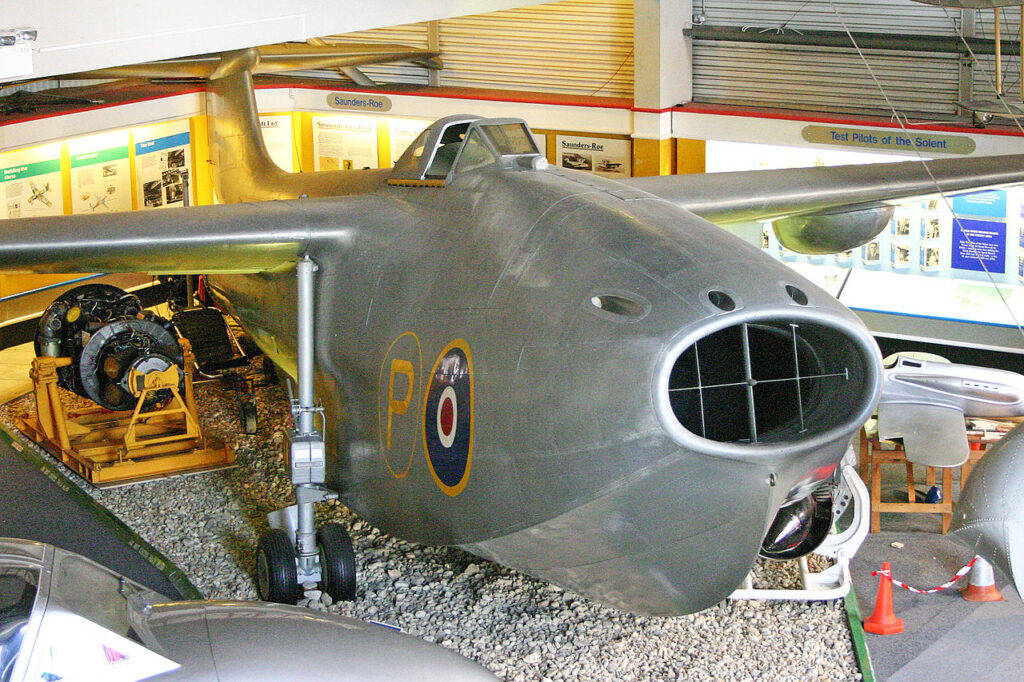
The SR.A/1 – also known as ‘the Squirt’
The SR.A/1 was a flying boat fighter aircraft. It was the 1st jet-propelled water-based aircraft to be made anywhere in the world. 3 Squirts were built. The maiden flight of the 1st prototype was on 16th July 1947. However, despite interest from foreign governments – including the United States – no orders materialised. It last flew in June 1951. The SR A/1 Photo: Alan Wilson A jet-propelled seaplane was believed necessary at the end of World War II to combat the Imperial Japanese Navy in the Pacific, which was using the Nakajima and Kawanishi seaplane fighters to good effect. Seaplanes were ideally suited to the Pacific Theatre of war as they could turn any calm area of sea into an airbase. The SR.A/1 was 50ft long, had a wingspan of 46ft and could reach a maximum speed of 512mph. It was powered by twin Beryl jet engines. The Squirt failed for 2 reasons. First, the Beryl engine became unavailable when the company Metropolitan-Vickers ceased jet engine production. Second, it was decided that the success of aircraft carriers in the Pacific had rendered seaplanes redundant. A prototype of this revolutionary jet-propelled seaplane can be seen at the Solent Sky Museum in Southampton.
The P.192 – also known as ‘the Queen’
The Saro Queen This remarkable beast – that never got beyond the drawing board – would have been larger even than the Princess flying boat. The extraordinary jet-powered design would have dwarfed anything then flying and – even today – would have been bigger than any aircraft that has ever flown. Its gargantuan size would have required a significant enlargement of the Columbine hangar in East Cowes. The enormous seaplane was conceived following interest from the P&O line for a seaplane capable of flying from Southampton to Sydney in less than 48 hours, carrying a ‘liner-load’ of passengers (over 1,000). It was to have been powered by 24 Rolls-Royce jet engines. It’s passengers would have been housed on 5 decks divided into 6-person compartments as in railway carriages. There would have been 7 flight crews and 40 cabin crew, together with a steward as on an ocean liner. 1st class passengers would have had their own bars, dining rooms and washrooms. Even though the planned seaplane was believed to be practically feasible, the idea proved too radical for both the P&O company and the Government, and the idea was shelved.
Article continues below this advertisement
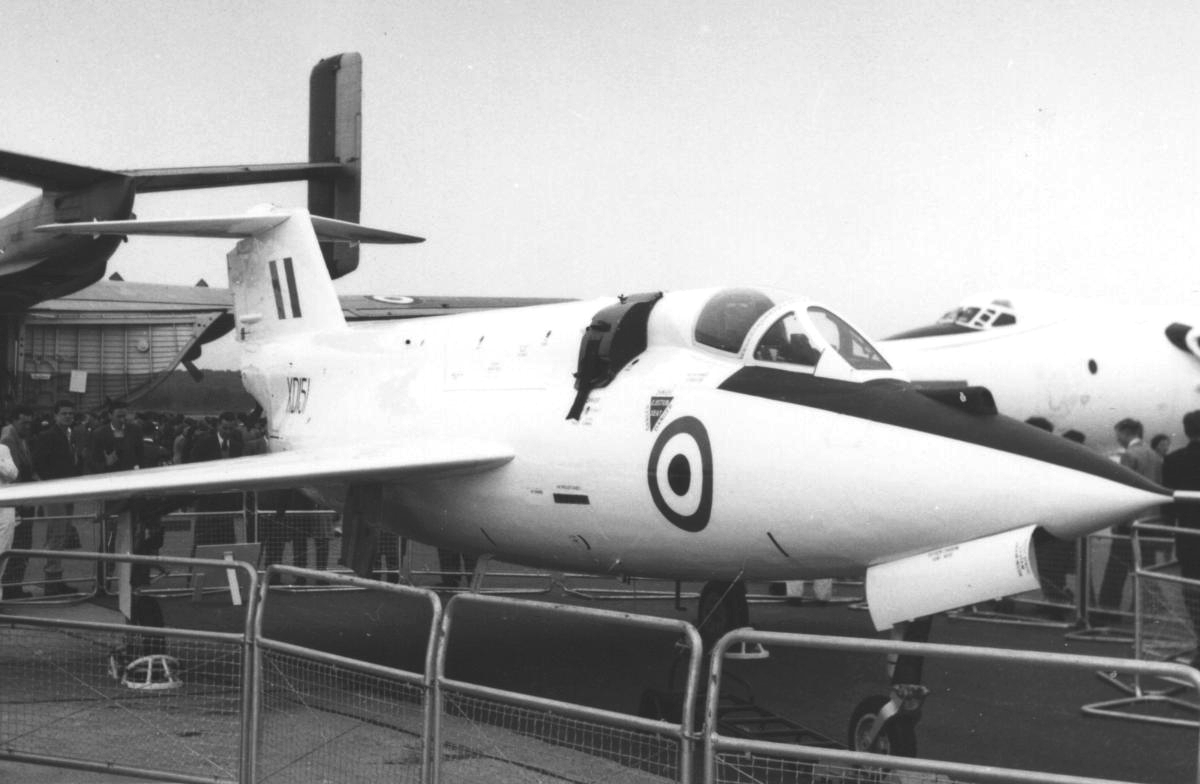
The SR.53
The SR.53 The SR.53 was an interceptor aircraft of mixed jet and rocket propulsion. It 1st flew on 16th May 1957. Only 2 were ever constructed. The revolutionary aircraft was capable of a speed of Mach 2.0 (1,520mph). It could climb to a height of 50,000 feet in just over 2 minutes. The test flights were promising, reaching a speed of 1.34 Mach (over 1,000 mph). The test pilot described the SR.53 as “exceedingly docile and pleasant to fly”. However, a 2nd prototype plane crashed on 5th June 1958, killing its pilot Squadron Leader Booth. Unfortunately, the SR.53 project was doomed to failure from before the 1st prototype had been completed. The ‘infamous’ Defence White Paper of 1957 outlined the British Government’s policy of abandoning piloted aircraft in favour of missiles. The SR.53 was cancelled on 29th July 1960. The surviving aircraft can be seen at the Royal Airforce Museum in Cosford in the West Midlands.
The SR.177
The SR.177 The SR.177 was a larger and faster version of the SR.53. It had a design maximum speed of Mach 2.35 (1,785mph) and could reach a height of 60,000 feet. 9 were ordered by the RAF, with an option for a further 27. The Royal Navy expressed an interest in purchasing the SR.177 for use on its aircraft carriers. The German Defence Ministry were – at one time – considering purchasing 200. Interest from the RAF evaporated following the release of the Defence White Paper of 1957. However, the Germans and the Royal Navy remained potential customers. The West German government eventually chose the American Lockheed F-104 Starfighter interceptor along with the majority of European Governments. However, it is claimed they only did so because of millions of dollars of ‘sales incentives’ (bribes). Prince Bernard of the Netherlands confessed to having taken more than a million dollars in bribes from Lockheed to buy the F-104. The project was abandoned at the end of 1957 with 1 of the prototypes 90% complete. Sadly, 1,470 workers – many highly skilled – lost their jobs.
Other Saunders Roe projects…
The 4 planes listed above were not the only futuristic design concepts of Saunders Roe in the years following World War II. The innovative Isle of Wight company also planned to build the Saunders Roe Hydroski (Project P.121) that would land on skis rather than a hull and a nuclear-powered flying boat with banks of engines mounted in the tailplane. No doubt, further far fetched projects can be covered in future series of Made on the Isle of Wight. However, in our next edition, rather than examining the engineering feats of our fathers and forefathers, we shall take a look at the humble can opener – 1st invented by a Ryde man.