










































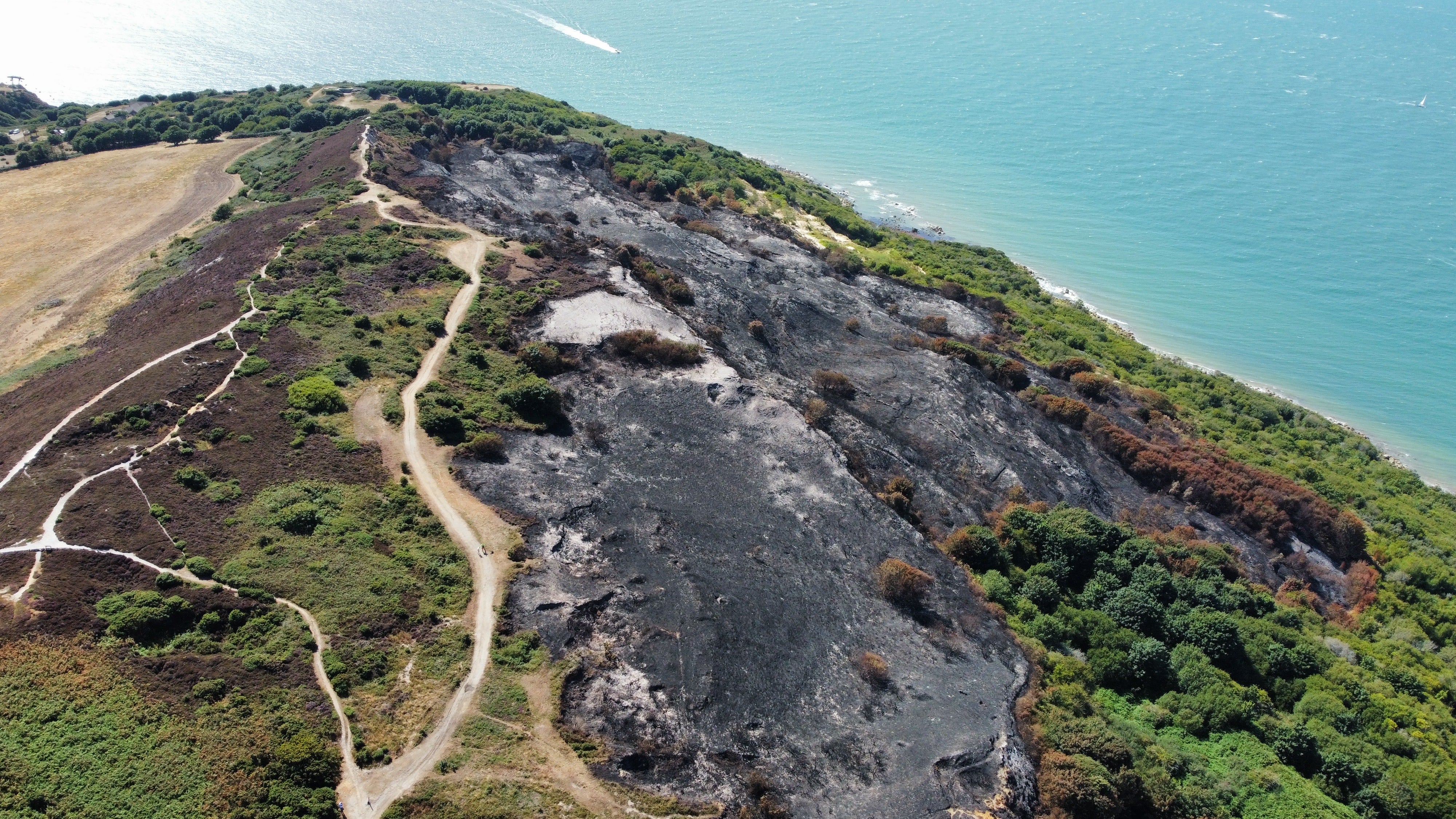


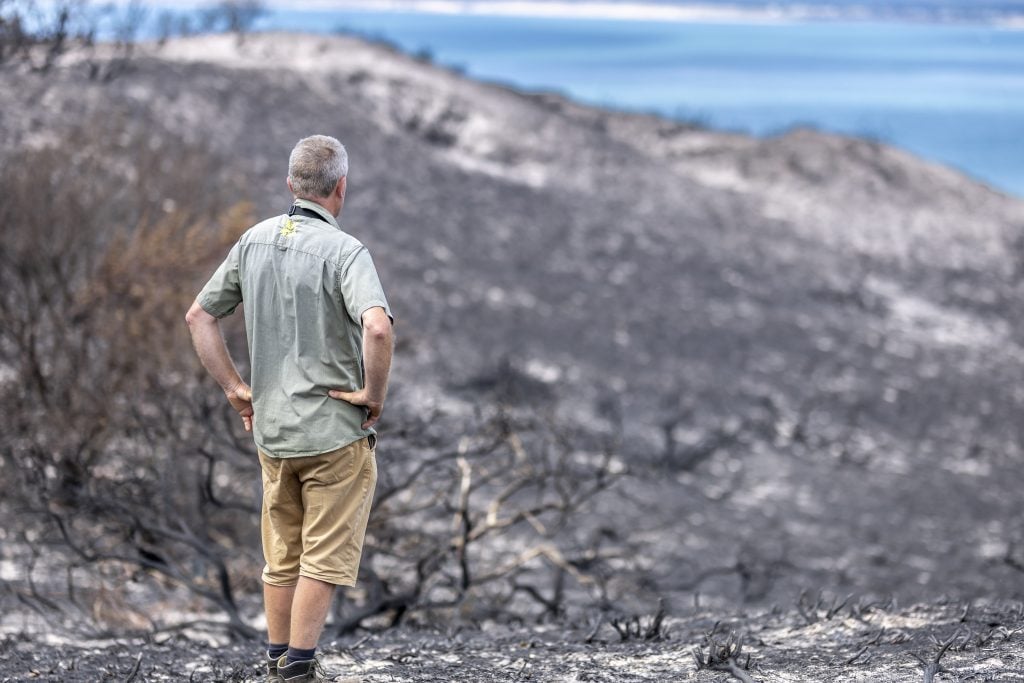
Rabbits that survived underground are helping to bring Headon Warren back to life, almost 3 months after a devastating wildfire destroyed a large area of nationally important heathland on the Isle of Wight.
The National Trust has revealed that the first signs of recovery are now appearing across the scorched landscape, with plants regenerating from their roots and new grasses beginning to establish themselves.


It follows the major wildfire that broke out at around 09:15 on Thursday 23rd July, prompting a huge emergency response involving around 80 firefighters at its height.
Crews from across the Isle of Wight and several mainland fire services battled the blaze, with a helicopter brought in to drop seawater on areas inaccessible to those on the ground.
The fire destroyed around 40% of the nationally important heathland at Headon Warren, which forms part of a Site of Special Scientific Interest overlooking The Needles.

Now, the National Trust has shared a video update showing how nature is beginning to reclaim the land.

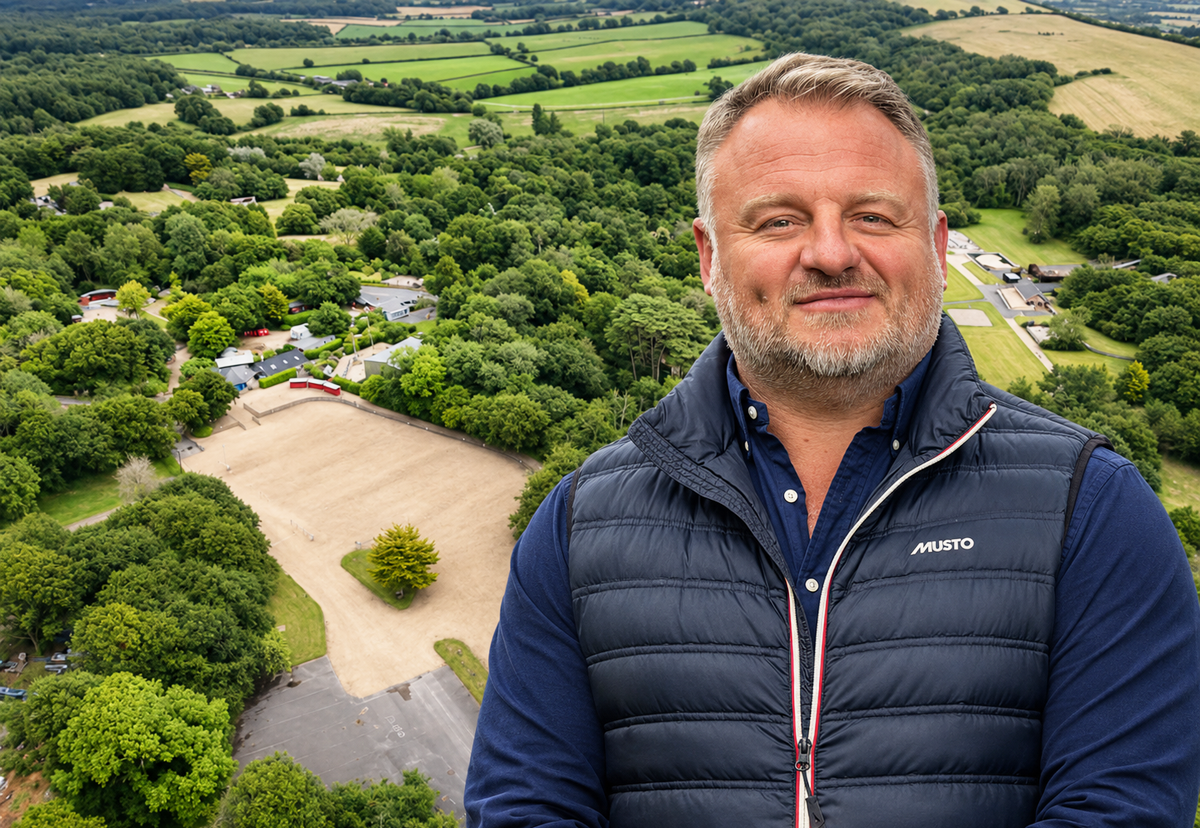
Paul Davies, the charity’s Countryside Manager for the Isle of Wight, has explained that recent light rainfall has encouraged rosebay willowherb and gorse to regenerate from their roots. Early colonising grasses, including Yorkshire fog, are also beginning to appear.
Perhaps more surprisingly, rabbits that survived the intense fire by sheltering underground are now playing a part in the recovery, spreading seeds through their droppings.
Despite these encouraging signs, large areas of bare ground remain, with the National Trust adopting a wait-and-see approach to establish which plants return naturally.
The National Trust is working alongside Warren Farm and Natural England to give the heather the best opportunity to return, using cutting or grazing to control competing vegetation such as bracken and bramble.
Speaking to Island Echo shortly after the fire in July, Paul Davies warned that recovery would take years rather than months, with heather expected to begin returning across the site within 3-4 years.
The area is home to a variety of wildlife, including adders, slowworms, lizards, nightjars and Dartford warblers.
Attention is also turning to how the site can be better protected from future wildfires.
The National Trust is considering improved access and additional fire breaks, while working with Hampshire & Isle of Wight Fire and Rescue Service to review lessons learned from the July blaze. The charity says the work will be particularly important ahead of the possibility of another hot, dry summer.