














































Military helicopters and transport aircraft are to be equipped to tackle wildfires across the UK for the first time, following a decision by Prime Minister Andy Burnham to establish a permanent aerial firefighting capability – just 3 months after a devastating blaze at Headon Warren on the Isle of Wight required a privately funded helicopter to help bring it under control.
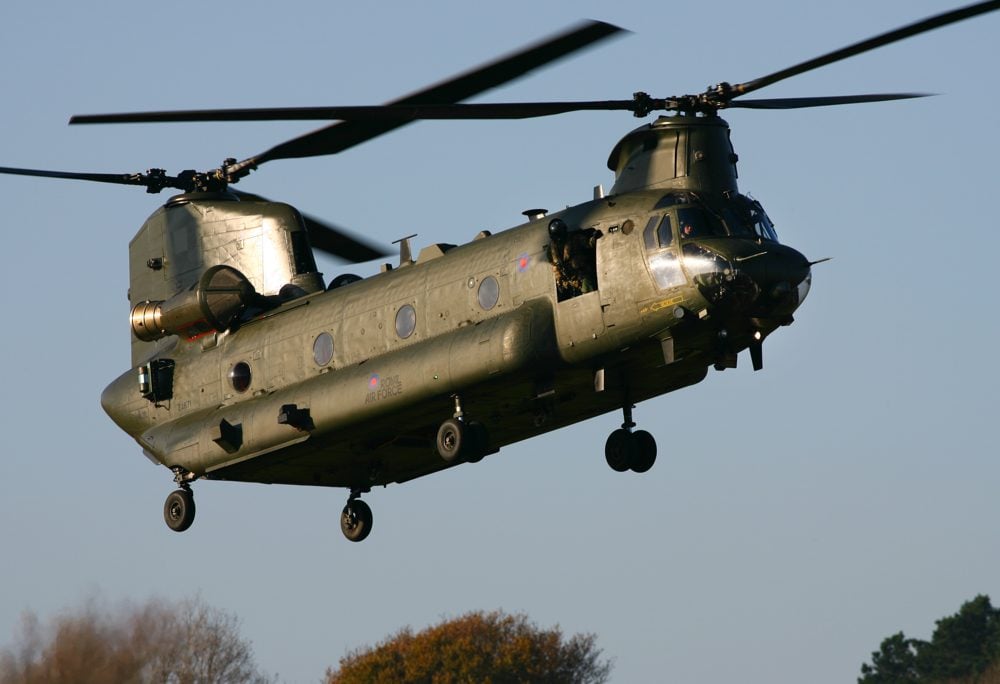
The RAF’s Chinook helicopters and A400M aircraft will be fitted with specialist firefighting equipment, allowing them to be deployed when requested to support emergency crews battling wildfires on remote moorland, steep hillsides and other difficult-to-access terrain.
The announcement made last Thursday follows a summer of destructive wildfires across Britain and mounting concerns over the country’s lack of readily available aerial firefighting resources.


The Ministry of Defence will now develop a permanent UK-based aerial firefighting capability, with civilian fire and rescue services across all 4 nations able to request military assistance through the existing Military Aid to the Civil Authorities process.
The government has also announced up to £45million for additional specialist wildfire teams and lightweight protective equipment for firefighters in England, alongside £25million to restore peatlands and improve natural fire prevention measures.
Prime Minister Andy Burnham has said:
“I stood in Stourbridge and watched families lose everything. I will never forget it. Our firefighters were heroes that day, but heroes shouldn’t have to fight with one hand tied behind their backs.
Article continues below this advertisement “Crews will now have the kit they need to stay safe and military aircraft will stand ready to help tackle wildfires from the sky. We cannot put people through another summer like this one.”

The decision comes after MPs warned that the UK’s existing arrangements for accessing firefighting aircraft were ‘no longer fit for purpose’, with individual fire and rescue services left to secure helicopters and other specialist resources from commercial operators.

In a major parliamentary report, ‘A burning issue: managing wildfire risk’, that was published on Wednesday last week, the House of Commons Environment, Food and Rural Affairs Committee called for a coordinated national aerial firefighting capability that could be rapidly deployed wherever needed.
MPs highlighted how aircraft were sometimes unavailable during this summer’s wildfires because they were already committed elsewhere, leaving emergency services competing for limited resources.
The committee had urged ministers to identify military, public-sector and commercially contracted aircraft that could be made available for the 2027 wildfire season, including an assessment of Ministry of Defence firefighting assets based in Cyprus.
The announcement is particularly significant for the Isle of Wight following July’s 5-day wildfire at Headon Warren, which destroyed approximately 40% of the site’s nationally important heathland.
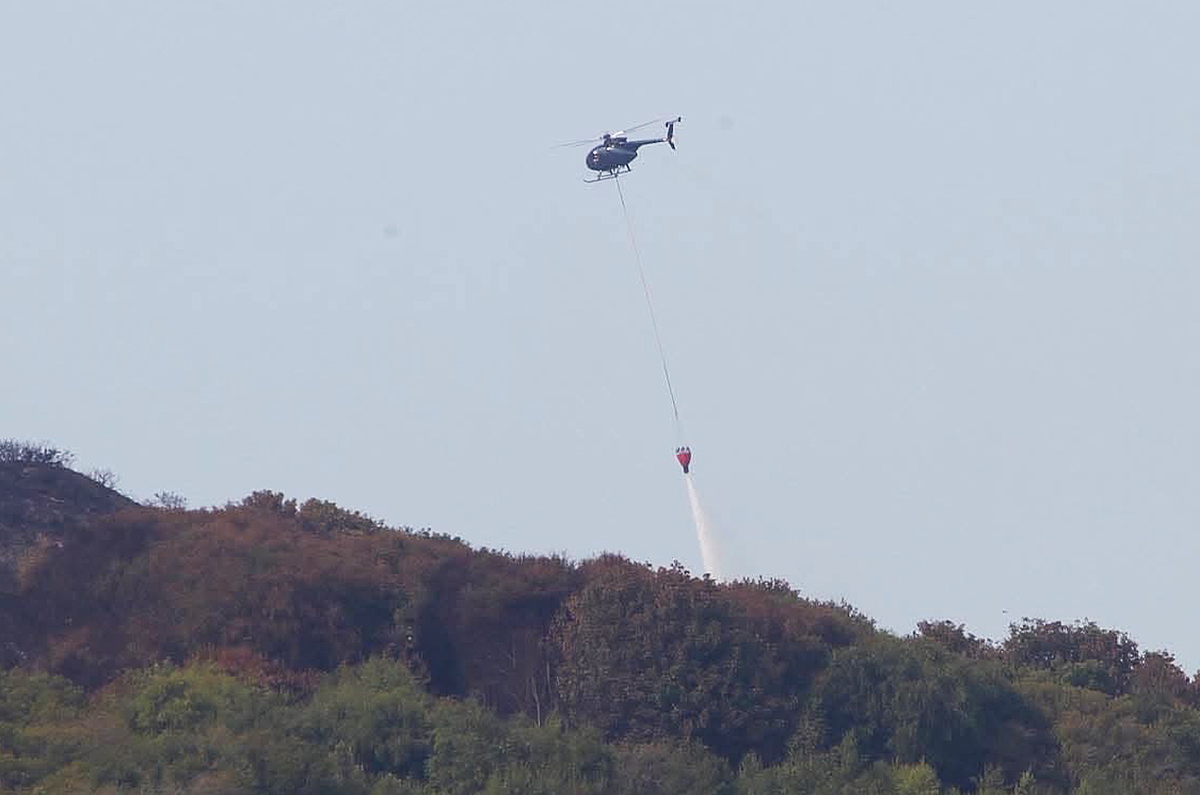
As previously reported by Island Echo, an MD Hughes 500 helicopter was flown in from the West Country on Friday (24th July), equipped with an underslung Bambi Bucket to collect seawater and drop it directly onto the burning landscape.

The specialist aircraft was funded by the National Trust at a cost of approximately £12,500, rather than being provided through a dedicated national firefighting service.
When the blaze broke out shortly after 09:00 on 23rd July, steep terrain and limited access made conventional firefighting particularly challenging.
Firefighters were forced to approach parts of the burning gorse on foot with portable equipment, while specialist 4×4 appliances and High Volume Pumps were brought in to support operations.
Water was drawn from the sea at Totland and transported approximately 3km uphill to the fireground, with around 80 firefighters involved at the height of the emergency.
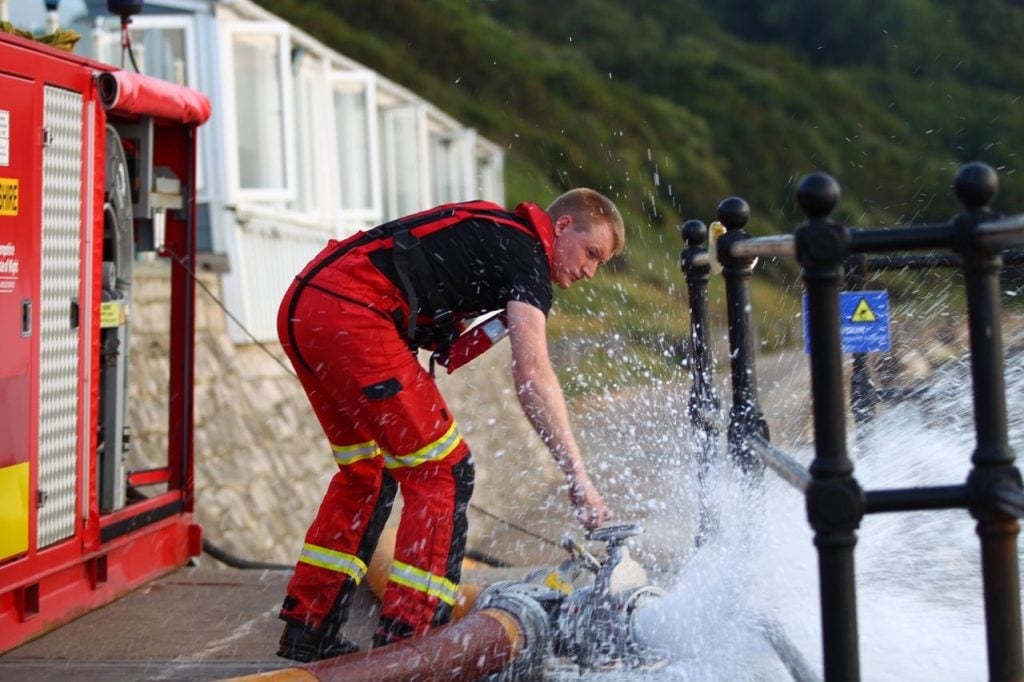
The incident consumed approximately 1,200 hours of fire service resource time over 5 days, making it Hampshire & Isle of Wight Fire and Rescue Service’s largest incident since 2019 before being surpassed by the A31 wildfire in the New Forest.
Around 8 hectares of the site’s 20 hectares of nationally important heathland were destroyed.
The parliamentary committee also highlighted the wider difficulties of accessing water during rural wildfires, recommending improved mapping of water sources, better access routes and the creation of dedicated suppression ponds and reservoirs.

Cllr Prad Bains, Chair of Hampshire and Isle of Wight Fire and Rescue Authority, previously welcomed the committee’s recommendations, revealing that the Service had attended 75 wildfires during July and August, including major incidents on the Isle of Wight and in the New Forest.
He said:
“Wildfires are becoming more frequent, more complex and increasingly resource-intensive, often requiring large-scale, prolonged responses across challenging terrain.
“We support the report’s call for greater investment in specialist capabilities, stronger national coordination and a long-term wildfire strategy.
“As the threat from wildfires continues to grow, it is essential that national funding and resilience planning keep pace, ensuring fire and rescue services have the capacity and capability needed to protect communities, firefighters and the environment.”
Alongside the introduction of military aircraft, the government has announced plans for a new Wildfires AI Unit within the National Situation Centre, improved forecasting with the Met Office and England’s first Wildfire Action Plan.

Ministers will also consider tougher local restrictions or product bans to reduce the risk of fires being started during periods of extreme danger.
Defence Secretary Wes Streeting has said:
“As the threat of wildfires in the UK grows, defence will step up to provide greater support to our emergency services and protect military training areas across the country.
“This will see the RAF’s Chinook helicopters and A400M aircraft equipped with new specialist firefighting equipment to enable them to tackle wildfires from the skies for the first time.”
Although the new military capability has now been approved, the government has not specified when the aircraft will be fully equipped and operational, or whether they will be available in time for the 2027 wildfire season.