




































































A fossil discovered on the Isle of Wight more than 100 years ago has finally been identified as a completely new species of meat-eating dinosaur.
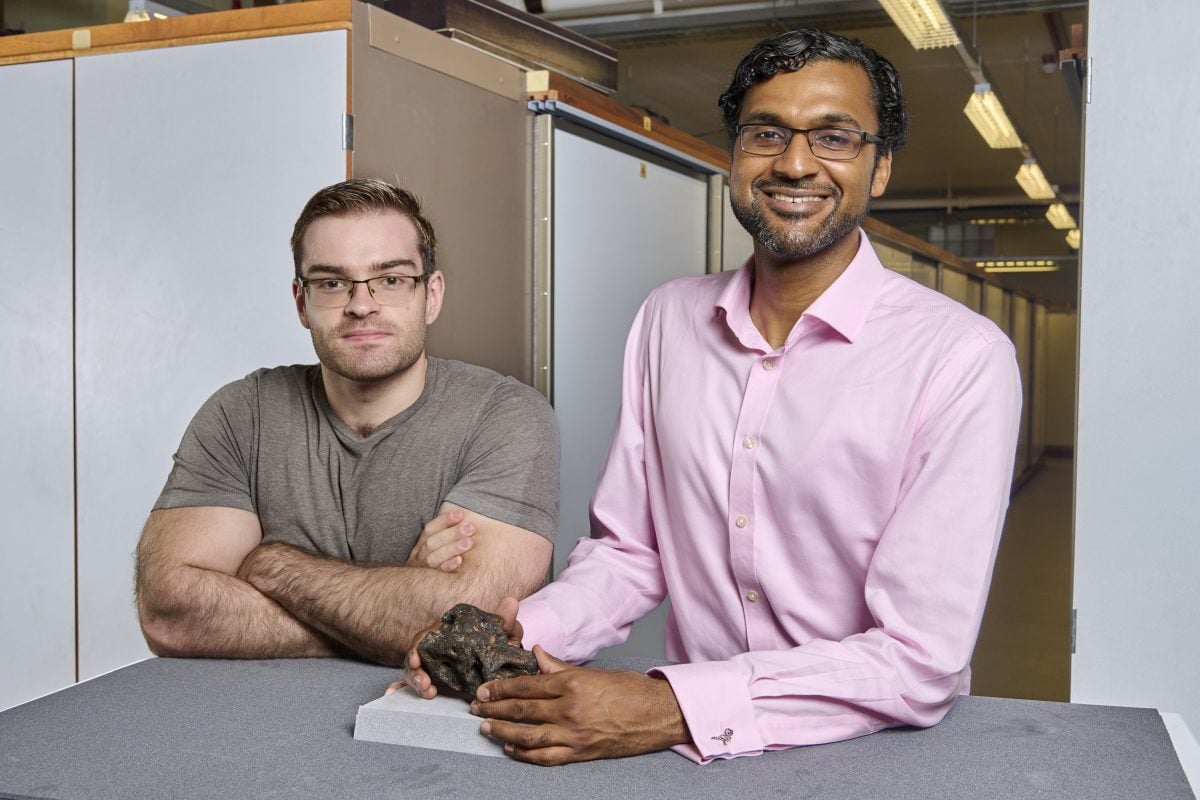
The remarkable discovery has been made by scientists examining a fossil that had been sitting in the Natural History Museum’s collection for almost a century, having been acquired by the museum in 1924.
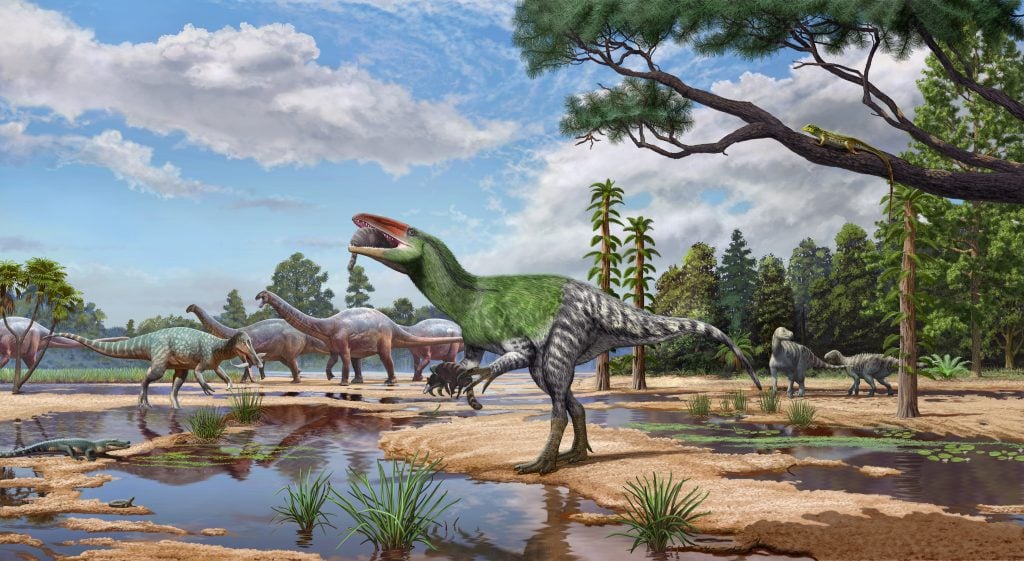
The dinosaur, named Invictibellatrix amberina, was a long-clawed predator roughly the size of a large tiger, which roamed the Isle of Wight around 120million years ago.


Despite being discovered more than a century ago, the fossil’s true significance had remained unrecognised until researchers from University College London (UCL) and the Natural History Museum carried out a detailed investigation.
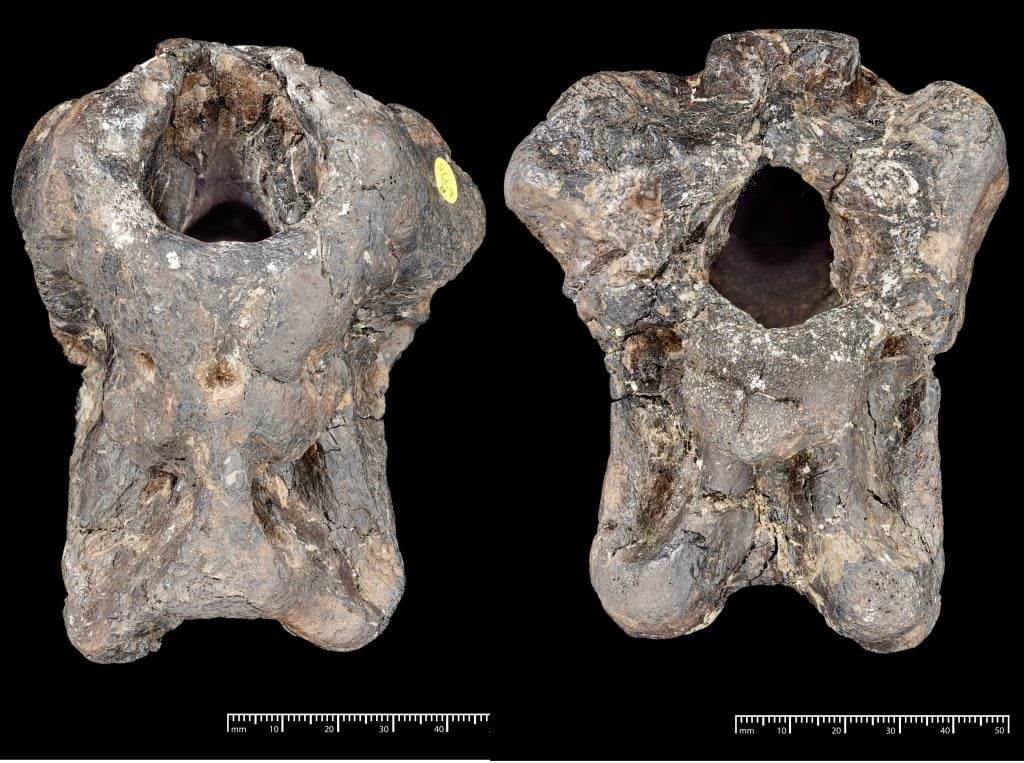
The fossil, consisting of part of the back of a skull, was originally discovered at the foot of a cliff on the south-west coast of the Island by amateur palaeontologist Reginald Walter Tooley.
It was among more than 1,000 specimens collected by Tooley which were acquired by the Natural History Museum following his death.
Now, more than 100 years later, scientists have established that the remains belong to a previously unknown species of dinosaur and, remarkably, the first member of its group ever identified in Europe.
The dinosaur belonged to a group of agile, 2-legged carnivores known as megaraptorans, which were closely related to tyrannosaurs, including the famous Tyrannosaurus rex.

However, unlike T. rex, which relied heavily on its powerful jaws, megaraptorans had slimmer heads and used their large arms and enormous curved claws to attack prey.
Researchers believe Invictibellatrix would have measured between 3 and 4 metres in length and stood just over 1.5 metres tall, with claws potentially measuring between 10cm and 20cm.
It may also have been covered in feathers and would likely have hunted smaller dinosaurs, lizards and mammals.
Lead author Dr Cassius Morrison, from UCL Earth Sciences, explained:
“Based on what we know about its closest relatives, Invictibellatrix would have been three to four metres long and just over a metre and a half in height – about as tall as a human.
“It would likely have had feathers and its claws might have been about 10cm to 20cm long. It would have eaten small dinosaurs, lizards and mammals – occupying a similar role in the food chain to the hyena today.”
Dr Morrison suggested that, had humans existed alongside the predator, they could have been an ideal size for it to hunt.
He added:
“It was not the apex predator of its time, but for humans this dinosaur would have been more dangerous than a T. rex. We would have been perfectly sized prey, about a third of their body weight.
“They definitely would have chased us. A T. rex would not have bothered, as we would have been too small.”
The discovery is particularly significant because, until now, no megaraptoran fossils had been identified in Europe.
Scientists have long suspected the group originated in Asia before spreading through Europe and eventually reaching the southern supercontinent of Gondwana, which included present-day Africa, South America and Antarctica.
The Isle of Wight fossil now provides the first direct evidence supporting that theory.
Researchers used CT scanning technology to create detailed 3D models of the fossil and its internal structures, allowing them to compare the remains with those of other meat-eating dinosaurs.
Distinctive features of the skull, including an unusual opening where the spinal cord entered the brain and an hourglass-shaped crest, helped confirm that the fossil represented a new species.
The findings have been published today (Wednesday) in the scientific journal Royal Society Open Science.
Professor Paul Barrett, senior author of the study at the Natural History Museum, said:
“Despite over 200 years of collecting, the Isle of Wight continues to surprise us with new dinosaur species, and finds of carnivorous dinosaurs, such as Invictibellatrix, have been particularly elusive.
“Work like this shows the exceptional value of working with historical museum collections where there are still many discoveries to be made.”
The dinosaur’s unusual name, Invictibellatrix, translates to ‘unconquered female warrior’, in recognition of the megaraptorans’ later evolution into enormous apex predators.
The second part of its name, amberina, refers to amber found in the rocks where the fossil was originally discovered.
For the researchers, the discovery raises the intriguing possibility that further unknown species could already be sitting in museum collections, waiting to be recognised.
Dr Morrison said:
“It is a real mystery that this fossil was overlooked for so long, sitting in a drawer for nearly 100 years.
“Lots of bones are found on the Isle of Wight – who knows what else is waiting to be discovered.”