






































































At its heart, MTG is a dueling game set within various planes of existence. Players – or planeswalkers – wield decks of spells and creatures in a battle of wits and strategy. With over 25 million players worldwide, MTG is a pillar in the tabletop gaming community. Understanding MTG is like learning a new language – and like any language, it begins with the fundamental concepts. This guide is tailored to help you navigate the vast world of MTG, from basic gameplay mechanics to deck building and beyond.
The Colors of Magic
In MTG, the colors of magic form the foundation of the game’s rich strategy and lore. Each of the five colors—White, Blue, Black, Red, and Green—symbolizes different philosophies, strengths, and weaknesses. White stands for order and community, offering protective spells and powerful defenses. Blue embodies knowledge and manipulation, allowing players to draw cards and control their opponent’s moves. Shrouded in ambition and power, Black offers direct damage and resurrection abilities. This diverse spectrum encourages players to mix and adapt, creating decks that reflect their strategy and playstyle.
Card Types
Understanding the different card types is crucial for mastering MTG. The main categories include creatures, which serve as your primary form of attack and defense; instants and sorceries, offering powerful effects with a single use; enchantments, providing ongoing benefits; and artifacts, versatile tools that can boost your game. Planeswalkers, another key card type, are powerful allies with unique abilities. 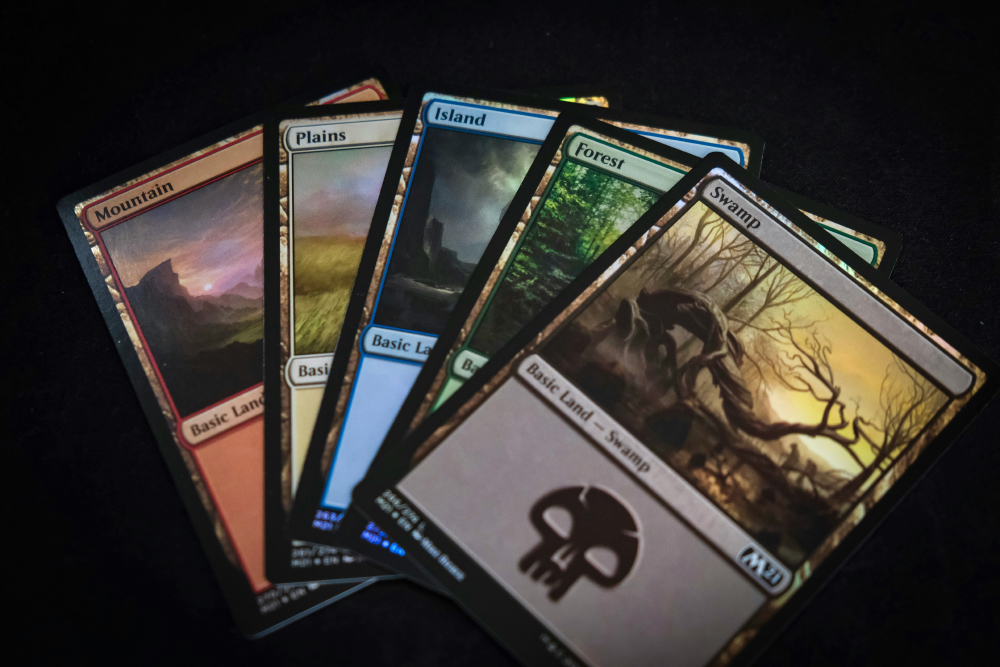 Lands are the backbone of your deck, fueling your spells and creatures by generating mana of different colors. Players often personalize their decks with custom trading cards, bringing a unique flair and strategic advantage to their game. This diversity in card types allows players to explore an almost limitless array of strategic combinations and playstyles, making MTG a constantly evolving challenge.


Phases of a Turn
Understanding the phases of a turn is crucial in mastering the tactical depth of MTG. Each player’s turn is divided into five main phases: untap, upkeep, draw, main, and combat. A second main phase follows, ending with the cleanup. The untapped phase sees all tapped cards refreshed and ready for the new turn. During the upkeep and draw phases, players can activate certain abilities and draw a card from their library. The combat phase is the heart of the battle, allowing players to attack their opponents with creatures. Navigating these phases efficiently is critical to developing strategies that can anticipate and counter the moves of your adversaries.
Deck Building
Deck building is an art and a strategy central to the MTG experience. It combines your understanding of card types, colors, and gameplay phases to tailor a deck that suits your playstyle. Successful deck builders balance a mix of creatures, instants, sorceries, enchantments, artifacts, and lands, keeping in mind the mana curve to ensure a smooth flow of play. Innovators in the game often experiment with custom trading cards or less conventional strategies to surprise and overcome their opponents. This process of creation and refinement aids not just in gameplay competence but also deepens one’s appreciation for the depth and complexity of MTG. Ultimately, deck building is a continuous learning experience, evolving with each game played and each opponent faced.
Rules and Etiquette
Beyond the mechanics and strategies, understanding the rules and etiquette of MTG is paramount in fostering a respectful and enjoyable gaming environment. Rules govern the flow of play and ensure fairness, while etiquette revolves around mutual respect and sportsmanship between players. Knowledge of both aspects prevents disputes and enhances social interaction, a core part of the MTG community. Players are encouraged to communicate, maintain a positive attitude, and respect their opponent’s time and space during matches. Familiarizing oneself with these guidelines ensures compliance with tournament standards. It enriches the overall gaming experience, making each duel not just a contest of skill but also a display of camaraderie and mutual respect. Adhering to these principles helps maintain the integrity and the spirited community MTG has built over the years.
Community and Resources
MTG is more than just a game; it’s a thriving community of passionate players. Whether you’re looking for events, tournaments, or simply fellow enthusiasts to play with, the MTG community offers countless resources and opportunities to connect with others who share your love for this legendary game. From local game stores hosting weekly tournaments to online forums and social media groups, there are ample ways to engage in the community and learn from others. Experienced players often provide valuable insights, tips, and trading opportunities for those looking to build their collections. MTG is a game of creativity and intellect. Every match is an opportunity to explore new worlds, craft unique stories, and challenge your strategic understanding. The initial learning curve can be steep for new players, but the rewards of persistence are vast. Take your time to understand the fundamentals, experiment with different deck builds, and, most importantly, engage with the thriving community of players. With some practice and perseverance, you’ll find yourself fully immersed in MTG’s strategic depth and endless possibilities.