












































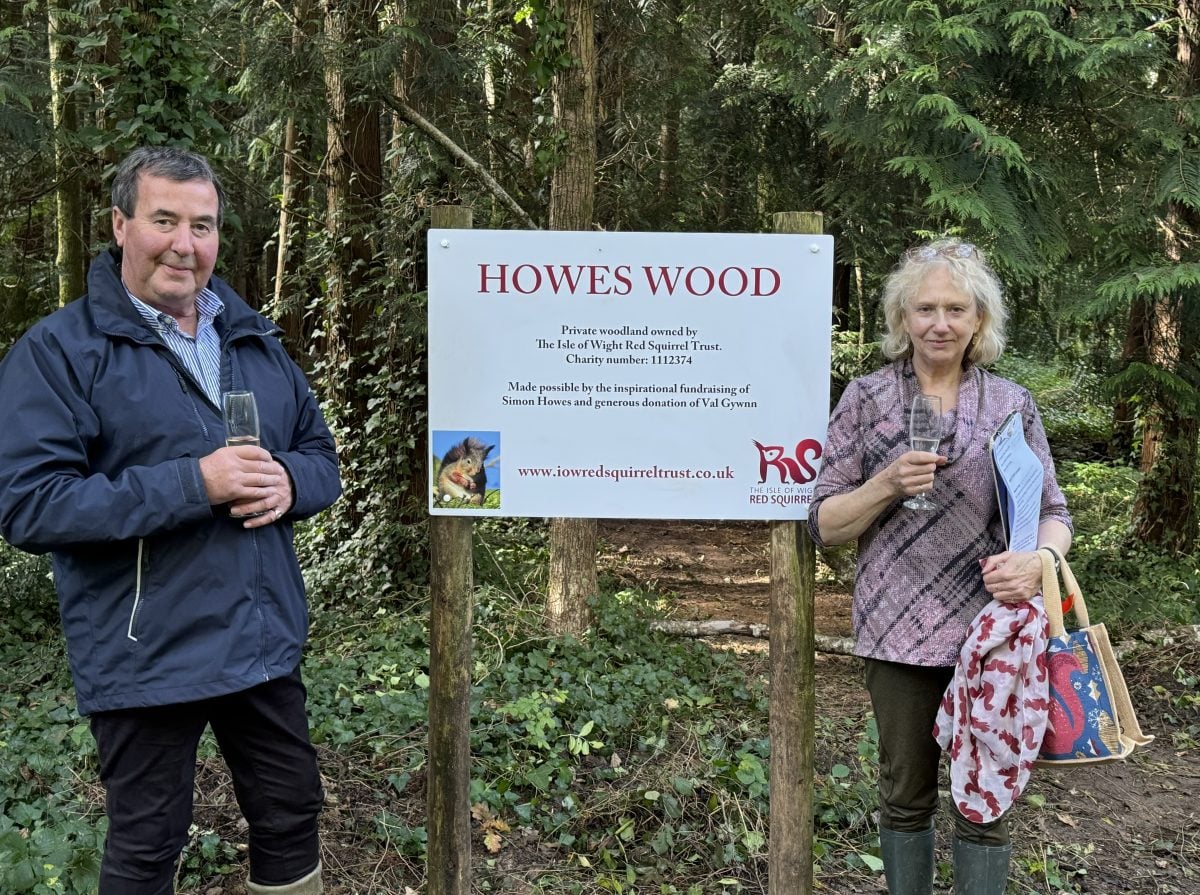

After 21 years, Helen Butler MBE is stepping down as a trustee and Chair of The Isle of Wight Red Squirrel Trust, whilst making it clear that she is certainly not retiring from her lifelong work protecting the Island’s red squirrels, as she continues as Chair of the IW Red Squirrel Forum.
Helen will continue managing and restoring woodland for the Trust, while Wight Squirrel Project and The Isle of Wight Red Squirrel Trust will remain partners and continue working together.
She also remains Chair of The Isle of Wight Red Squirrel Forum and is becoming increasingly involved with scientific projects focused on the Island’s native reds.


Explaining her decision, Helen said:
“People keep telling me I’m retiring from red squirrel work – how did they get that idea!
“All I’m doing is stepping down as a trustee, and therefore chair, of The IW Red Squirrel Trust. I am still managing and restoring the woodland for the Trust.
“Wight Squirrel Project and Trust are still partners and working together. I am also chair of The IW Red Squirrel Forum.”
Helen says the Trust is now in a strong position, allowing her to free up some time to concentrate on other areas of her red squirrel work.

She added:
“As the Trust is in a good place and I’m more involved with science projects, stepping down as a trustee will free up a bit of time for the other red squirrel jobs.
“I’ll probably keep going until I drop!
“Meanwhile The IW Red Squirrel Trust is in good hands with Nick Gurney-Champion and the other dedicated trustees.”
Helen’s involvement with the Isle of Wight’s red squirrels stretches back more than 3 decades.
As previously reported by Island Echo, Helen founded Wight Squirrel Project in 1993, with its work focusing on monitoring the Isle of Wight’s red squirrels without intrusive methods.
Her contribution to conservation was recognised with a special award from The Red Squirrel Survival Trust in 2012 for outstanding service to red squirrel conservation in the United Kingdom. She received an MBE for services to red squirrels on the Isle of Wight in 2013.
Now, attention is turning to further research, with Wight Squirrel Project preparing a number of new studies and once again calling on Islanders to become citizen scientists.
The next study will look at squirrel coat colour amid differences in the genetics of red squirrels in the east and west of the Isle of Wight.
Helen says squirrels with greyish coats appear to be seen more often in West Wight and wants Islanders to help gather more information.
Anyone who sees a red squirrel with a greyish coat anywhere on the Isle of Wight, including regular garden visitors, is being asked to report the sighting to Helen at [email protected] or submitted through the online form at www.wightsquirrels.co.uk.