











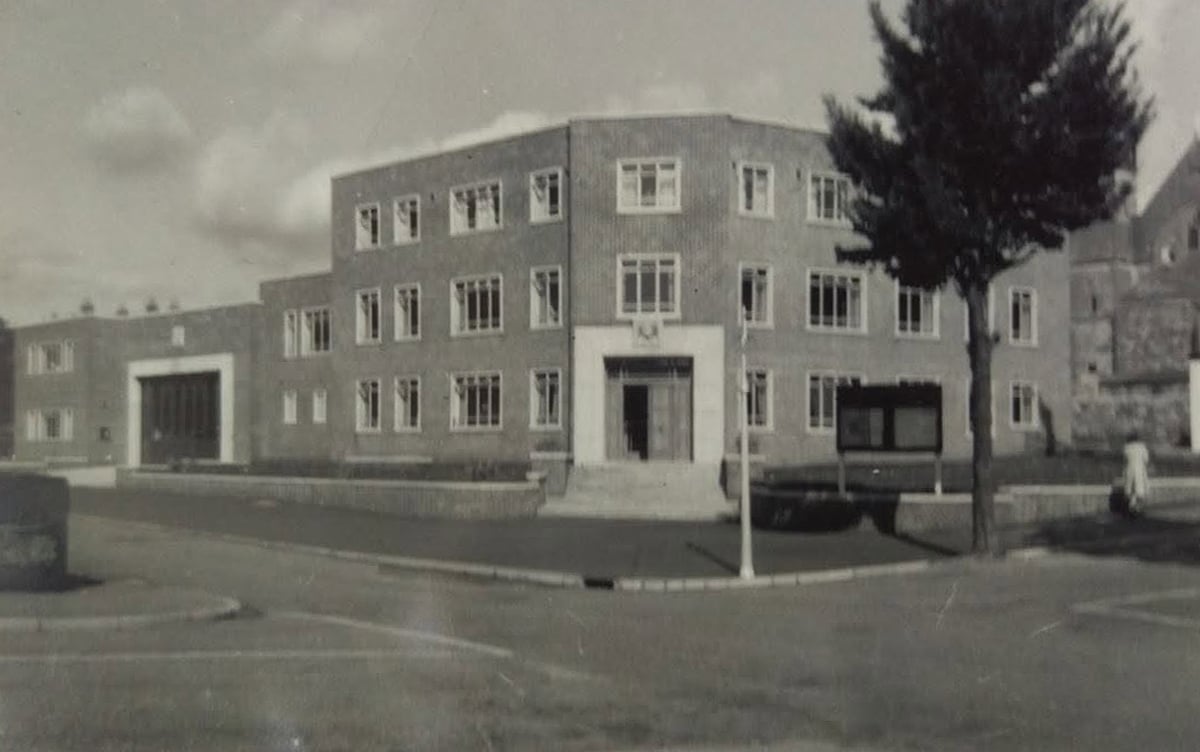

































One of Britain’s most feared jails opened a stark new fortress for its most dangerous inmates when its Maximum Security Block received its first inmate on 31st January 1966.
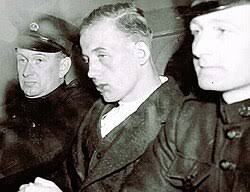
The first man led through its reinforced doors was John Thomas Straffen, already notorious and destined to become the longest-serving prisoner in British legal history. Straffen had murdered 3 young girls in the early 1950s and, by the time he arrived at Parkhurst, was regarded as a man the system could only contain, not reform. His quiet arrival sent a blunt message: this new block was reserved for those considered beyond the reach of ordinary prison control.
Parkhurst’s latest wing was created at a moment when the prison system was under intense pressure to rethink how it handled high-risk, long-term inmates. Officials openly acknowledged that some of the country’s most infamous criminals could soon be housed there. Among those widely expected were members of the Great Train Robbers gang, whose audacious 1963 raid had shaken public confidence and produced a generation of celebrity criminals. The very suggestion that they might be sent to Parkhurst underlined the block’s status as a last resort.


Yet the new wing was not conceived simply as a concrete cage. One newly arrived inmate, comparing conditions with Durham Prison, summed up the contrast in a line that quickly gained attention: moving to Parkhurst, he said, “is like jumping out of the dark into the light”. The phrase captured the thinking behind the project. More care, officials insisted, had gone into both security and prisoners’ amenities than at Durham, with hard lessons learned from earlier maximum-security experiments.
The block replaced Parkhurst’s old punishment wing, long associated with harsh discipline and isolation. Its interior was completely stripped out and rebuilt at a cost of £15,000, a substantial investment in mid-1960s Britain. The aim was to create a unit that could hold dangerous men securely while avoiding the mental and physical breakdown that often accompanied decades behind bars. As prison planners put it, society had to detain such men, but must not destroy them.
Exercise and controlled freedom were central to the redesign. Three enclosed yards, each measuring 35 feet by 25 feet, were roofed with translucent plastic so they could be used in all weathers. An additional open compound, with stark whitewashed walls, offered the possibility of gardening, a small but symbolic nod to responsibility and routine. Outside, television cameras constantly scanned the perimeter walls and exercise yards, providing round-the-clock surveillance that was advanced for its time.
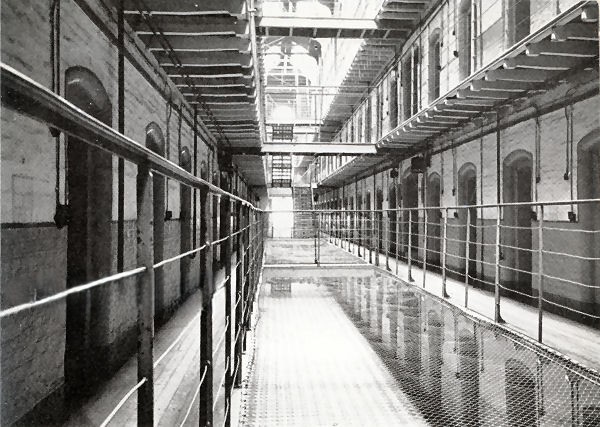
Inside the block, the tone was deliberately softened. Cells were painted pale cream instead of institutional grey. Each contained a combination locker, writing desk, hanging wardrobe and an upholstered chair, furnishings almost unheard of in a high-security wing. Just inside the entrance stood a communal gas stove where prisoners could make tea or coffee, or cook extra food bought from the prison canteen, under close supervision.
Work was part of the regime from the outset. Initially, inmates were employed sewing mailbags for the Royal Mint, repetitive but steady labour chosen to impose discipline without unnecessary risk. Evenings brought a carefully managed release of pressure. Between 18:00 and 21:00, prisoners were allowed access to recreational facilities including television, table tennis and billiards, alongside quieter pursuits such as chess, cards, darts, dominos and a shared radio. A small library of around 250 books was planned to provide an escape of a different kind.

Movement within the block was tightly controlled. Prisoners were escorted by officers wherever they went, yet within the unit they were granted a limited freedom of movement that set the wing apart from older maximum-security designs. The block was built to house up to 20 men, all under constant observation but no longer locked away in near-total isolation.
Even as the new wing opened, officials were already looking ahead. The next stage in dealing with long-sentence prisoners, they said, would follow the same guiding principle of “detain, not destroy”. Plans were outlined for a small prison for around 80 men, to be built behind Albany Prison, where even football might be possible.
The opening of Parkhurst’s Maximum Security Block marked a turning point in British penal thinking – a hard-edged blend of iron control and guarded humanity.










The island was once a place with tough laws
nowdays they cannot stop speeding.
How times have changed, it is now
Marshmallow Isle, so soft!.