






















































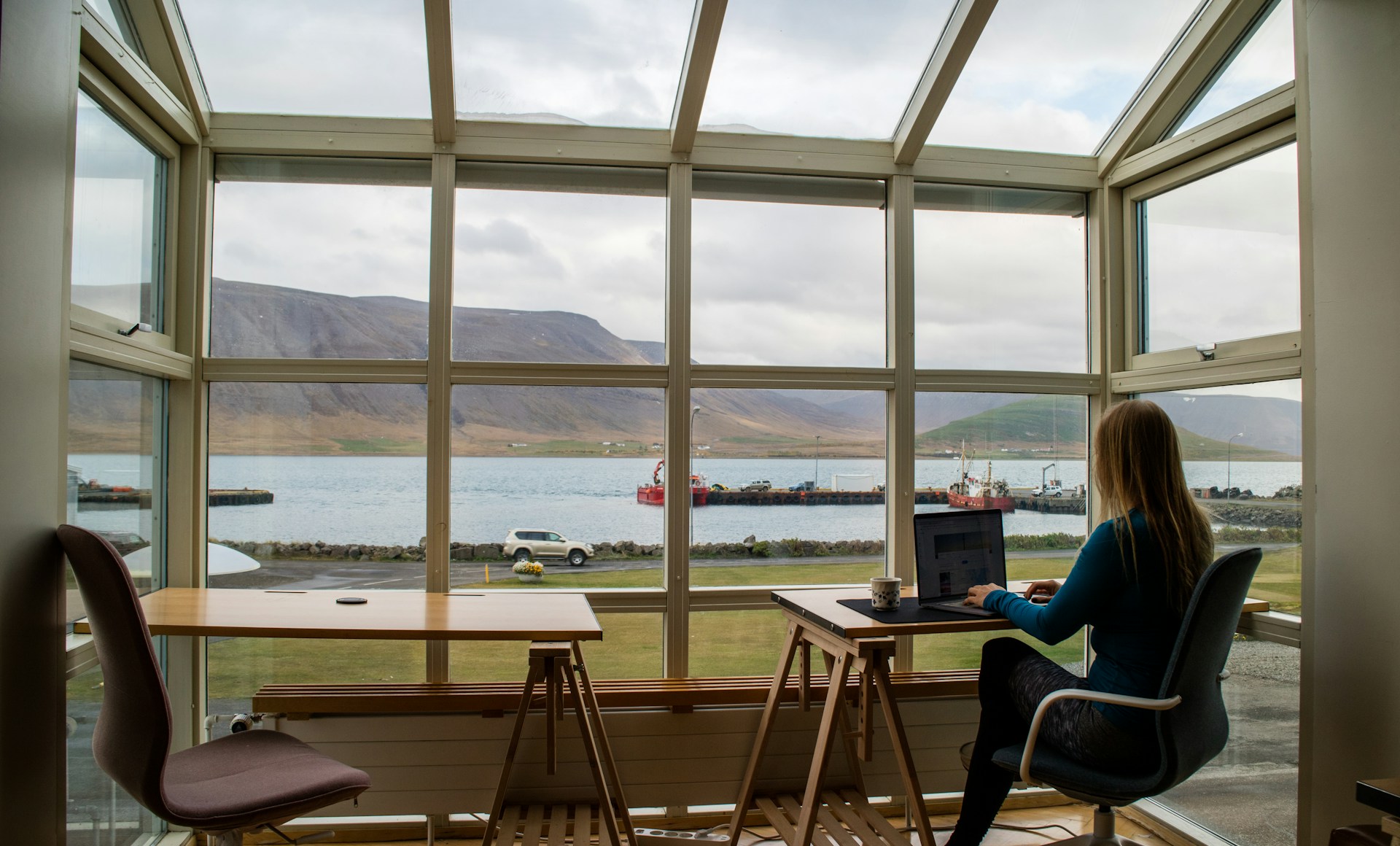

A decade ago, “working from home” meant the spare room. Now it increasingly means a co-working desk in Lisbon, a rented flat in Split, or a beach town in Bali with a decent fibre connection. The pandemic loosened the tie between job and postcode, and for a growing number of UK workers, that loosening never snapped back.
Around 165,000 British citizens are now living and working abroad as digital nomads, according to research from luxury travel specialist Bailey Robinson reported by HR News, with more than 730,000 monthly online searches related to the lifestyle. Spain has become the destination of choice, scoring 88 out of 100 in the firm’s ranking thanks to a digital nomad visa allowing stays of up to five years, average internet speeds of 200 Mbps and living costs around £1,645 a month, well below what the same lifestyle costs in London.
For anyone on the Island who has ever weighed up handing in their notice for a laptop-and-passport life, the appeal is obvious even before the numbers come in. No commute to Southampton on a foggy morning, no 6.45am ferry to catch, just a strong signal and a change of scenery. But the practicalities matter more than the daydream, and that’s where most people trip up: visa income minimums, tax residency rules, and the unglamorous question of whether the wifi in a rented apartment actually matches what the listing promised.


None of this requires anyone to actually leave, of course. Plenty of the appeal translates directly to an evening at home: swap the commute for a walk along the prom, and the after-work routine looks much the same wherever you are, whether that’s catching up on a boxset, meeting friends at the pub, or having a browse through the latest casino bonuses for something to do on a quiet Tuesday night. The lifestyle shift being sold as “digital nomadism” is really just flexibility with better marketing, and plenty of that flexibility is already available to anyone with a laptop and a bit of nerve.
Not every nomad chases sunshine and low rent, either. New rankings published this week put Seoul top of the pile among major cities for digital nomads, scoring 73.60 out of 100 on a mix of co-working density, going-out options and internet speed, with Tokyo a close second and Hanoi third. What’s notable is how far down the list European cities sit: Barcelona is the highest-ranked, in sixth place, ahead of a chasing pack that includes Madrid and São Paulo. For an Islander used to being a ferry ride from the mainland, it’s a reminder that “remote” now has a genuinely global meaning, not just a Solent-shaped one.
What’s changed is how normal it’s all become. Five years ago, telling your manager you wanted to work from Portugal for three months would have raised eyebrows. Now it’s a line item in some companies’ HR policy, and remote-first hiring means plenty of Island residents can already do their current job from a different country without changing employer. Whether that ends up meaning a longer stint away or just a fortnight’s “workation” once the kids are back at school, it’s a choice more people have than they realise.
It also raises a genuinely local question. If income minimums for nomad visas start around £2,000 a month for destinations like Portugal and Greece, and Island salaries in several sectors sit below that, the trend may say more about who can afford to opt out of the daily grind than about any seismic shift in how everyone works. The story gets told through the lens of freedom; it’s worth remembering it’s also a story about who has the income and job type to take advantage of it.
Still, the direction of travel is clear enough. Search interest keeps climbing, more countries keep opening visa routes rather than closing them, and employers keep discovering that a good hire based in Ryde can just as easily be based somewhere with better weather and a lower cost of living. We’ve seen this play out locally too. The Bay Business Association, which marked its first year supporting freelancers and start-ups across Sandown, Shanklin and Lake, has spent the past twelve months running AI workshops and networking events aimed at exactly this kind of flexible, non-traditional working life. The digital nomad trend is really the same conversation, just with a longer commute attached.

For most people reading this over a coffee in Newport rather than a co-working space in Chiang Mai, the practical takeaway isn’t “quit and go.” It’s that the option now genuinely exists, with real numbers behind it, for anyone curious enough to run them.