









































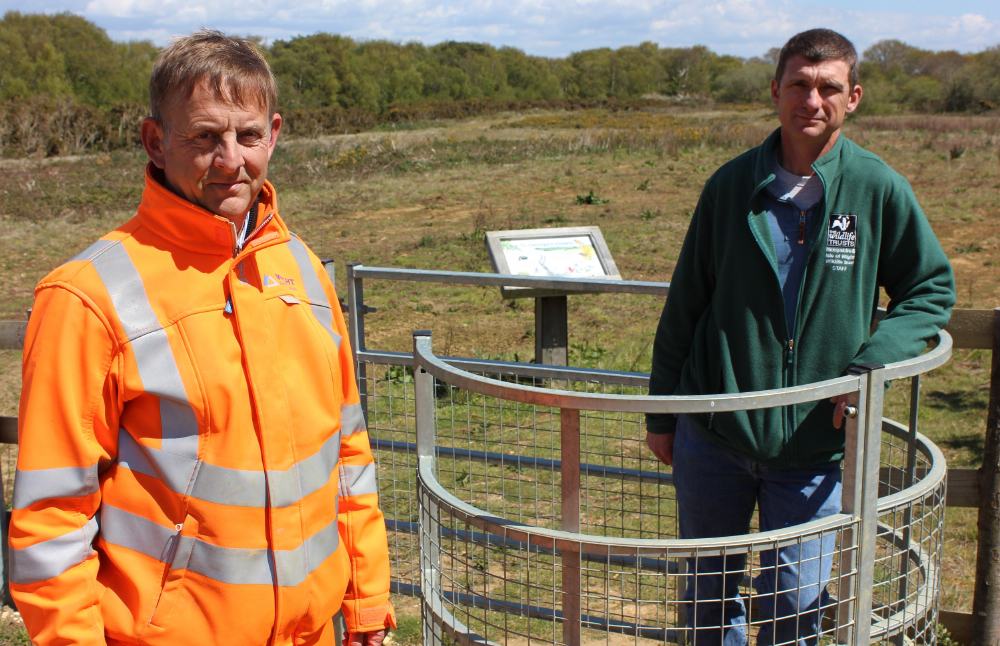

Grazing animals are set to be re-introduced to 2 environmentally important sites as part of work to restore 2 quarries back into areas where wildlife can thrive.
This project, by Wight Building Materials and Hampshire & Isle of Wight Wildlife Trust, funded by the Aggregate Industries, will see land at Prospect Quarry near Shalcombe and St George’s Down near Newport, being prepared for the introduction of cattle grazing in the Autumn.
The reintroduction of grazing will help manage the scrub and the grassland at both locations to provide conditions in which existing and new plants and animals can flourish now quarrying has stopped. St George’s Down, a Site of Importance for Nature Conservation (SINC) will initially host a herd of Aberdeen Angus, while Prospect Quarry, a Site of Special Scientific Interest (SSSI), will host a herd of Hereford cross cattle.


Over a kilometre of fencing has been erected to define the grazing area and a water supply will be installed in time for the animals to be introduced in the Autumn.
Reintroducing grazing as part of a wider land management plan brings many benefits for wildlife. Regular grazing helps maintain species-rich habitats by controlling more aggressive plants that would otherwise take over. Furthermore, as cattle use their tongues to pull tufts of vegetation into their mouths, they do not graze vegetation too close to the ground This often leaves tufts of grass which are used by insects and small mammals. Cattle also create their own access into rough areas which is a natural way of controlling scrub.
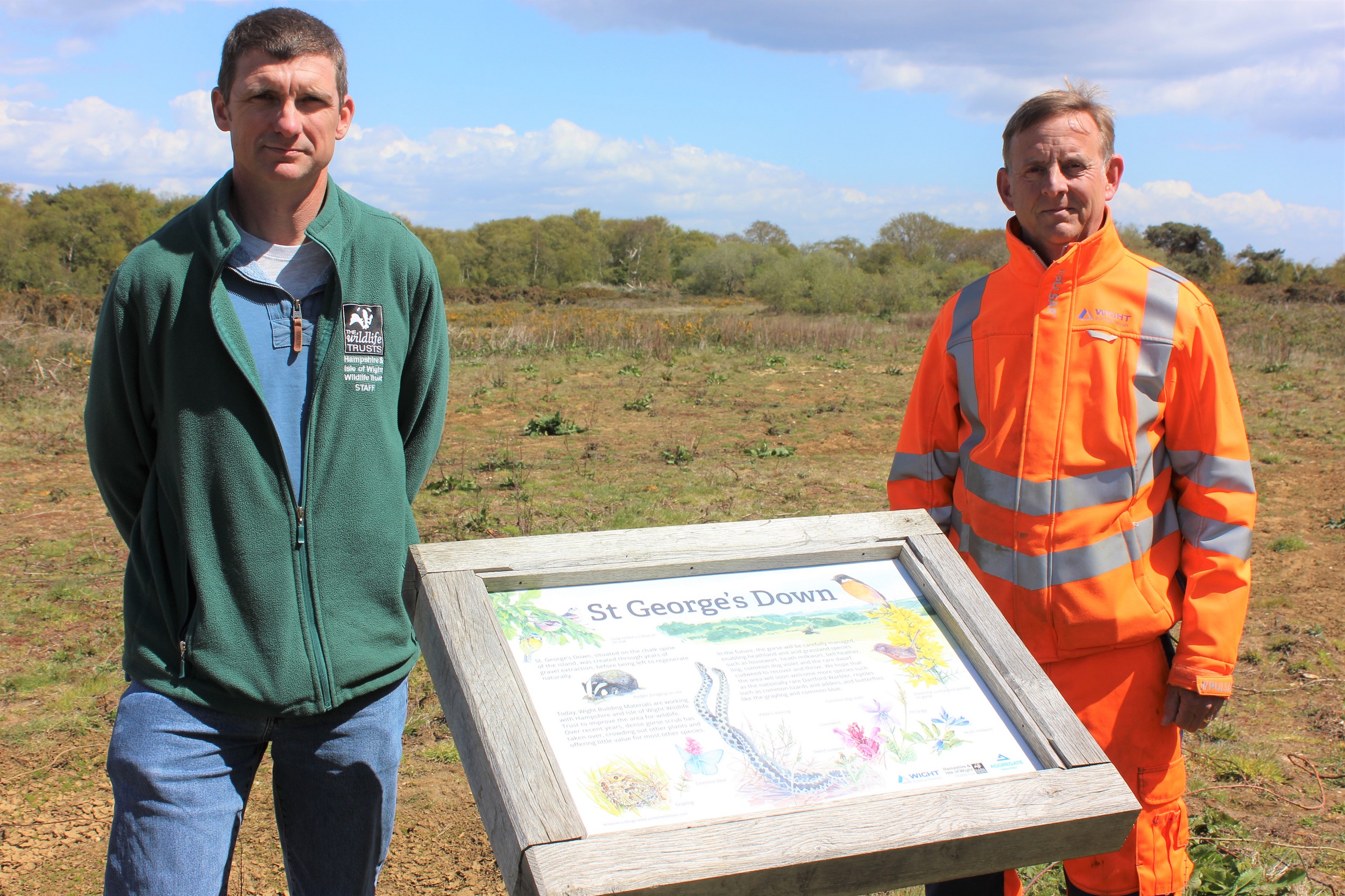
The Trust’s work has identified important species such as dormice, grass snake, slow worm and badgers in both sites which between them provide varied habitat – St George’s Down an acid grassland with gorse scrub and woodland, while Prospect quarry is a limestone grassland with special geological features in the exposures of Bembridge Limestone.
The work at both sites is supported by a grant from the Aggregate Industries (AI) Local Partnerships Development Fund.
The Trust’s ecology team provides bespoke ecological and land management advice to business, private landowners, public bodies and community groups.

Sarah Boswell, Ecologist at Hampshire & Isle of Wight Wildlife Trust said:
“We know from survey work that there is a diverse range of wildlife at both sites from insect life and reptiles to mammals including badgers, red squirrel and dormice.
“It will be interesting to monitor these sites as management continues, and hopefully see more benefits for wildlife. At Prospect there is the additional aim of using the management plan to eradicate or control non-native plant species such as Japanese knotweed, and to preserve and enhance the geological features on the site.
“The Trust and Arcadian are working with business and other landowners to help deliver our Wilder 2030 strategy – with the aim of 30% of land and sea becoming wilder by 2030 while reducing pressure on wildlife everywhere else.
“We would like to thank Wight Building Materials for supporting our plans for a Wilder Wight.”
Steve Burton, Wight Building Materials general manager, said:
“As an Island business, we understand just how special our environment is and our aim is to work completely in harmony with our surroundings.
“That doesn’t mean simply restoring the land to what it was before, it means looking how we can increase the ecological importance of a site after quarrying has ceased. It is a pleasure to work with the trust on this project and we are looking forward to the sight of cattle roaming these sites with all the environmental benefits that will bring.”
Steve added:
“I think the projects at St George’s and Prospect highlight an advantage land-won aggregates have over those dredged from the seabed. Our work is being done for all to see and subsequently enjoy as an enhanced habitat is created in full view of the public.”