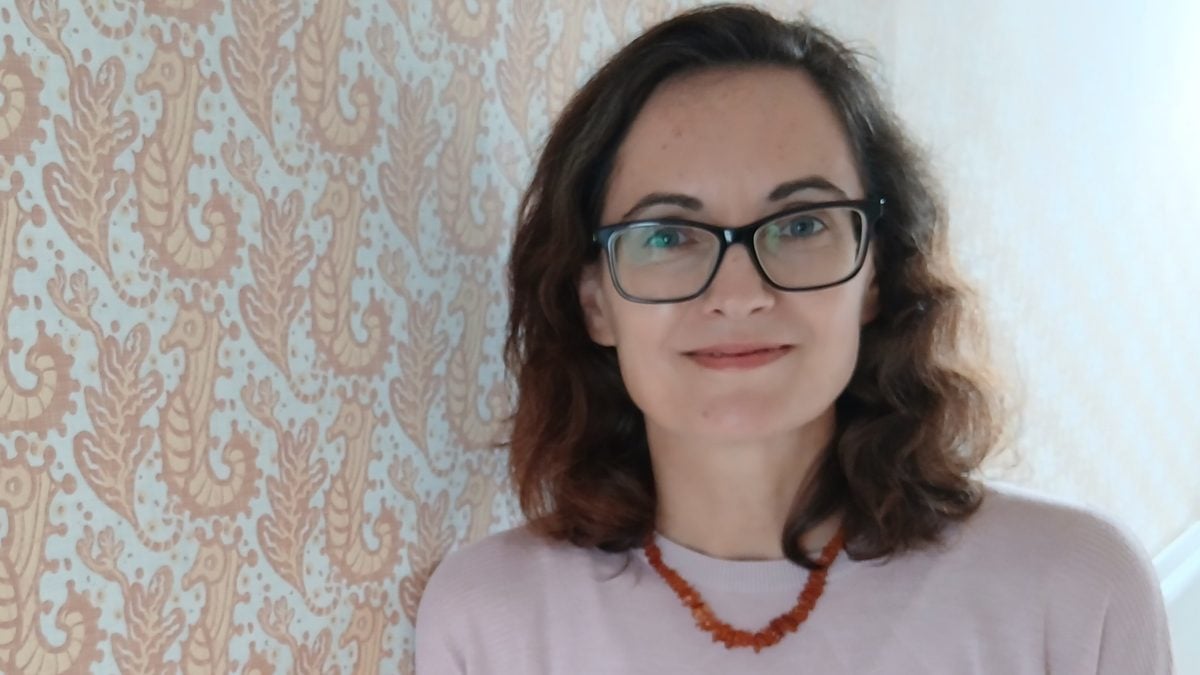

































































Emily Katherine Dawson sat down with us to discuss AI and how important it is to use it responsibly.
Q. First of all, Emily, how would you describe yourself in a few words?
EKD. I’m a tech nerd who also loves to write good stories. I have a journalistic background, so I’ve always been obsessed with how people and technology intersect.


Q. You studied Journalism at the University of Texas at Austin and later earned a Master’s from Yale. That’s quite a shift into tech. What triggered that transition?
EKD. It wasn’t an expansion, but a shift. Journalism taught me how to research, communicate and stay curious. My time at Yale sparked my interest in exploring deeper, more technical topics. So, I decided to combine both passions: telling stories and understanding how AI impacts our daily lives.
Q. You often talk about responsible AI. Could you elaborate on what that means to you?
EKD. For me, responsible AI is all about transparency, fairness, and accountability. It’s not enough to create cutting-edge algorithms; we need to ensure that these tools benefit society without infringing on privacy or creating unintended biases.
Q. In your own words, how do you see AI fitting into our daily routines?

EKD. The thing is… AI is already part of our day-to-day life! Voice assistants, personalized ads on social media… But here’s the thing: “it’s not about fearing AI, but about learning to use it responsibly.” Once we embrace that mindset, the possibilities are endless and way less scary.
Q. You’ve worked at IBM and Alphabet Inc. What was your biggest takeaway from those experiences?
EKD. The pace. Everything moves at lightning speed in tech. It taught me to adapt quickly, keep learning, and never assume that what’s groundbreaking today will remain so tomorrow.
Q. Now you’re a professor at the Illinois Institute of Technology. How has teaching changed your perspective on AI?
EKD. Teaching keeps me grounded. My students ask the most unexpected questions, which forces me to stay on my toes. It also reminds me that each generation will shape how AI evolves.

Q. Why do you think people are so fascinated (and sometimes intimidated) by AI?
EKD. AI is new, evolving, and it seems to “think” on its own. That can feel magical or intimidating, depending on your viewpoint. People love the promise of automation and convenience but worry about losing control or jobs.
Q. Of all your professional ventures—IBM, Alphabet, teaching—what’s been the most fulfilling?
EKD. Teaching, by far. Don’t get me wrong, my stints at big tech companies were amazing learning experiences. But seeing students have that “aha” moment in class when they finally get a complex concept it’s priceless.
Q. And how about your other titles: “The Future of AI: Successes, Challenges, and Ethical Dilemmas” (2022) and “The History and Evolution of AI in the Last 50 Years” (2024)?
EKD. The 2022 book looks at AI’s ethical dilemmas and how we might tackle them. It’s kind of a reality check on what’s at stake. Then the 2024 title is a retrospective, looking at the milestones over the last five decades to show how far we’ve come and where we might be headed.
Q. Given your background, what would you say to someone just starting out in AI research?
EKD. Stay curious and don’t be afraid to challenge the status quo. AI is an ever-changing field. The best researchers are the ones who stay open to new ideas and remain respectful of ethical boundaries.
Q. You’ve been active professionally since 2015. What do you think has changed the most in AI during that time?
EKD. The explosion of data and computational power has skyrocketed. Also, there’s a much bigger focus on ethics now. Back in 2015, people mostly wanted to see if AI could do cool stuff. These days, we’re concerned about the impact of that “cool stuff” on society.
Q. Finally, where do you see AI, and yourself, five years from now?
EKD. I think AI will continue to merge with everyday life in ways we haven’t even imagined yet. As for me, I’ll keep researching, teaching, and hopefully writing. My goal is to help shape AI in a way that’s beneficial and inclusive.