



























































 Southern Water is consulting on plans to pump hundreds of millions of pounds into Hampshire and the Isle of Wight to help keep rivers and taps flowing during a drought.
The company’s ‘Water for Life – Hampshire’ programme will revolutionise the way it sources, treats and supplies water across Hampshire and the Isle of Wight over the next decade.
Due to the COVID-19 pandemic, the company is adopting a digital-first approach to its consultation and has launched a virtual room online where people can interact with films, animations, information boards and a brochure detailing the programme and the opportunities to help shape the plans.


The virtual room can be reached via www.southernwater.co.uk/water-for-life-hampshire.
The company is seeking planning consent for its central plan – a desalination plant in the Fawley area which will produce up to 75 million litres of water per day that will be used to supply water to the Hampshire region during periods of drought.
The consultation also outlines the alternatives the company is exploring as a back-up in case desalination proves undeliverable – ensuring customers’ supplies are maintained.
As part of its wider Water for Life – Hampshire programme, Southern Water is also:
- Planning to install up to 125km of new water mains to link up its key sites and bring in supplies from neighbouring companies as well as building additional storage
- Reducing leakage (by 15% by 2025, 40% by 2040 and 50% by 2050)
- Increasing water efficiency by supporting and incentivising people to reduce their use to 100 litres a day (from an average of 129) by 2040
- Improving environmental resilience and water quality by working with farmers, businesses and environmental groups to protect and restore local water sources
Ian McAulay, Southern Water CEO, says:

“Water is a precious, and increasingly scarce, resource and we all need to take steps to protect and preserve it.
“It’s also a fantastic opportunity for us to work with environmental groups, local authorities, industry, land owners and others to deliver our stated vision of “Delivering a resilient Water Future for the South East” and, in particular, Hampshire and the Isle of Wight.
“This wide-ranging programme is the first of its kind in the UK and gives us an opportunity to help redefine how we think about water in a more holistic and sustainable way and create examples for the future.
“The result will be a resilient supply of water for customers and the environment, whatever the weather.”
The improvements will secure future water supplies for customers and help protect 2 of the county’s major rivers – the Test and the Itchen. These rivers are among the finest examples of chalk streams in the world – rare ecosystems that support an abundance of wildlife such as salmon, trout, crayfish and dragonflies.
If you are unable to access the website, please write to Water for Life – Hampshire, PO Box 5215 (no stamp required) to request a written copy, or large print version, of the consultation brochure and feedback form.













Water is NOT scarce. It can’t be ‘destroyed’ even if you boil and kettle dry, the steam condenses and reappears as exactly the same amount of water again in the atmosphere.
What the ‘problem’ is, is too many people are better off having more and more children, so the ‘amount’ consuming water has increased, and as the Island is overbuilt more and more water will be needed, which bore holes can’t supply in drought times.
Answer is we need LESS people, and we need to prevent those unneeded arriving here and to NOT make people ‘better off’ by having more than one child now.
Water scarce!! Try telling that to the people who have been flooded more now than at any other time.
Stop building unwanted houses and maybe look at using places on the island for a reservoir. It could help solve some of the flooding issues in certain areas and also help keep costs down on pipework that will need continuous maintenance.
I know I would rather look at a nice reservoir than more rabbit hutches banged up cheaply and sold or rented at ridiculous prices for the young working islanders.
The so called rabbit hutches will, for many, have all their rent and c tax so heavily subsidized by the rest of society for those working a few hours then claiming tax credits of hundreds per week, or those who get it all paid anyway, if as many will be, unemployed, that the only way for many to ‘get on’ is now to have children and live in this way.
With no hope of securing a job which funds all their rent, c.tax and living expenses, adding another child, then boosts up the income, BUT then adds another unneeded body to need to be housed and kept within two decades, so the problem grows ever worse as each generation goes on.
Believe me I know how the system works, I have worked in and around s p o n g e r s and the building game all my life.
My concerns are for the young workers who always get priced out of the market for greed. They sadly will miss out on owning outright their own home.
As for s o c i a l b r e e d e r s , they have learnt from their parents how to milk the system. So we are now in 4th generation b u m s .
If southern/Thames water fixed all there leaks and stored the water properly how can a island have a water shortage ????
Might have helped if they hadn’t filled all the reservoirs in and now we rely on ‘piped’water from the mainland.
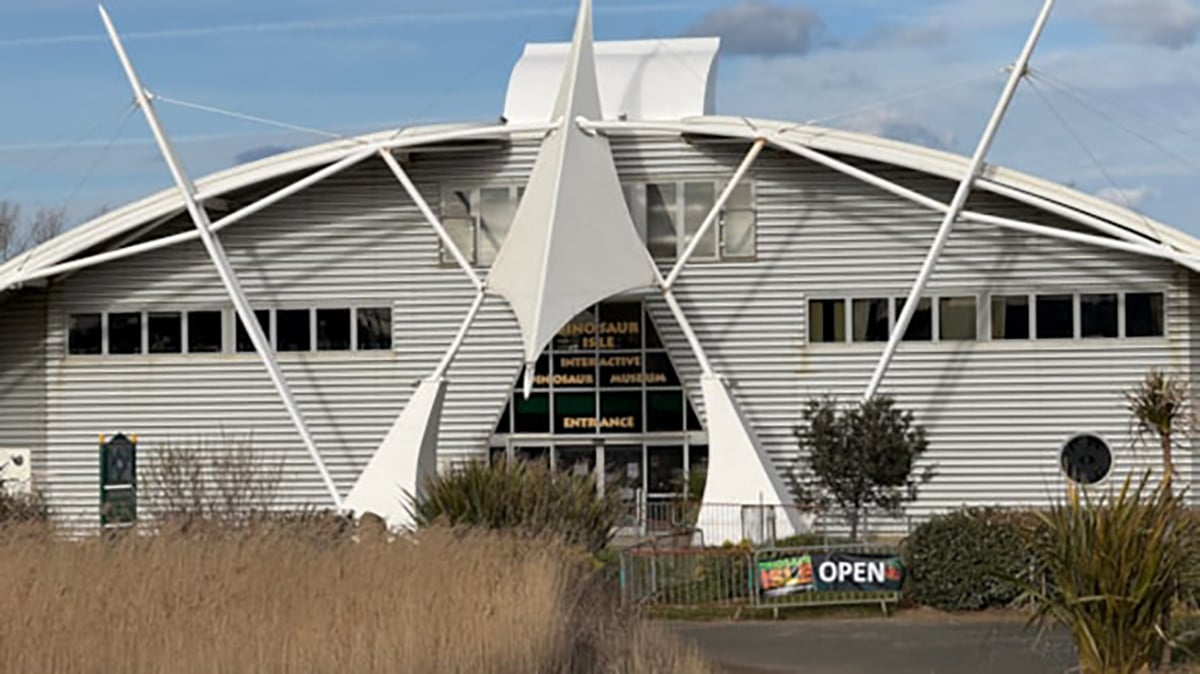
If they built a damn behind Bembridge embankment, then they could flood the entire area back to the Dinosaur Museum in the Summer months, by stopping the Yar flowing into the sea at Bembridge. This was sea years ago, so flat and easy to now flood with FRESH river water.
Then, the lake formed could be used for water sports, generating money, and the water taken IF needed for cleaning at the nearby Sandown water works.
The marsh could be returned for its valuable source of wet lands, for wild birds in the Autumn, when the risk of drought has passed for us all, by allowing the water to flow out into the seaside once again.
I know where they can get thousands of gallons of fresh water and improve land stability at the same time, the Undercliff.