























































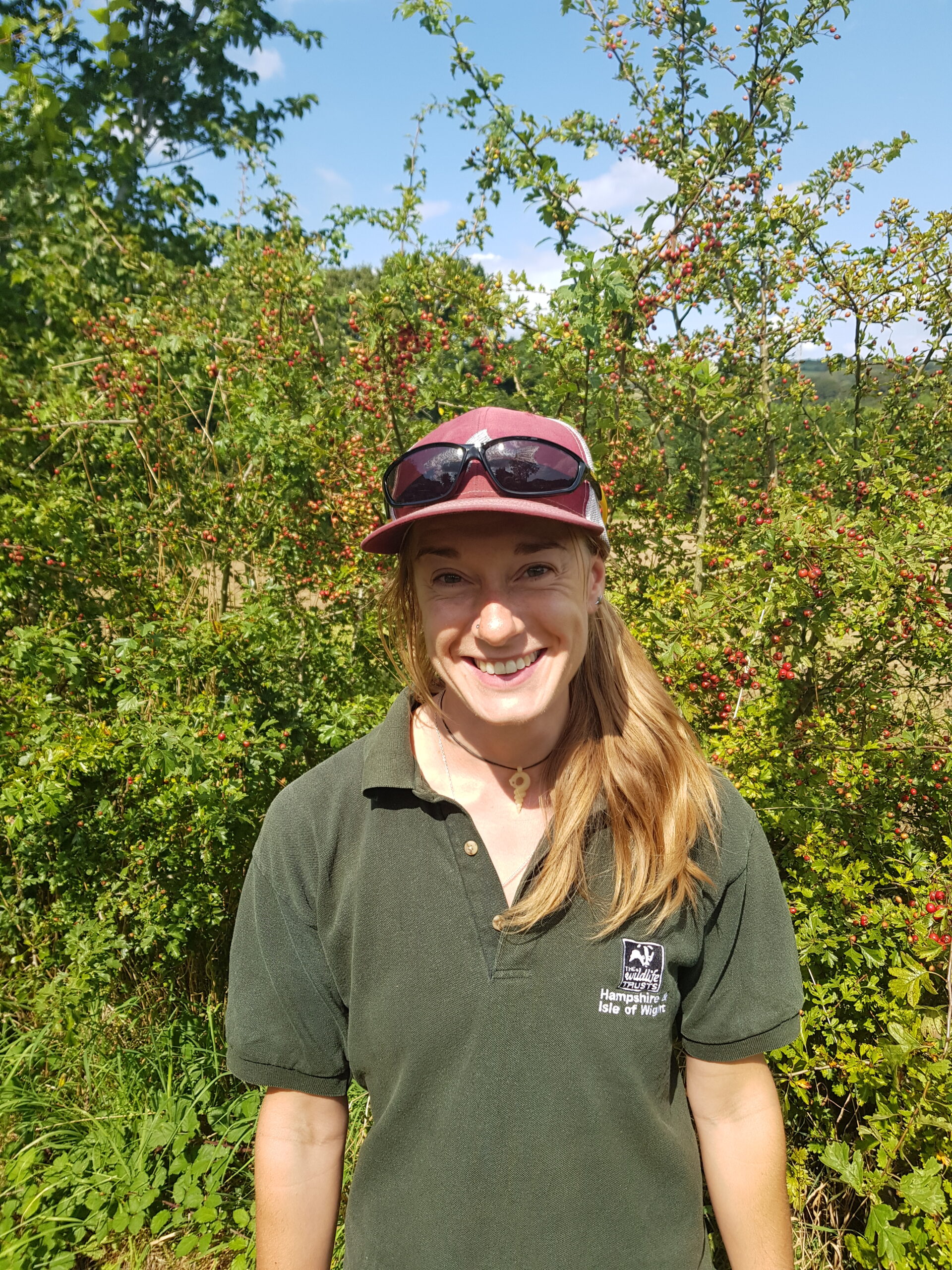
Island Echo recently put the concerns of farmers and residents to the Beaver Recovery Project Officer for the Isle of Wight, Izzie Tween.
Izzie – an employee of the Hampshire and Isle of Wight Wildlife Trust – was questioned about whether beavers were likely to attack dogs and their owners and the dangers of flooding and falling trees.
In reply to the question as to whether beavers were a threat to people and their dogs, Izzie said:


“Adult beavers do protect their vulnerable young from predators, and during the breeding season, beavers can perceive dogs as a threat to their young given their similarities to their natural canine predators. For this reason, dogwalkers are advised to keep dogs on lead and under control along sections of rivers close by to beaver lodges.
“Wading into beaver ponds is not advisable, given that they can be extremely silty, and can be deep in the middle close to the river channel. Beavers are elusive and evasive, and often avoid human contact and are extremely unlikely to attack people.
“The most typical interaction of a beaver perceiving a threat such as a human would be the beaver diving deep down into the safety of its pond, with only a tail slap warning sound to ever alert you that a beaver was close by.”
In reply to the question as to whether falling trees would pose a danger to walkers, Izzie says:
“By far, beavers tend to forage on small stems of plants and branches of willow along riverbanks that would largely go unnoticed by people.
Article continues below this advertisement “On occasion, beavers will turn to bigger trees, which they will gnaw into that distinctive pencil shaped stump to fell them. If it became apparent that a beaver was trying to fell a large tree, fencing could be installed to protect against any further gnawing and prevent the beaver from causing undue damage. Valuable trees can also be protected in advance in this way, and also through the application of sand-based paint, whose rough texture can deter beavers from gnawing on any favoured riverside trees.
“If lucky enough to be walking in areas foraged upon by beavers, it’s wise to keep an eye out for pencil shaped tree stumps left by the beavers, as trip hazards over stumps represent a far greater risk than being crushed by a falling tree.
“Beavers are nocturnal, only coming out at dusk so any tree felling would be carried out under the cover of darkness. However, sometimes fallen trees can be left in inconvenient places, across riverside footpaths for example, and the Trust would be sure to carry out regular monitoring of access paths in areas where beavers may establish, should beavers be released on the Island.”

When asked whether beaver dams would create a greater danger of flooding, Izzie has said:
“Beaver dams are only temporary structures and wash out often, but as they tend to be small and transient in nature, they hold only small amounts of water and so pose very little flood risk.
“Beavers often build sequences of dams one after the other in areas close to their lodge. These series of dams, in fact, can help buffer water pressure and slow the flow downstream, so that lower dams face less force than upstream dams, helping to moderate the risk of downstream flooding should one dam become breached. And research has shown that water storage offered by beaver ponds, even ones that fail, delay downstream floodwater transmission, and on the whole offer greater protection to vulnerable downstream communities.”
When asked whether beaver ponds might kill trees, Izzie said:
“Sometimes the deeper water can lead to the inundation of tree roots that were previously dry. Some species of tree, including willows, birches, and alders, are well-adapted to wetland conditions and can thrive happily when submerged. These are the tree species most likely to be growing on riverbanks anyway, and so may tolerate wetter conditions. However, other tree species more adapted to drier conditions may not tolerate increased water levels, and these may die.
“It is important to note that beaver flooding behind dams is restricted to the floodplain, and so the impacts are localised. Small scale levels of tree mortality can also enhance biodiversity. Standing dead wood is an important part of a healthy functioning ecosystem, and provides habitat for fungi, burrowing invertebrates, nesting holes for birds and bats, and perches for raptors.”
For further information on the work of the Hampshire and Isle of Wight Wildlife Trust, please visit their website.










Ms Tween’s title, Beaver Recovery Project Officer for the Isle of Wight, is a very obvious, clumsy and inaccurate attempt at propaganda.
Whatever their history on the north island there is no record of beavers ever having been here on the IW.
It is not a ‘recovery project’ at all but a blatant attempt to introduce a non-native species without any real knowledge of the impact and, what will probably be irreversible, consequences and is essential based on the ‘ahh, aren’t they cute’ principle of conservation being peddled by a mainland university.
Look here munchkin. The island I would have thought had beavers. As the island was part of the “ north island” (clown) mainly known as the mainland! As there is a submerged forest under the Solent which is a huge fact and there would have been streams and a river which would have been a habitat for these majestic animals. So take your insulting and propaganda and poke it my friend.
Well, she would say that, wouldn’t she?
Don’t know why you’ve got the thumbs down! She’s definately a spin doctor fresh out of uni and yes she is going to say that, izzy needs to protect her job!
Im sorry Izzy, no matter how you try to dress it up, clearly beavers are a disaster in places near people, who in this case, really were here first! there is no sound reason for putting these large rodents on a small, crowded island.
Good luck to Izzy Tween and the HIWWT with their beaver reintroduction project. Unfortunately both the local authority and their chums on the IW Biodiversity Partnership have a well documented history of ignorance and prejudice against the presence of native large herbivores on the island!
There is no and there never has been any evidence that the eurasian beaver was ever a native species of this Island. It is not needed here. It is not a re-introduction, it is an introduction – an imposition on a landscape that does not require it.
Thanks Izzy, very interesting and informative, and you obviously have little concerns.
Perhaps IE can do the same to explain why most of the comments on news stories are being removed.
It amazes me, as a landowner in the immediate vicinity of the proposed beaver release area that no-one has talked to farmers whose land adjacent to the Yar is likely to be affected. I assume the majority of identified lodge sites are on privately owned land which may end up flooded. The woolly response from those involved, that they can attend premises where beavers are attempting to settle but not wanted in order to discourage them is just not good enough. It’s about time the local NFU got involved before this goes too far.
Perhaps Izzie Tween could tell us whether beavers have ever lived on the Island and if the answer is ‘no’ then why are they being introduced now?
The Eastern Yar is already an area which floods regularly and bringing in a non native species of animal, especially one with a reputation for causing flooding, doesn’t seem a terribly good idea.
Her quote that a team of people will paint trees with sand-based paint and put fences around others that are being gnawed through sounds ridiculous. If the beavers are going to need that much ‘managing’ then perhaps this isn’t the place for them?
You can’t expect us to take her word for it, she loves the environment, probably a Extinction Rebellion Terrorist.
We need a independant review by local farmers.
from some of the comments here you would think the locals think she is setting up jurrasic park with flimsy fences……….do we really think beavers hunt humans……..
It does not matter how many people oppose because the groups involved will have already made their minds up to go ahead. This is all about tourism, attracting people to the Island and money.
Were they ever on the island?
If so let us know when and where. Why are they no longer here?
If not give a forecast of their potential. Will they simply live virtually undetected or could they over-run the island creating damage everywhere?
Well iv been looking for a beever for good couple years now,and no luck.
Beavers usually manage waterways much better than humans. They are bringing them back on “flood plain” areas on the mainland so I can see the sense in doing the same on the Island. Why do we not just accept their presence and wait and see? Sometimes people are so negative we would not advance in our outlook if we were all the same, so I say good luck to them.