












































The Fanes-Sennes-Prags Nature Park covers about 25,000 hectares of the north-eastern Dolomites in South Tyrol, between Val Badia, Val Pusteria and the regional border above Cortina d’Ampezzo. It was set up in 1980, and since 2009 it has been part of the Dolomites UNESCO World Heritage Site.
The park has three names, in German, Italian and Ladin, and the Italian version is Fanes-Sennes-Braies. Its highest summit is the Croda Rossa d’Ampezzo at 3,146 metres, but most walkers come for the wide limestone plateaus below the peaks, which are crossed by good paths and dotted with mountain huts.
Two High Plateaus: Sennes and Fanes
The park centres on two high plateaus separated by the valley at Pederü, where the road from San Vigilio di Marebbe ends. To the north lies the Sennes plateau, a rolling area of pasture and bare karst at a little over 2,000 metres. To the south are the Fanes pastures, ringed by cliffs and holding small lakes such as Lago Verde and Lago di Limo.


Both plateaus are used as summer pasture, and marmots are common on the open ground. The terrain is gentle by Dolomite standards, with long, level stretches between the climbs, so the walking is less about steep passes and more about distance and views across to the surrounding peaks.
Ladin legend places an ancient kingdom here, the Fanes, whose people were allied with the marmots and are said to sleep inside the mountain waiting for a promised time. A rocky basin above Lago Verde is still known as the Parliament of the Marmots.
The Huts of Fanes and Sennes
Rifugio Fanes, at 2,060 metres, and Rifugio Lavarella, a short walk away at around 2,050 metres, stand close together on the Fanes plateau. Both are reached from Pederü in about two hours along an old military road, and both are family run, with the same family keeping Lavarella since 1912. Lavarella also brews its own beer, served on draught only at the hut.
On the Sennes side, Rifugio Fodara Vedla sits at about 1,980 metres around an hour above Pederü, and Rifugio Sennes lies another hour beyond it on the open plateau. Further north, Rifugio Biella stands at 2,327 metres at the foot of the Croda del Becco. It was first opened in 1907 by a section of the German and Austrian Alpine Club and now belongs to the Italian Alpine Club.
From Biella, a marked route climbs to the summit of the Croda del Becco in a little over an hour, a good addition for walkers who arrive early. The huts are close enough together that walkers can link three or four of them in a single long day.

Lago di Braies and the Alta Via 1
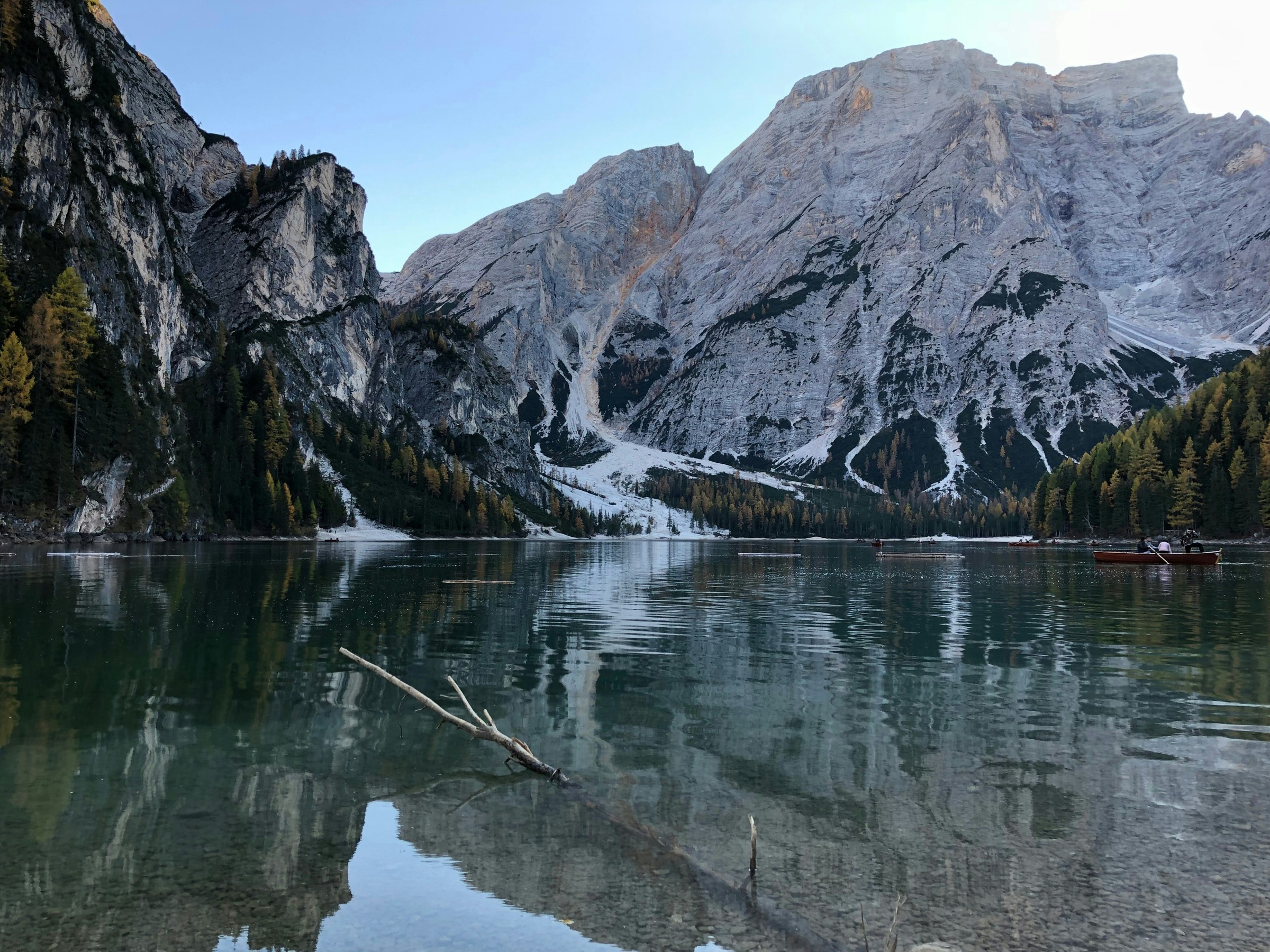
Lago di Braies, the Pragser Wildsee in German, lies at nearly 1,500 metres beneath the north face of the Croda del Becco. It is one of the most visited lakes in the Dolomites, and in summer the lakeshore path is busy with day visitors. The crowds thin quickly once you start climbing the path to the south.
The lake is the starting point of the Alta Via 1, the long-distance route that runs south through the Dolomites to Belluno. Its first stage climbs about 900 metres from the lake to Rifugio Biella in around three and a half hours, with a short cabled section below the Forcella Sora Forno. From Biella the route crosses the Sennes plateau, drops to Pederü and climbs again to the Fanes huts.
The Alta Via 1 then crosses Passo di Limo and leaves the park towards the Lagazuoi, so its first two days are spent almost entirely inside the park. Walkers starting the route add to the day visitors and keep the huts here busy in July and August.
Planning a Hut-to-Hut Walk in the Park
Most huts in the park open for the summer from June until late September or early October, and July and August are the busiest months. Snow can linger on the higher paths early in the season, and summer afternoons often bring thunderstorms, so the longest climbs are best done in the morning.
A walk of three or four days fits the park well. A common line starts at Lago di Braies, climbs to Biella, crosses the Sennes plateau to Fodara Vedla and Pederü, and ends at the Fanes huts, before either continuing south on the Alta Via 1 or dropping down to San Vigilio di Marebbe. Buses run to the lake from Villabassa and Dobbiaco, both stations on the Val Pusteria railway.
Because the Alta Via 1 starts here, beds at Biella, Sennes and the Fanes huts are often booked months ahead, and the distances between them need to be matched to each walker’s pace. Many people choose an organised trip for hut to hut hiking in the Dolomites, with the rifugio nights booked, the route planned around the plateaus, and luggage sent ahead where a road allows it.