


























Most of Europe’s long-distance trails can be walked in two ways: with a guide and a group, or on your own with the arrangements made in advance. Both use the same paths and often the same huts and hotels, but the days feel quite different.
The right choice depends on the route, your experience and the kind of company you want. The main differences come down to navigation, pace, luggage, where you sleep and cost. Neither format is better in general, but one usually fits a particular trip better than the other.
How the Two Formats Work
On a guided trip you join a small group on a fixed departure date, led by a qualified mountain leader or guide. The leader handles navigation, sets the pace, deals with hut staff and makes the daily decisions about weather and route changes. Some guided trips also include most meals, and the group often eats together in the evenings.


On a self-guided trip you walk alone or with your own party, usually starting on a date you choose. The accommodation is booked for you in advance, and you receive route notes, maps and GPS files, with a support line to call if something goes wrong. Luggage transfers between overnight stops are often included where a road allows it, and the overnight stops are chosen for their position on the route.
Both formats follow the same stages on popular routes, so the scenery is the same either way. The difference lies in who carries the responsibility for each day.
Navigation, Terrain and Pace
Waymarking varies widely between routes. The Camino Francés, nearly 800 kilometres from Saint-Jean-Pied-de-Port to Santiago de Compostela, is marked with yellow arrows and scallop shells, and passes through villages every few kilometres, so navigation is rarely a concern and most people walk it without a guide. The Juliana Trail, a 270-kilometre circuit around the Julian Alps in Slovenia, is also signed and stays mostly at lower levels, linking villages, farms and valley towns rather than high passes.
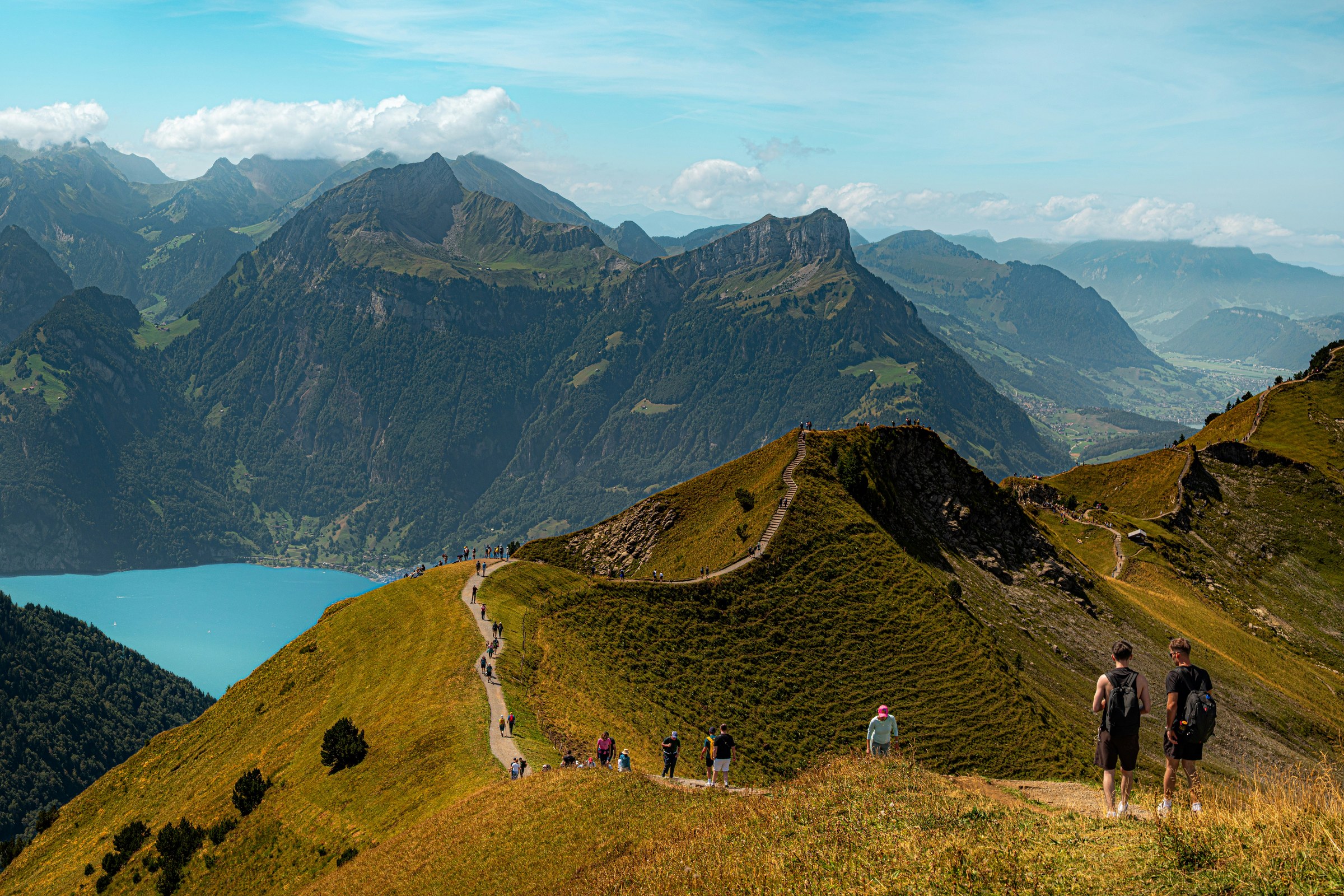
Higher routes ask more of the walker. The Tour du Mont Blanc, about 170 kilometres around the massif, is well marked, but its passes can be confusing in cloud and it has several variants. The Alta Via 1 in the Dolomites, around 120 kilometres from Lago di Braies to Belluno, follows numbered paths with a few short cabled sections. Climbs to Triglav in the Julian Alps end on protected rock, where a guide adds real value.
Pace is the other big difference. A group walks at a pace that suits most of its members and stops at agreed times, while a self-guided walker can start early, linger at a lake or add a rest day. A guide also knows where the water sources, shelters and escape routes are, which matters when the weather turns.
Luggage, Huts and Hotels
Luggage transfers depend on roads. On the Camino, bags can be moved between almost every village, and on the Tour du Mont Blanc they can travel between valley towns such as Les Houches, Courmayeur and Champex. Most high mountain huts in the Dolomites and the Julian Alps have no road access, so walkers carry what they need on those nights.
Hut nights mean dormitories, shared tables and an early start, while hotel nights bring private rooms and a later breakfast. Many itineraries mix the two, and the balance often decides whether a route suits a particular walker more than the guiding does. On the Camino there is a third option, the pilgrim hostels known as albergues, many of which cannot be booked in advance.
On guided hut trips the leader usually manages the hut bookings and meal times, which saves a lot of small decisions. On self-guided hut trips those details are confirmed in advance, but walkers handle them on the day.
Cost and Who Each Suits
Self-guided trips are usually cheaper, because there is no guide’s wage or accommodation to cover. Guided trips cost more, but often include extra meals, transfers and the experience of someone who knows the route well. Solo travellers should check single supplements on both formats. For either kind of trip, the price depends more on the standard of accommodation and the season than on the trail itself.
A guided trip suits first-time multi-day walkers, solo travellers who want company, and anyone tackling exposed ground or high passes. A self-guided trip suits experienced walkers, couples and families who want to set their own pace and choose their own dates. Some people combine the two, walking a first route with a group and returning later to walk another on their own.
Either way, the planning is the hard part, with beds booked in the right order, luggage moved and stages matched to fitness. Many walkers book hiking tours to have this done for them, choosing a guided departure or a self-guided version of the same route, with the huts, hotels and transfers already arranged.