




















































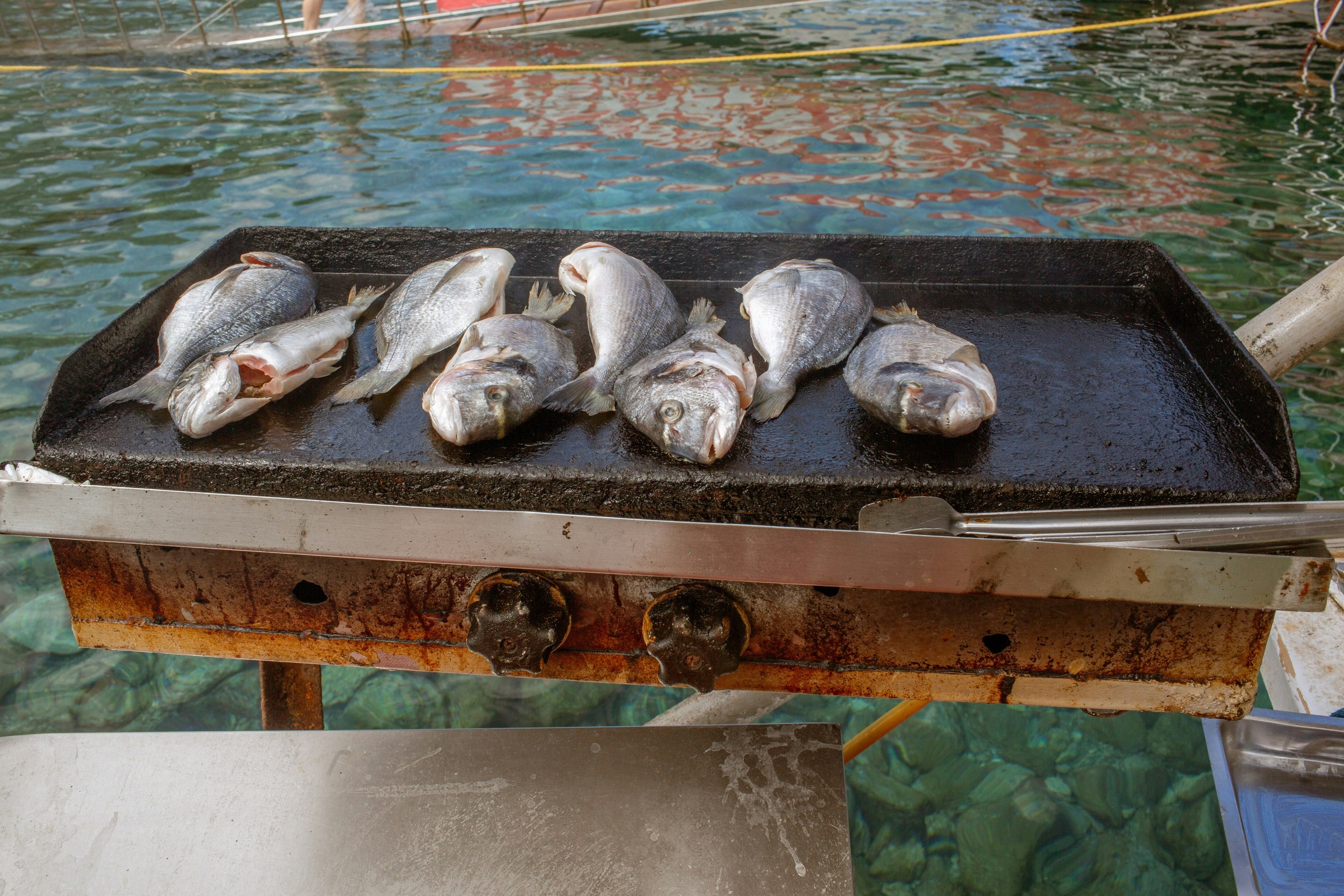

A gulet is a traditional wooden motor sailer, and on a cruise along the Dalmatian coast most of the cooking happens in its small galley below deck. The menu changes with what the crew can buy in the harbours along the way, from fish landed that morning to cheese, ham and wine from the islands.
On many gulet cruises breakfast and lunch are prepared on board, while most evenings are free for eating ashore. That pattern gives guests a mix of home-style Dalmatian cooking at sea and restaurant meals in the island towns.
What the Crew Cooks
Fresh fish is the centre of most lunches on board. Sea bream, sea bass and other local fish are cooked whole on the grill with olive oil, garlic and parsley, then served with blitva, a simple dish of Swiss chard and potatoes. Squid and prawns are cooked the same way when they are in the market.


Brudet, the Dalmatian fish stew, is made with several kinds of fish simmered in tomato, wine and olive oil, and is traditionally eaten with polenta. Octopus salad is another standard, with boiled octopus, potatoes, onion and parsley dressed in oil and vinegar and served cold. Black risotto, coloured and flavoured with cuttlefish ink, appears on most Dalmatian menus as well.
Peka is one of the best-known Dalmatian dishes. Meat or octopus is slow-cooked with potatoes under an iron bell covered in hot embers, which takes several hours, so it is usually ordered in advance at a konoba ashore. A crew can usually arrange it with a konoba they know for one evening of the week.
Produce Picked Up Along the Way
The crew shops at the morning markets and fishmongers in harbour towns such as Split, buying vegetables, fruit and fish for the next day or two. In Split the fish market, known as the Peškarija, is a short walk from Diocletian’s Palace. Hard sheep’s cheese from the island of Pag is one of the best-known local foods, made from the milk of sheep that graze on salty, herb-covered pastures. Dalmatian prosciutto, a dry-cured and lightly smoked ham, is often served with the cheese, olives and bread as a starter.
Further south, the bay at Mali Ston at the base of the Pelješac peninsula is known for its oysters and mussels, which are farmed in its clean water. Gulets on southern routes can stop nearby so guests can eat them fresh, at one of the restaurants by the water in Mali Ston.
Olive oil comes from almost every island, with Brač, Šolta and Korčula among the best known. The wines are local too. Plavac Mali, the main red grape of the coast, is grown on the steep slopes of Pelješac at Dingač and Postup, while Pošip, a white wine from Korčula, is most closely linked with the villages of Čara and Smokvica.

How Meals Fit the Day at Sea
A typical day starts with breakfast on deck, either in harbour or at anchor in a quiet bay. The gulet then cruises for a few hours to a swimming stop, where it anchors while guests swim from the boat and the crew prepares lunch.
Lunch is the main meal on board and is usually served at a long table on the aft deck. After lunch the gulet moves on to the town or village where it will spend the night, arriving in the late afternoon so there is time to walk ashore before dinner.
Many cruises include a captain’s dinner on one evening, when the crew cooks a larger meal on board. Drinks are often charged separately from the food, and dietary needs should be given before the cruise, because the galley is stocked for the week in advance.
Konobas Ashore in the Evenings
A konoba is a traditional Dalmatian tavern, often family-run, with stone walls, an open grill and wine served by the jug. In the old towns of Korčula, Hvar and Trogir, and in smaller harbours on Vis and Brač, konobas serve the same grilled fish, brudet and peka found on board, along with local lamb and homemade pasta. Eating ashore lets guests try a different place each evening and meet the families who run them. Fresh fish is often shown at the table and priced by the kilo rather than listed on the menu.
Many konobas are small and fill quickly in July and August, so a table booked by the crew in the afternoon saves a long wait. Crews tend to know which places serve fish caught that day and which are worth a walk inland from the harbour.
A gulet week works best when someone else plans the provisions, the moorings and the evening tables around the route. Many guests book Croatia gulet cruises for this reason, with an experienced crew who know the markets and konobas, lunches cooked on board, and the week’s route planned around stops for local food, such as Pelješac for oysters and wine.