










































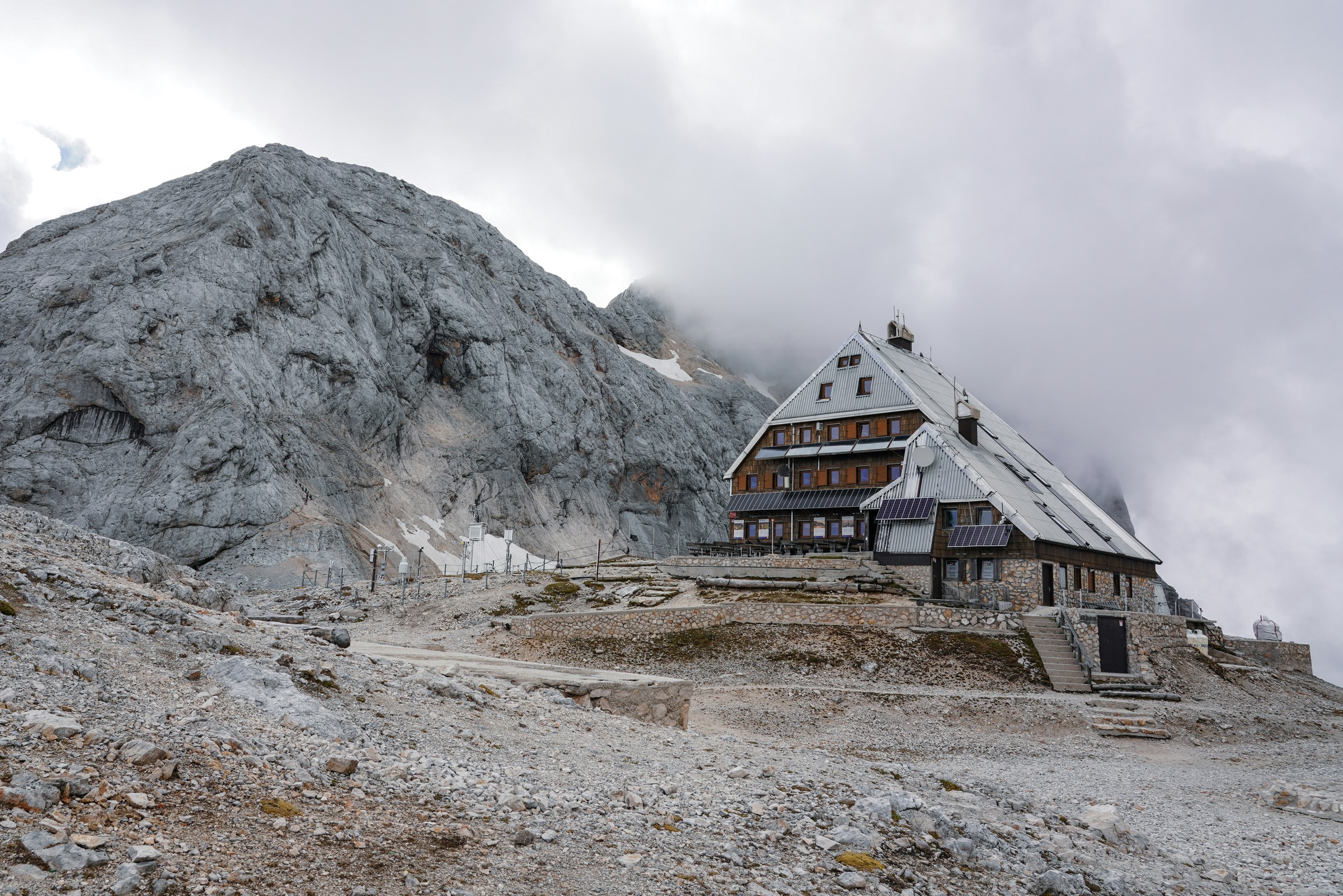

Triglav, at 2,864 metres the highest mountain in Slovenia, can be climbed from four main directions. Each approach starts in a different valley or plateau, and each has its own mix of distance, gradient and protected rock.
The route you pick decides how long the days are, how much cable and peg work you face, and which hut you sleep in before the top. Most walkers take two or three days, spending a night high on the mountain and reaching the summit early the next morning.
The Gentle Start From Pokljuka
The approach from Rudno polje, a car park at about 1,340 metres on the wooded Pokljuka plateau, is the one most often suggested to first-timers. A forest road and then a good path climb over the Studorski preval saddle to Vodnikov dom na Velem polju, a hut at 1,817 metres, in around three and a half hours. The gradient is steady rather than steep, and there are no cables on this first stretch.


Above Vodnikov dom the path rises to Konjsko sedlo at 2,019 metres, where it splits three ways towards Planika, Kredarica and Dom Valentina Staniča. Dom Planika pod Triglavom stands at 2,401 metres on the stony Ledine plateau beneath the southern cliffs, and many climbers spend their night here. From Planika a protected path climbs to the summit in around two hours.
Total ascent from Rudno polje is roughly 1,500 metres, which most people spread over two days. Because the climb is gradual and the cables come only near the top, this route suits walkers who are fit but have little experience of exposed ground.
The Krma Valley: Long but Easy
The Krma valley is reached from Mojstrana in the Upper Sava valley, and its path is graded easy all the way to Kredarica. It starts at the end of the valley road beyond Kovinarska koča v Krmi and climbs gradually through forest and high pasture to the head of the valley. There are no protected sections before the hut, so Krma is a common choice for the descent as well as the ascent.
The trade-off is length. The valley is long and the scenery changes slowly, so the day is a steady walk rather than a climb. A side path also links Krma with Konjsko sedlo, which lets walkers combine it with the Pokljuka side and make a traverse of the mountain instead of returning the same way.
Krma ends at Triglavski dom na Kredarici, at 2,515 metres the highest hut in Slovenia, with room for 200 people or more. It sits on a broad saddle about an hour and a half below the summit, so climbers can leave at first light and be on top before the afternoon cloud builds.

The Vrata Valley: Prag or Tominšek
The Vrata valley gives the steepest start. A road from Mojstrana ends at Aljažev dom v Vratih, a hut at 1,015 metres directly beneath the great north face of Triglav. From here two main routes climb towards Kredarica, both using pegs and cables on their rock steps.
The Prag route, Pot čez Prag, takes around four to five hours to Kredarica and is the slightly easier of the two, which is why it is also the usual way down. The Tominšek route is steeper and more exposed, and loose rock and late snow in its gullies can make it awkward early in the season. Dom Valentina Staniča, a smaller hut at 2,332 metres close to Kredarica, gives a quieter alternative for the night.
Experienced climbers sometimes choose the Bamberg route instead, which leaves the head of the valley over the Luknja pass and includes a near-vertical cabled section. In general, Vrata suits people who are already comfortable on protected rock and want the climbing to start early in the day.
From Trenta, and the Ridge at the Top
The southern approach from Trenta, on the Soča side of the range, is the longest and the least crowded. Paths start in the Zadnjica valley at around 650 metres and climb to Tržaška koča na Doliču, a hut at 2,151 metres, in about four and a half hours. From there the summit is another two to three hours, and the full climb involves around 2,200 metres of ascent.
Whichever valley you start from, the final part of the climb is protected. From Kredarica the route crosses Mali Triglav and follows a narrow, exposed ridge with cables and pegs, while from Planika and Dolič protected paths climb the rocky southern slopes. A helmet, a harness and a via ferrata set are standard equipment for this last section.
The climbing season runs from about July to September, when the snow has cleared and the huts are staffed. Kredarica and Planika fill early in summer, and afternoon thunderstorms are common, so hut nights and start times have to be planned around both. Many climbers book triglav tours for this reason, with beds reserved in advance, a qualified mountain guide and via ferrata kit for the protected sections, and a route matched to their experience.