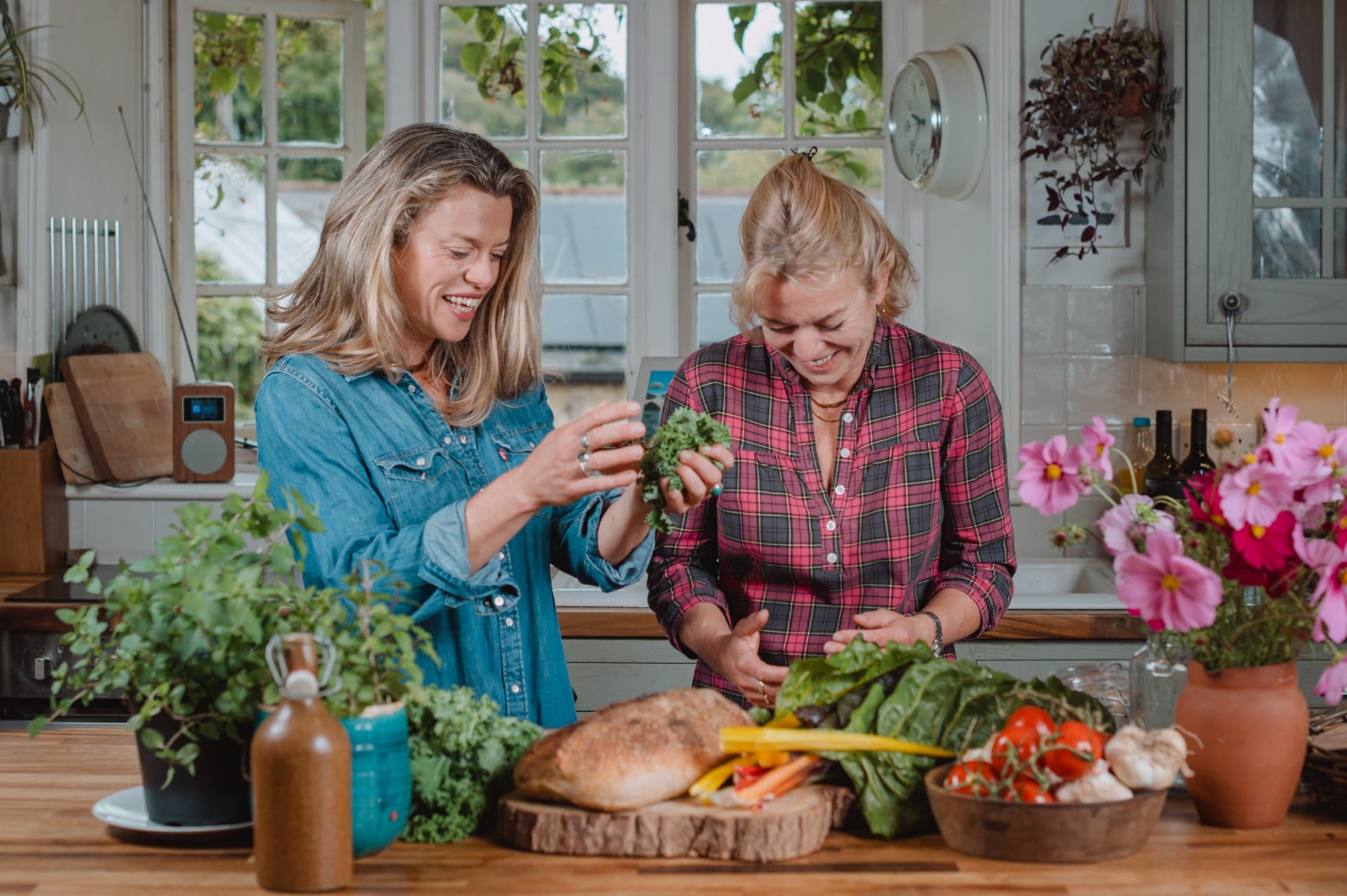





































A pair of sisters from The Garlic Farm are spending September eating only food that has been grown, reared, caught or produced on the Isle of Wight.
Natasha Edwards and Jo Boswell – both from the family that owns The Garlic Farm – launched #EatTheWight at the beginning of this month.
While Natasha and Jo already purchased much of their meat, vegetables and dairy locally, they wanted to take it a step further and celebrate the extraordinary range of food produced here.


Behind the challenge is a more serious ambition: to encourage more people to buy directly from Island farmers and producers, helping more of what they spend stay within the local economy.
9 months ago Natasha launched the Isle of Wight Foodie Collective, bringing together ten Island food and drink businesses where people can meet producers, visit farms or eat and drink where products are made.
She believes encouraging more people to seek out Island produce could also help protect a farming system which is becoming increasingly vulnerable.
With no abattoir on the Island, farmers also rely on livestock transport to the mainland, as well as local vets and other services.
Natasha Edwards, The Garlic Farm says:

“The Island’s farming infrastructure is quite delicate – if any part of that system disappears, it becomes increasingly difficult for the farms that remain.”
“What we would love to see is a demand-led farming resurgence.”
“Our farms tend to be small, so we are never going to compete on price and efficiency with large mainland producers but what we can compete on is quality and provenance.”
Buying directly also allows farmers and producers to retain more of the value of what they sell – something Natasha believes could make a significant difference to smaller Island businesses.
For Jo, the challenge has really highlighted how much of a lifestyle change is needed to rely so much more on local, fresh, home-grown produce.
Jo Boswell, The Garlic Farm says:
“I haven’t set foot in a supermarket since we started – although I have had to send my partner out for toilet roll and nappies!”
“One of the biggest takeaways for me is that eating fresh, local and seasonal food genuinely takes more time, organisation, knowledge and cooking skills.”
“We’re not pretending this is necessarily an easy or practical way for everyone to live all year round – but doing it for a month makes you look more closely at what’s available on your doorstep.”
“We also need to think about rebuilding the knowledge, skills and confidence that enable people to do it, while recognising that time and accessibility are real barriers.”
The month-long experiment has highlighted both the extraordinary range of food already being produced and some surprising gaps.
Without imported staples such as rice and pasta, bread and potatoes have become much more important, while Jo believes there could be an Island market for crops including beans, lentils, chickpeas and quinoa.
Both say they feel healthier as a result of the challenge, but they have also missed some much simpler things – particularly lemons, pepper and spices.
Natasha has enjoyed having fewer ingredients to choose from and cooking with what is available, while also building much closer relationships with other Island suppliers.
They now hope #EatTheWight could become an annual September challenge, inviting more Islanders to take part and encouraging producers to get involved with special offers during a month when local produce is particularly abundant.
It is also an opportunity, they say, for families to seek out farms and food businesses, meet the people producing their food and show children what is being grown and made close to home.
Natasha Edwards says:
“Things are changing around the country. Farm shops and honesty shops are popping up everywhere and the opportunity to persuade people to eat locally is right there.”
“We’re not saying you have to eat like this all the time but if more of us chose Island food more often, that demand could make a real difference.”
The sisters are documenting #EatTheWight throughout September, sharing meals, recipes, producers and some of the challenges they encounter along the way.