








































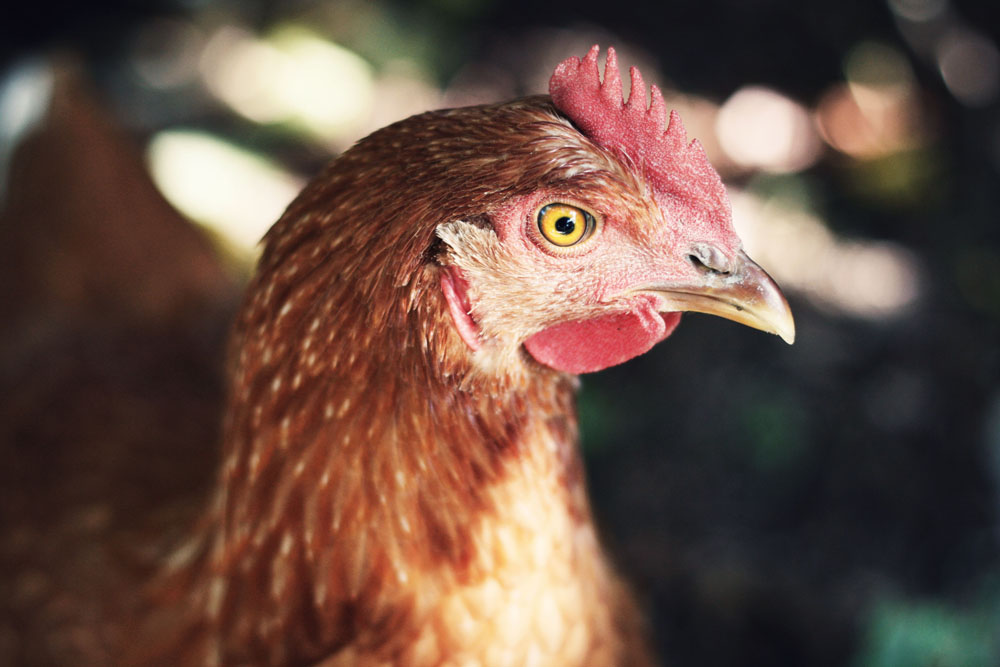

 The UK’s Chief Veterinary Officer has announced that all poultry in England are now allowed to be outside following updated evidence on the risk posed by wild birds.
As of today, keepers across the Isle of Wight will no longer be required to house poultry or put in place total range netting in Higher Risk Areas of England. However, the Department for Environment, Food and Rural Affairs (DEFRA) requires all keepers to continue to comply with strict biosecurity measures.
The need for continued biosecurity measures means all poultry keepers must continue to take steps to reduce the risk to their birds, including minimising movement in and out of bird enclosures, cleaning footwear, keeping areas where birds live clean and tidy and feeding birds indoors. However, a ban on poultry gatherings will remain in force across the UK until further notice – this will apply to birds including chickens, turkeys, ducks and geese, and restricts events such as livestock fairs, auctions and bird shows.


The decision to lift the additional requirements in the Higher Risk Areas is based on the latest scientific evidence and veterinary advice, which concludes that the level of risk to poultry in these areas has now reduced to the same level as that across the rest of England. This is because of changes in the wild bird population: the majority of over-wintering migratory birds have now left the UK, and resident wild waterfowl are at their lowest levels and entering the breeding season when they become less likely to move long distances to forage for food.
The risk of poultry becoming infected from H5N8 remains heightened and countries across Europe continue to experience outbreaks and observe cases in wild birds.
Isle of Wight Council regulatory services manager, Amanda Gregory, said:
“We welcome the news from Defra that keepers can once again allow their birds outside. It is reassuring to see that to date existing Defra contingency plans have contained and isolated the outbreak and I’d like to thank the Island bird keeping community for following this advice. The Trading Standards Service continues to monitor the situation and to work closely with other local services, interested parties and DEFRA.
“However, I would remind poultry keepers that H5N8 avian flu in wild birds remains a threat to poultry and kept birds across the UK and keepers must comply with strict biosecurity measures. Keepers of birds are urged to be vigilant and to maintain good hygiene practices when dealing with their poultry and should also consider how to isolate the birds that are normally kept outside, from wild birds, should the need arise.”
Article continues below this advertisement

Although unlikely, if you do find dead wild waterfowl (swans, geese or ducks) or other dead wild birds, such as gulls or birds of prey, you should report them to the DEFRA helpline (03459 33 55 77).
More information on the Avian Influenza Zone can be found here: https://www.gov.uk/guidance/avian-influenza-bird-flu#prevention-zone.
More information on biosecurity precautions can be found here: https://www.gov.uk/guidance/avian-influenza-bird-flu#biosecurity.