



















































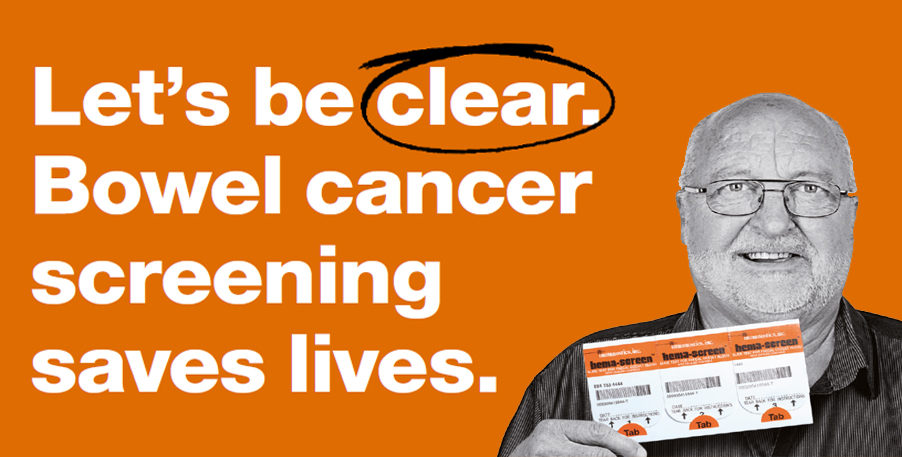


The Isle of Wight NHS Trust is raising awareness about the importance of Bowel Cancer screening and early diagnosis, with just 59.9% of Islanders eligible for screening (aged 60-74 yrs.) taking up the offer and returning their sample last year.
In the UK, from the age of 60 until your 74th birthday, a bowel screening kit is sent to your home automatically, every 2 years. You don’t need to have experienced any symptoms of bowel cancer, the test picks up early signs of cancer that may otherwise go undetected. It is this early diagnosis that has proven to be the life-saving key to bowel cancer treatment.
Treatment for early signs of bowel cancer has been very effective, but there is still a long way to go. With more than 16,200 people on the Island being eligible for this test, the message is to consider the potential benefits of returning your sample sooner, rather than later.


Most people will carry out the test, return their sample in the post and within 2 weeks, be told that there were no signs detected. It will be another 2 years before you are asked to carry out the test again.
For others however, the test may find blood in the sample in which case, you will be invited to a local screening centre to talk about your results. This does not mean you definitely have cancer; the bleeding could be caused by a non-cancerous growth or another health problem. You will be offered more tests to find out what is causing the bleeding.
Mr Steven Elsmore, Consultant General Surgeon at St. Mary’s Hospital, said:
“We don’t like to talk about our poo and bowel movements and some people may find this particular test unpleasant to perform, but my message to anyone who receives a test kit in the post is that cancer is so much harder to treat if we don’t catch it early. Difficult as it may be, completing the sample could quite simply save your life. Cancer treatment can be very effective with more people surviving cancer than ever before and much of this is thanks to the screening programmes on offer.
“There are simple things we can all do to reduce our risk of cancer, such as eating healthily, taking regular exercise, giving up smoking and generally monitoring our health and wellbeing, spotting when something is different and being aware of the possible signs and symptoms of cancer.”
Article continues below this advertisement

For more information about Bowel Cancer and Bowel Screening go to www.bowelcanceruk.org.uk.