





































 Isle of Wight GP surgeries are being urged to sign up for training to help them to become ‘dementia friendly’ practices.
The Dementia Awareness Partnership (DAP), based on the Isle of Wight, is delivering training sessions to raise awareness of the early signs of living with dementia and the effect on wellbeing and lifestyle for the person diagnosed with the disease and their families.
There are an estimated 3,000 people on the Island living with dementia and the majority live at home so when medical problems occur, the GP is the first port of call.


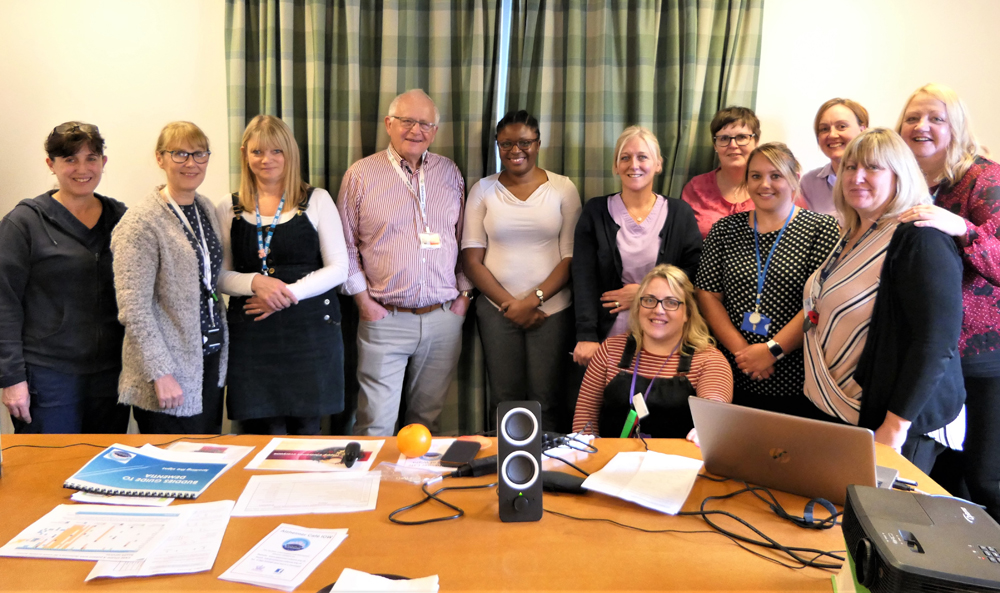
East Cowes Medical Centre is the latest GP surgery to host a Dementia Friendly training session, delivered by the DAP’s Barry Jackman. Staff from across the GP surgery reception team, the clinical and non-clinical teams came together for the afternoon sessions. The surgery has already implemented changes to improve the way they signpost potential cases of dementia.
Barry says:
“GP surgeries are busy places and the only way to achieve a good, early diagnosis is if the entire medical practice has some understanding of what dementia is. I am an Islander and an East Cowes resident so I’ve got a vested interest in making surgeries like this a part of our Dementia Friendly Island initiative.
“I hope the staff at the surgery will take away a wider knowledge of dementia. It is a disease for which there is no cure, at present. Each person’s journey is different and a speedy diagnosis enables people living with dementia and their carers to understand what is happening, what support is appropriate to their changing needs and where to find that support. It is essential for all staff to be able to spot the signs and to be aware of patients who have been diagnosed or may be showing early signs of the disease. We refer to this as being dementia detectives.”
Barry presented 2 sessions to the staff at East Cowes Medical Centre’s GP surgery. The DAP is urging other surgeries to follow suit and sign up to receive the free training. Early intervention is key to making progress in understanding each individual case, as Barry explains:
“GP surgeries really are at the sharp end. The major problem is that there are often delays in getting each patient referred to the memory service and a psychiatrist. Blood tests are a prerequisite to the diagnosis and they can often take time to process. Getting a dementia diagnosis enables people to get on with the business of living life well. To many it comes as a relief.”
The training sessions have been welcomed by Dr Sunitha Jinka, GP at East Cowes Medical Centre. She’s said:
“We want to be Dementia friendly at the surgery. The sessions have been really well received and delivered some very important information. Our staff are the point of contact to help identify patients with Dementia and help and support their carers. Signposting is the most important thing we can do.
“Barry has been very helpful and introduced us to the Isle of Wight Alzheimer Cafe network and the Dementia steering group. As a result of these sessions we will be providing more information about Dementia in our waiting room. We have already moved towards having a Dementia group within the practice, led by Sarah our healthcare assistant, supported by the DAP. We want to continue to take things further to make our service even better.”
The DAP is offering training sessions to GP surgeries as a priority but is keen to work with a wide range of groups, businesses and organisations. The DAP hopes that the free sessions will act as a precursor to more detailed training.
Barry concludes:
“I hope that GP practices will opt to do our six session course. At the end of that they will know what they need to do to become a really efficient dementia friendly practice. It’s not about making a ‘quick fix’. Providing effective care and support depends on where a person with dementia has reached on their journey.
“There is a saying: ‘When you have met one person with dementia, you have met one person with dementia.’ Each person is different and that outlines the challenge we face. Recognising the symptoms and knowing how to communicate is vital but not rocket science. We can all learn the skill if we are prepared to make the effort.
“We will only achieve appropriate dementia care if we know what is required, why each person presents differently and what ‘Dementia friendly’ actually means? The Alzheimer Society released new statistics last month. One is: One in every three babies born today will develop Alzheimers. Now there’s a thought…”
To find out more about how you can access free Dementia friendly training for your GP surgery, organisation or business contact [email protected] or call 07717756362. More information can be found at http://dementiaawarenesspartnership.org/.








I’m fortunate as my practice at Tower House did the training with Age UK years ago.
Well Done East Cowes Medical Centre.