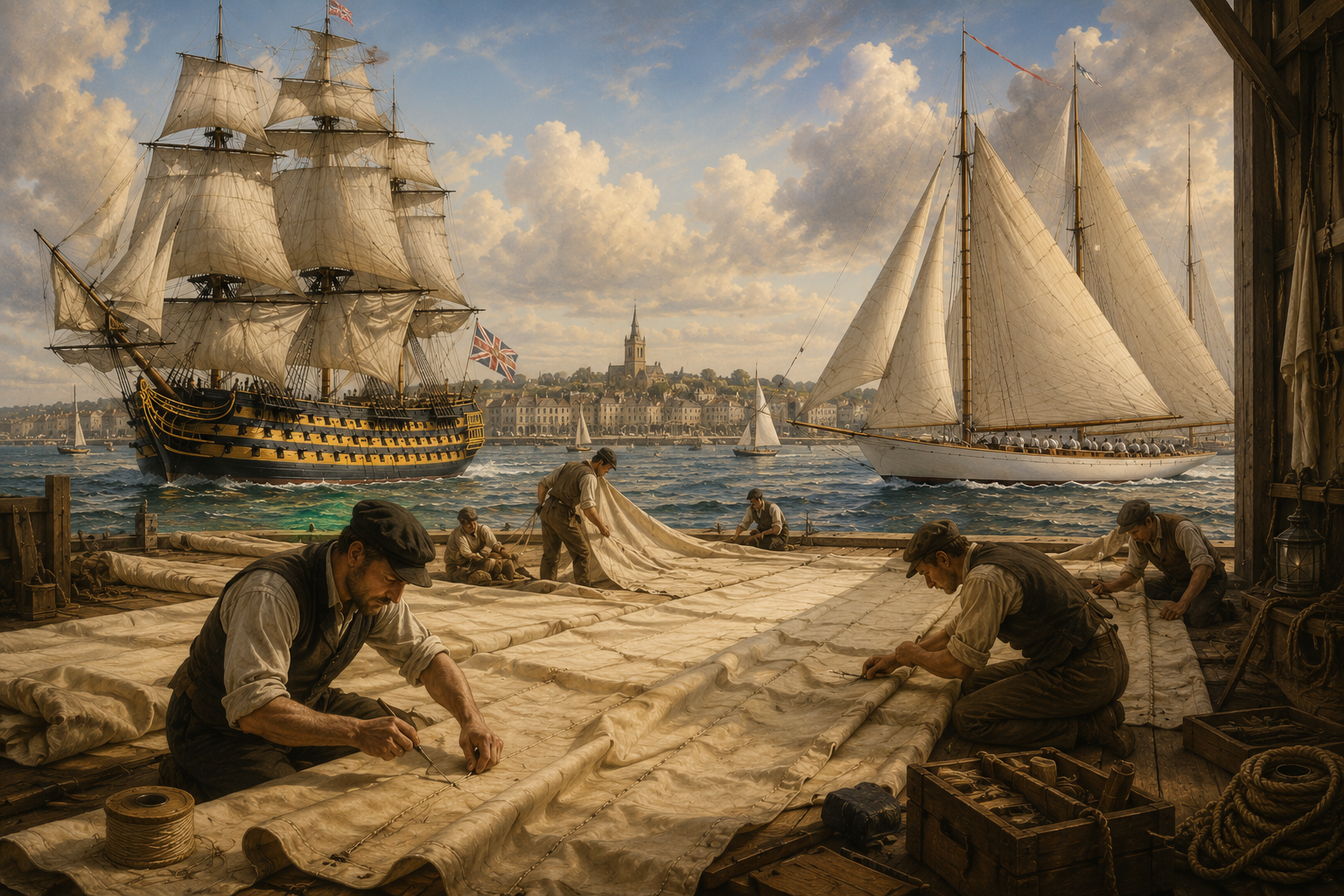
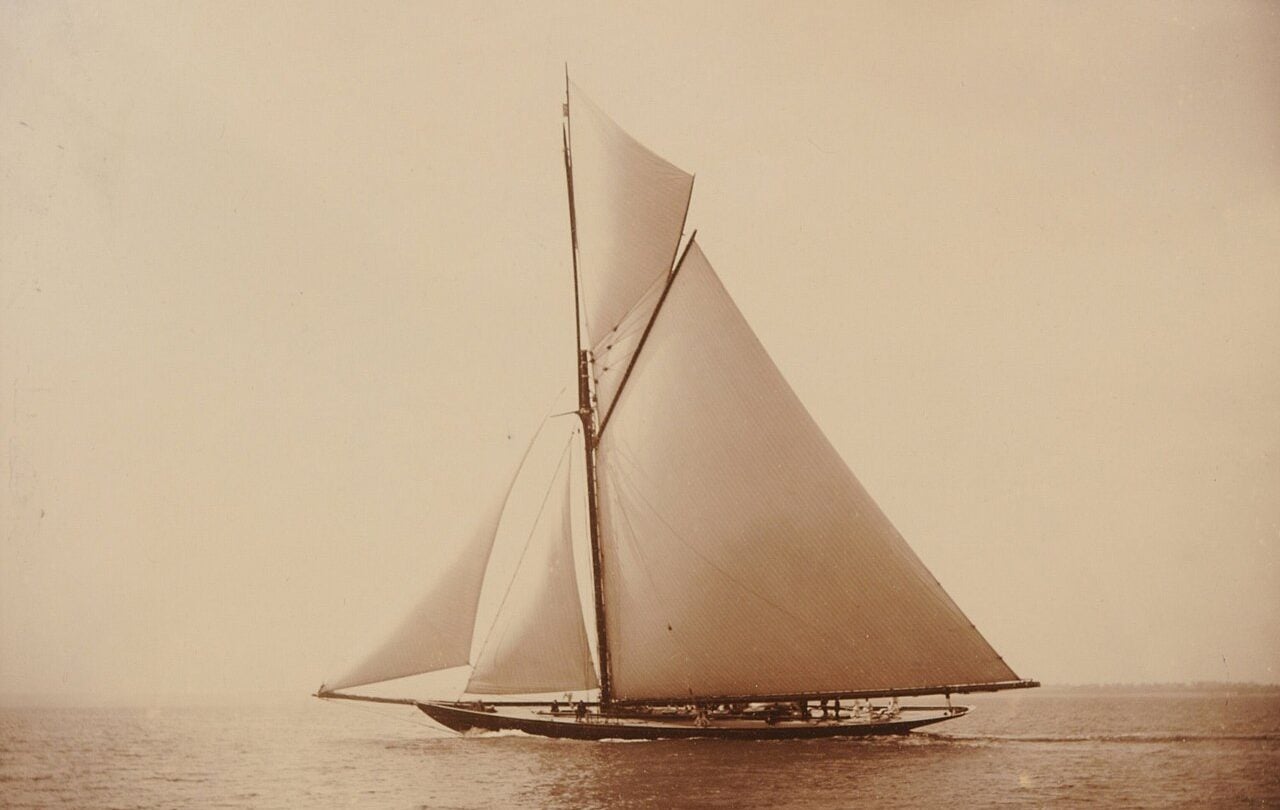
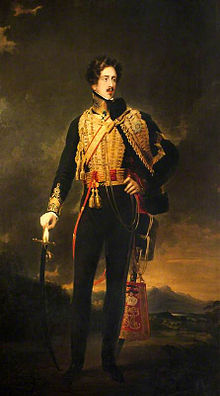
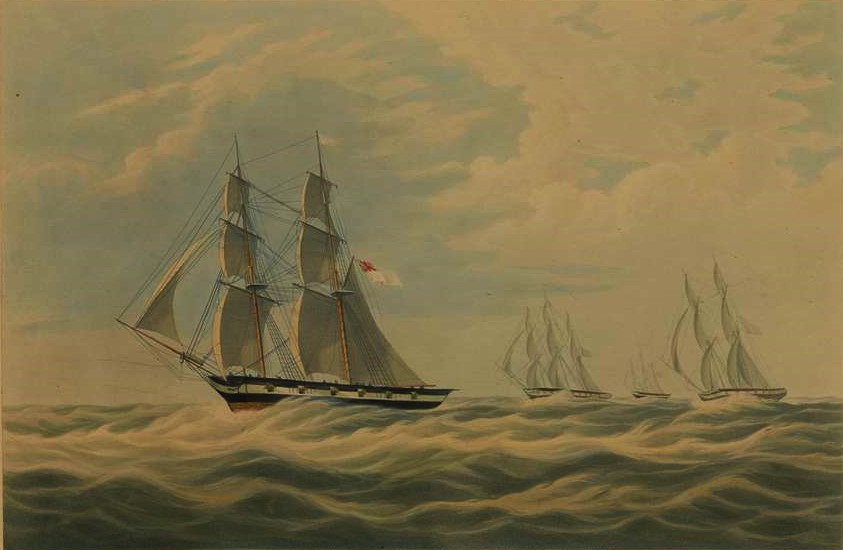
George Chichester, Earl of BelfastIn this week’s edition of Made on the Wight we examine the illustrious history of the Waterwitch – arguably the finest historic ship to have been built on the banks of the River Medina – which played a vital role in combatting the slave trade in the 19th century. The Waterwitch was the fastest ship of its class in the world when built. After being purchased by the Royal Navy, it was responsible for the capture of at least 43 slave trading vessels and the freeing of up to 26,000 slaves off the West coast of Africa. The story of the Waterwitch begins in 1802 when shipbuilder Thomas White acquired the shipbuilding site on the East bank of the River Medina, moving his business from Broadstairs in Kent. In 1825, he rebuilt the site, which became the Falcon Yard – which is still in operation today as GKN Aerospace. Thomas White was also responsible for the construction of the Thetis Yard on the West bank of the river towards the end of the Napoleonic Wars, on the marsh between Medina and Arctic Road. The person who funded the building of the Waterwitch was the sailing enthusiast George Chichester, Earl of Belfast. The wealthy nobleman lived at Cowes when not engaged in parliamentary duties in London. He was a member of the Royal Yacht Squadron, founded in 1815. The 3rd person responsible for the Waterwitch was George Ratsey of Cowes: a world-beater in sail-making. In the 1820s, the Earl of Belfast’s specialists – Ratsey and White – built him the cutter Harriet, a specialist racing yacht. Harriet was so successful that the aristocrat decided to change his focus from a fore-and-aft rigged to a square-rigged vessel. In 1832, the revolutionary 334-ton brigantine Waterwitch was launched on the Medina, using the finest racing sails money could buy from George Ratsey. The Earl hoped that his craft could improve the sailing qualities of the Royal Navy by competition and example. The Royal Navy were reluctant to race their ships against Waterwitch. In 1834, the Earl of Belfast’s brig took on the crack Royal Navy Channel Squadron between Dover and the Isles of Scilly. The Isle of Wight-built vessel was said to have outperformed all Royal Navy vessels on every point of sailing and in all strengths of wind. The Waterwitch off the Isles of Scilly The same year, Lord Belfast won a 1,000-guinea bet (£100,000 in today’s values) by racing the Waterwitch against the fastest big yacht of its time – the schooner Galatea – to the Eddystone Lighthouse and back, returning victorious. The Earl of Belfast had hoped that the success of his vessel would encourage the navy to use Thomas White as their shipbuilder and George Ratsey as their sailmaker. Instead, they simply purchased the Waterwitch for the sum of £3,656 (£393,000 in today’s values). However, the Navy were still jealous of the success of the Waterwitch against their vessels – for this reason, she never became HMS but was termed HMB (Her Majesty’s Brig) Waterwitch. The illustrious sailing vessel was immediately dispatched to the West Africa Squadron – based on the remote South Atlantic island of St Helena – where she was seen as the ideal vessel for chasing slave trading ships. There, the Waterwitch became possibly the most successful slave trader hunting vessel of all time. The United Kingdom abolished the slave trade in 1807. The following year, the slave ship busting West Africa Squadron was formed. It took until 1848 for France to abolish slavery, 1858 for Portugal to follow suit, and 1862 for the practice to be banned in the United States. Remarkably, slavery only ended in Brazil in 1888 and Saudi Arabia in 1962. It still persists to this day in Africa, with slaves openly sold in Libya in the 21st century. An observer of 1 of the slavers’ ships brought into St Helena described the horrors he witnessed:
“The whole deck, as I picked my way from end to end to avoid treading on them, was thickly strewn with the dead, dying and starved bodies. Yet these miserable, helpless objects being handed over the ship’s side, one by one, living, dying and dead alike, were human beings. Their arms were worn down to the size of a walking stick. Many died as they were passed from the ship, but there was no time to separate them from the living.”
Of the 26,000 souls rescued by the West Africa Squadron, 8,000 died on St Helena and were buried in a mass grave. Of those who survived, some remained on the South Atlantic island, others were either relocated to British colonies or returned to Africa. Many of St Helena’s present-day inhabitants are descended from rescued African slaves. Some bear the surname ‘Waterwitch’ in honour of the vessel that saved them. The Waterwitch continued to ply her trade until 1861 when – damaged by her efforts in a hostile climate and made obselete by the arrival of steam-powered craft – she was broken up. When her duties on the island of St Helena were completed, a memorial was built there in her honour. Waterwitch monument in St Helena The memorial inscription reads:
“This column was erected by the commander, officers and crew of Her Majesty’s Brig Waterwitch to the memory of their shipmates who died while serving on the coast of Africa AD 1835-1843. The greatest number died while absent on captured slave vessels. Their remains were either left in different parts of Africa or given to the sea, their graves alike undistinguished. “This Island is selected for the record because three lies buried here and because the deceased, as well as their surviving comrades, ever met the warmest welcome from its inhabitants”.
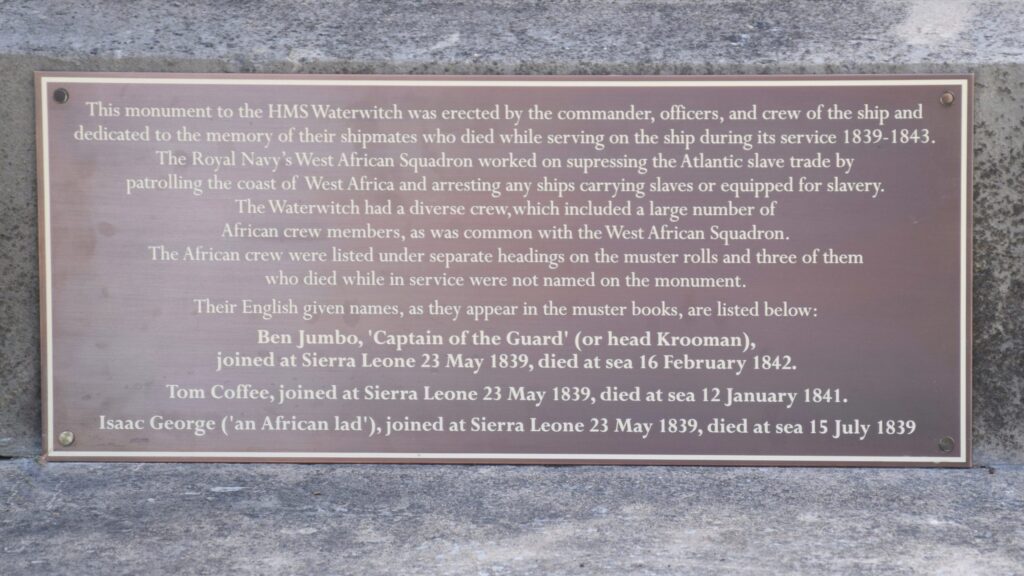
In 2022, the names of 3 more crew members of the Waterwitch – which had been omitted from the original monument – were added on a further plaque. Plaque added to Waterwitch memorial in 2022 The three were: Ben Jumbo, ‘Captain of the Guard’, died at sea February 1842. Tom Coffee, died at sea, 12th January 1841 Isaac George, ‘an African lad’, died at sea 15th July 1839 In the next edition of Made on the Isle of Wight, Island Echo will look at some of the futuristic jets designed by Saunders Roe in the 1940s and 1950s of the previous century, which never got beyond the design and prototype stage.
Most ironic that slaves used to have to be forcibly taken, now the same impoverished arrive by a never ending flotilla of their own accord.
The problems that such bring, over population, crime, and poverty are now spread to whatever country allowed in, or took these people from their homelands.
We have paid a high price for our ancestors mistakes and now, will continue to do so, for the rest of time.
By Jove
2 years ago
As shown by the article, Africa still has slave trade, odd how they have made us feel eternal guilt for the slave trading, YET they still carry out such, AND clearly, IF the boot had been on the other black foot, they would still have no qualms about taking our people, to use as slaves.
Either way, seems the West has paid a very huge price for first taking them, and secondly allowing in a never ending stream as some misguided ‘guilt’ repayment for our current generation to attempt to ‘never’ repay the folly of not leaving them where they, and we, would both have had nicer lives.
Huge Price Lol our whole Victorian infrastructure was built on exploitation of the Empire and many of those Stately homes and Estates profited by slavery.
”We have paid a huge price for transporting and enslaving people” is that what you are saying?
listen to yourself
WE, never bought these beings over, so WE never profited from them being here, BUT WE are paying the price for what others may well have gained from.
Does France, and Nordic countries or Rome keep paying us back for the audacity of invading our shores years ago? Of course not, the truth is, IF you are too stupid, weak, disorganised to PROTECT what you have then someone will exploit it.
Hence we pay billions on defence to protect our nation, our people and what OUR ancestors have fought and died for. They NEVER died or came back broken forever to hand it to some ethnics who because they now have smart phones KNOW wherever they exist just how to illegally enter our land.
IF we are so evil how come they come here in droves?
Byjove, yes good point. I am sick of having the slave trade rammed down my throat every time some historical prog is on the bbc etc.
None of us ever gained from it, as the working classes suffered as much as if we couldn’t compete with the free labour the toffs then had, we too starved.
Many of our ancestors had terrible lives in mines, in heavy industry, being treated worse than animals, but we don’t keep whinging on about it, and using it as an excuse to act appallingly to the innocent generations down the line.
Had enough of the lies and power of the most used ‘card’ in the world. See the light, great post by the way.
Ash webb
2 years ago
What a great story about a local vessel and another piece of history for the Isle of Wight.












































It’s about time they started building the ferries on the Isle of Wight.
A very interesting article again. Thank you IE
Most ironic that slaves used to have to be forcibly taken, now the same impoverished arrive by a never ending flotilla of their own accord.
The problems that such bring, over population, crime, and poverty are now spread to whatever country allowed in, or took these people from their homelands.
We have paid a high price for our ancestors mistakes and now, will continue to do so, for the rest of time.
As shown by the article, Africa still has slave trade, odd how they have made us feel eternal guilt for the slave trading, YET they still carry out such, AND clearly, IF the boot had been on the other black foot, they would still have no qualms about taking our people, to use as slaves.
Either way, seems the West has paid a very huge price for first taking them, and secondly allowing in a never ending stream as some misguided ‘guilt’ repayment for our current generation to attempt to ‘never’ repay the folly of not leaving them where they, and we, would both have had nicer lives.
Huge Price Lol our whole Victorian infrastructure was built on exploitation of the Empire and many of those Stately homes and Estates profited by slavery.
”We have paid a huge price for transporting and enslaving people” is that what you are saying?
listen to yourself
Slave trade banned before Victoria gained the throne.
WE, never bought these beings over, so WE never profited from them being here, BUT WE are paying the price for what others may well have gained from.
Does France, and Nordic countries or Rome keep paying us back for the audacity of invading our shores years ago? Of course not, the truth is, IF you are too stupid, weak, disorganised to PROTECT what you have then someone will exploit it.
Hence we pay billions on defence to protect our nation, our people and what OUR ancestors have fought and died for. They NEVER died or came back broken forever to hand it to some ethnics who because they now have smart phones KNOW wherever they exist just how to illegally enter our land.
IF we are so evil how come they come here in droves?
Byjove, yes good point. I am sick of having the slave trade rammed down my throat every time some historical prog is on the bbc etc.
None of us ever gained from it, as the working classes suffered as much as if we couldn’t compete with the free labour the toffs then had, we too starved.
Many of our ancestors had terrible lives in mines, in heavy industry, being treated worse than animals, but we don’t keep whinging on about it, and using it as an excuse to act appallingly to the innocent generations down the line.
Had enough of the lies and power of the most used ‘card’ in the world. See the light, great post by the way.
What a great story about a local vessel and another piece of history for the Isle of Wight.