


























































Islanders are being urged to ‘stop, report, talk’ when it comes to scams as Citizens Advice Isle of Wight reveal the extent of the problem as part of Scam Awareness Fortnight.
6 in 10 people in the South East region have been approached by a scammer in the last 2 years but worryingly, of those targeted, only 30% of people spoke to anyone about it.
Under the slogan ‘stop, report, talk: be #scamaware’ Citizens Advice and Trading Standards, as part of IWASP (Isle of Wight Against Scams Partnership) and Scam Awareness fortnight from 10th-23rd June, are encouraging people to talk about their experiences and look out for others, particularly more vulnerable people.


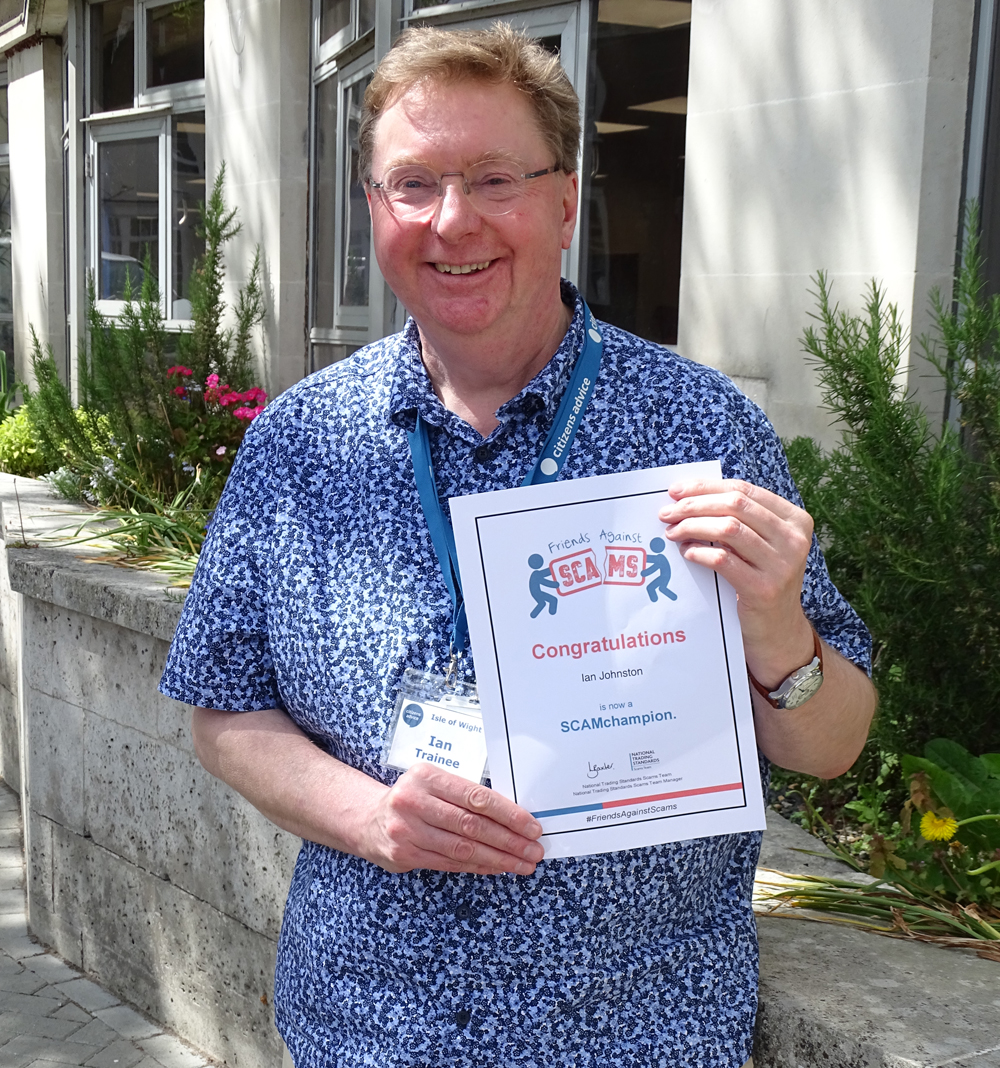
Citizens Advice Isle of Wight has also trained 3 specialist Scam Awareness Advisers to continue to raise the awareness of scams after the campaign fortnight has ended.
More than half of all scams reported to the Citizens Advice consumer service in the last year used well-established, offline methods. These classic tactics from the scammers’ playbook include unsolicited doorstep selling, mail and cold calling, and saw people lose an average of almost £3,000.
Fraudsters using these methods are known to overwhelmingly target older, more vulnerable people, who are less likely to report the scam. However, the ‘life established’ (people in the mid 40s-60s age range) are also likely to fall victim.
Paul Savill, Chief Officer of Citizens Advice Isle of Wight, said:
“‘Stop, report, talk: Be #scamaware’ is our message to people in the Isle of Wight. We’re finding that although many people have come into contact with scammers, very few people are speaking up about this issue.
Article continues below this advertisement

“People can sometimes feel foolish or embarrassed reporting their experiences, but sadly this means perpetrators are getting away scot-free.
“In reality, all of us can have the bad luck of being targeted with a scam. We hope this Scams Awareness campaign, and our continued support with our Specialist Scam Awareness Advisers, will encourage people to share their stories and learn tips to stop scammers from running off with people’s money.
Isle of Wight residents can use the IWASP website at https://www.iow.gov.uk/Council/OtherServices/IWASP/Introductio14/ to check on the current crop of scams hitting the Island. These include emails reportedly being from HMRC advising people that they are due a refund, a telephone call reportedly from BT advising that their internet connection is being cut, and an email advising on a TV licensing refund.
To help stop more people being fleeced by these types of scams, Citizens Advice Isle of Wight and Trading Standards are sharing the following tips on how to spot them:
If you’re worried that someone you know has become victim to a scam, look out for the following. Are they:
- Receiving more mail than usual?
- Receiving unsolicited calls or spending more time on the phone?
- Struggling with money or have they withdrawn large amounts of cash recently?
If you think someone you know is being scammed, take the following steps:
- If you’re worried about telephone scams look into installing a call blocker
- Encourage them to tell their bank immediately if there is any suspicious activity or transactions from their account or credit cards
- Report the scam to the Citizens Advice Consumer Service online or by phone on 03454 04 05 06. They will give you advice on what to do next
- Report the scam to Action Fraud on 0300 123 2040
- Telephone the Telephone Preference Service on 0345 070 0707 or go online at tpsonline.org.uk. For mail telephone 0207 291 3310 or go online at www.mpsonline.org.uk
- If they’re struggling to pay bills or outstanding debts encourage them to visit their local Citizens Advice
You can also take the following steps to safeguard yourself and others:
- Be suspicious if you’re contacted out of the blue, even if it’s from a name you recognise
- If it sounds too good to be true it probably is
- Never send money to someone you’ve never met
- Never give out your bank details unless you are certain you can trust the person contacting you
- Don’t be rushed – you never need to make a decision straight away and if you feel pressured say “no”
- Suspect a scam? Hang up, wait five minutes to clear the line or use another phone to report the caller
Don’t suffer in silence – speak out about scams.







Trust Nobody.
Assume every unsolicited call is a scam of some form.
If it’s not someone I already have dealings with, I assume it’s a scam.
One trick I use, is to ask for the postcode of the building they are calling from. Most hang up after that. If they don’t, I type it into google maps, then ask questions about the area. Then they go off.
Trust nobody.
Assume every unsolicited call is a scam of some form.
You’ll never miss out on anything by not engaging with them. If it is genuine, they will write to you later.
Trust Nobody