





















































Hampshire Constabulary is driving forward with an innovative plan that can revolutionise police fleets across the UK, saving millions of pounds.
The force has been given the green light to transform its general fleet of cars – those used as pool cars and for CID – from petrol engines to electric. But the Isle of Wight is unlikely to see any electric Police cars until mid to late 2019. Currently, a number of the pool/CID cars are parked on the roads or in car parks away from Newport Police Station.
Hampshire Constabulary is the first non-metropolitan police force in the country to make the ground breaking change and will result in an initial £450,000 saving over 3 years.


The pioneering plan to go green has proved so effective that other forces across the country are now looking to do the same.
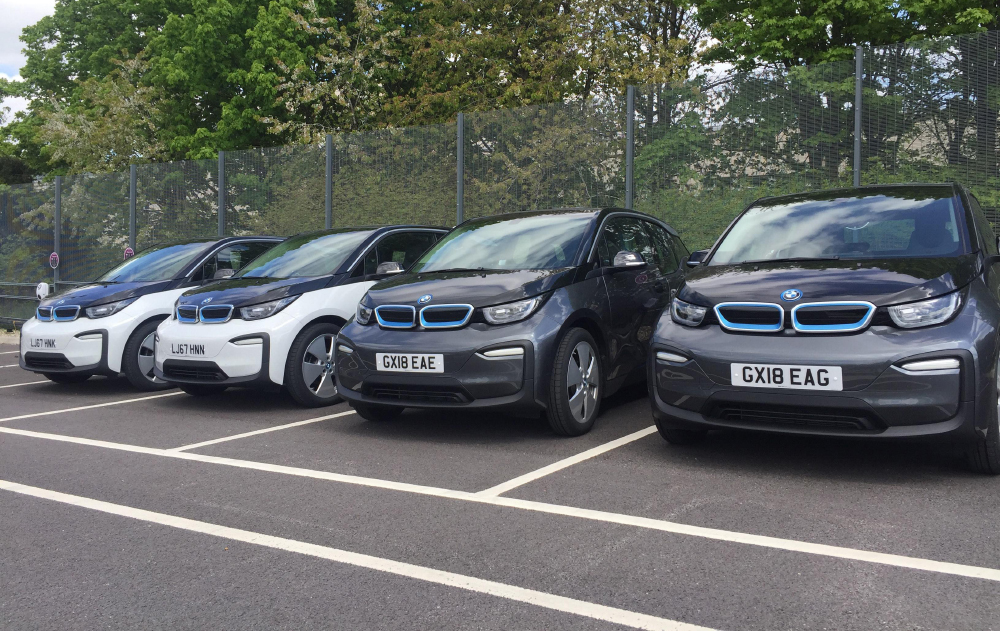
The force recently introduced 2 electric cars into its pool fleet. The BMW i3s were an instant hit with staff and officers and so efficient that it quickly became clear that going green made perfect sense for the thin blue line.
Inspector Andy Tester, who developed the plan, said:
“It quickly became clear that stepping up a gear when it came to electric cars made perfect sense, both financially and environmentally.
“We are spending public money so it is vitally important that forces find pioneering new ways to transform the way things are done.
Article continues below this advertisement “There is a perception that electric cars are expensive but we have done the sums and wit the help of government grant, the savings for the first three years is £450,000.
“That type of saving, when every force across the country is looking to cut costs, is almost impossible to argue against, especially when you look at the environmental benefits too.
“Proof of this is how quickly we have seen other forces across the country look at our ideas – imitation is the best form of flattery after all.”

Commenting on the plan, Chief constable Olivia Pinkney added:
“Hampshire Constabulary has a reputation for finding new and ground-breaking ways to be more efficient. I commend the team who have developed this plan for continuing that fine tradition.
“We are proud to be in the driving seat of innovation. These cars save public money, are proving popular with our teams and are kinder to the environment. This ticks all the boxes and we are excited to see whether others forces can benefit too.”
Insp Tester added:
“The obvious major drawback of electric cars is what happens if they run out of electricity during a journey, but in the unlikely event this did happen, these cars have a petrol back-up system that would last for 60miles. So that problem is instantly eradicated.
“The range of the i3 on electric power alone is up to 120 miles and the average daily mileage of a CID or pool car is significantly less than 100 miles.
“Plus, the majority of these vehicles are generally used on day or late shifts, which means the cars can be charged for regular periods overnight.
“And the response from those who have used them so far has been fantastic, they have praised the design, quality, equipment levels and the way they drive.
“People have really been surprised at how much they enjoy driving them and we are sure that this experience will be the same across the board.
“Currently we have more than 220 pool and CID cars but the plan is for us to move towards having a 50/50 split in the future.”
CID and pool cars require no modifications beyond the fitting of a police radio and tracking systems, so bringing these vehicles into and out of the fleet will require minimal expense.
A small proportion of the initial £450,000 saving will fund the upfront cost of having to install more charging points at Southampton, Basingstoke and Portsmouth stations, but once in place, these will have a lifespan well in excess of 10 years.