












































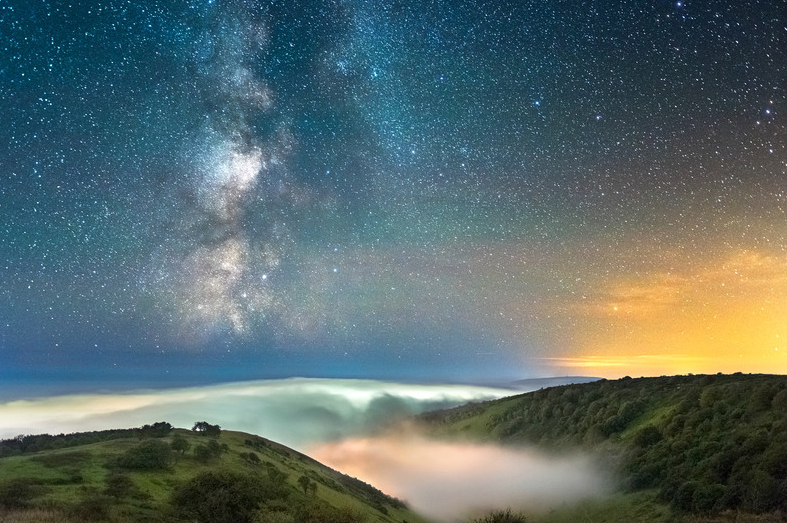

 Councillors are to support a campaign on the Isle of Wight to achieve dark sky status by formulating a new local lighting code to help promote astro-tourism and preserve wildlife.
The Island has a relatively high quality of night sky with low levels of light pollution and it can apply for recognition from the International Dark Sky Association (IDASA).
At the meeting of the Full Council on Wednesday (15th November), councillors voted to include drafting a policy on dark skies as part of the review of the Island plan, as well as producing an accompan


ying policy guidance document.
Councillor Barry Abraham, Cabinet member for planning and housing said:
“This is an exciting opportunity and we are happy to support the approach being championed by the Area of Outstanding Natural Beauty partnership as it will benefit the Island’s economy.
“This is all about encouraging the better use of lighting and understanding its impact on the night sky – particularly in our rural areas.
“Studies show this approach can also help wildlife and the environment but it will also help increase visitors to the Island in the winter months when the night sky is at its best for astronomers.”
Article continues below this advertisement

Campaigners like Dark Wight Skies, Vectis Astronomical Society and the Isle of Wight Society are behind the campaign for dark sky status. The Council will now work with groups to help achieve the aim as part of the review process of the Island Plan, the planning blueprint for the Isle of Wight.
Only a handful of places in the UK presently have dark sky status. These include Sark Island, Exmoor and the Scottish Isle of Coll.